
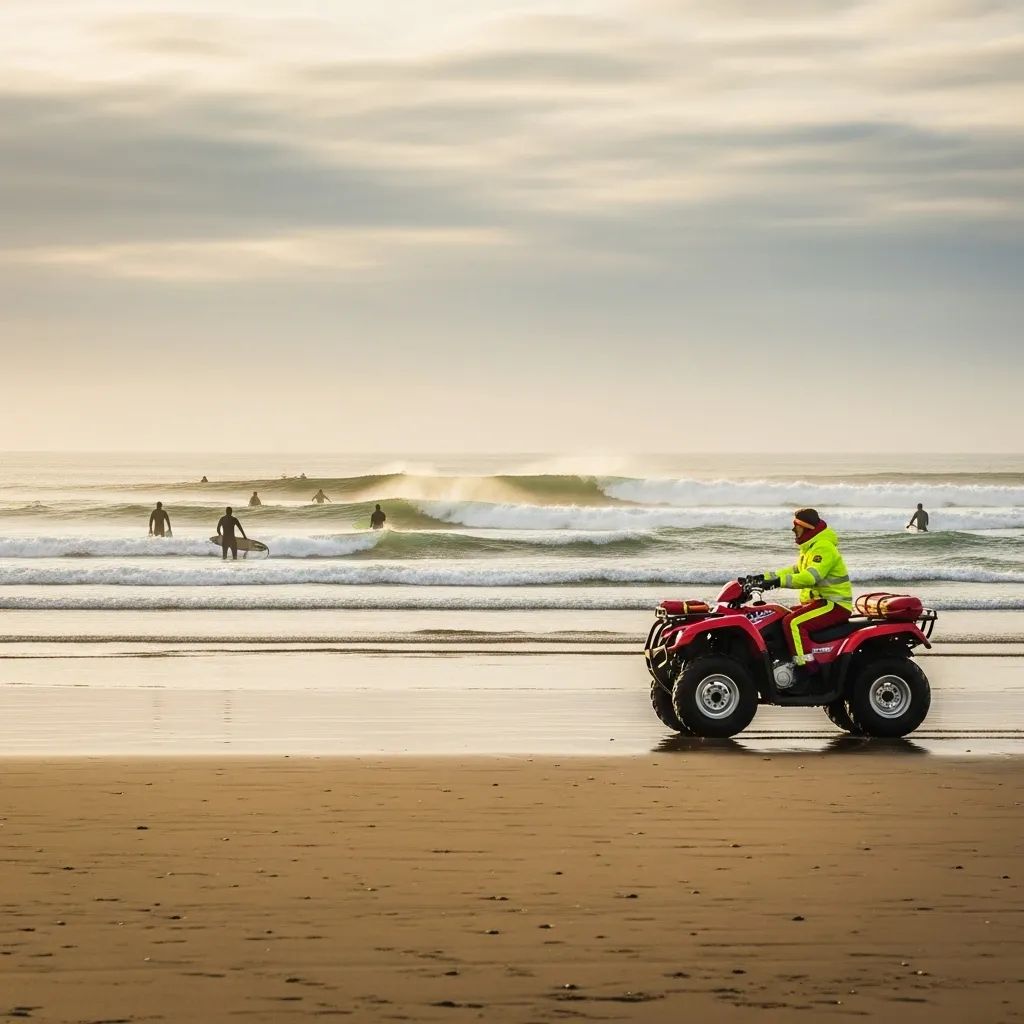
Blue skies and 17 °C water in mid-October no longer surprise surfers on the Alentejo shoreline, but until recently the absence of professional rescuers did. Odemira’s new year-round safety program quietly changed that, turning empty winter sands into some of the most monitored spots on Portugal’s Atlantic coast.
Quick view
• Daily lifeguard patrols keep watch from October to May, complementing the classic summer season.
• Partnerships with the National Maritime Authority (AMN) and local clubs ensure rapid intervention.
• Community outreach is creating a new culture of off-season water safety across the Alentejo.
Why winter safety matters on Alentejo beaches
As climate patterns shift, warmer winters push more visitors to the coast, lured by remote coves once considered off-limits in cold months. Yet these postcard spots hide powerful undercurrents and, in many cases, lack mobile coverage, making rescue times critical. Data from the Portuguese National Health Institute shows that drownings outside the bathing season have risen, particularly among domestic tourists and digital nomads who treat the coastline as an all-year workplace. The municipality believes that investing in a preventive security net is cheaper than post-incident healthcare and insurance costs, a message echoed by UN World Tourism data projecting continued shoulder-season growth.
Inside the all-year patrol: how it works
The program assigns daily patrols to 25 km of shoreline that hosts 11 Blue Flag beaches and 4 accessible beaches. A squad of Guardião lifeguards roams by ATV and 4x4 vehicles, backed by drone support on swell-heavy days. Coordination happens through a joint radio channel that links rescuers to the local fire brigade, AMN and GNR, hitting a 90-second response target along the busiest stretches. Funding for wages and equipment comes from a mix of municipal budgets and Blue Economy grants, ensuring the project survives beyond election cycles.
Beyond lifeguards: education and tech
Safety does not end at the waterline. Guardião’s team takes classroom workshops into village schools, demonstrating rip-current simulators and basic CPR. On site, beaches display QR-code signage that opens tide charts and emergency instructions in five-language guidance. Integration with the nationwide Costa Segura radar grid provides forecasting, while Seawatch vans bolster coverage on holiday weekends. A pilot of weather-triggered alerts pushed through the InfoPraia app will expand in January, alongside free community first-aid courses for surf schools and guest-house staff.
Odemira sets the pace for Portugal’s coastline
Regional neighbours are watching closely. Ílhavo's weekend watchers have already copied the model for Costa Nova, and a national review 2026 led by Minister Maria da Graça Carvalho may turn such schemes into a national benchmark. Experts argue that flexible rapid-response crews financed through public–private sponsorship can plug the coverage gap created by longer hot seasons. The program also dovetails with EU climate adaptation funding, positioning Odemira as a laboratory for coastal resilience.
What visitors should know this winter
Even with extra eyes on the water, personal responsibility matters. Before you lay out your towel, follow these pointers:
Dial 112 for any emergency—your call is routed to the lifeguard team.
Download InfoPraia to see live flag colours and surf forecasts.
Respect the red flag; fines for swimming against it now reach €250.
Stick to areas within sight of yellow rescue towers and avoid isolated spots at low tide.
After sunset, leave the water; off-season rescues at night remain risky, especially if alcohol is involved.
Keep an eye on the winter rip currents that form near river mouths.
Wait for the lifeguard whistle before re-entering after a red flag is lowered.
Store the GPS beach code posted at every access point; it speeds up rescue dispatch.
The bigger picture
For locals, the initiative means winter jobs and the chance to expand surf schools, guest houses and small cafés without the fear of liability. For the municipality, it is a drive to strengthen the year-round tourism economy and anchor the Blue Economy narrative in tangible action. Early results—no serious incidents reported since October—suggest that safety branding can be a decisive competitive edge as coastal towns compete for visitors seeking mild weather. If replicated, experts say the approach could redefine Alentejo coast competitiveness and give Portugal a head start in adapting to the beach calendar of the future through preventive investment, community engagement and strengthened coastal stewardship.


