

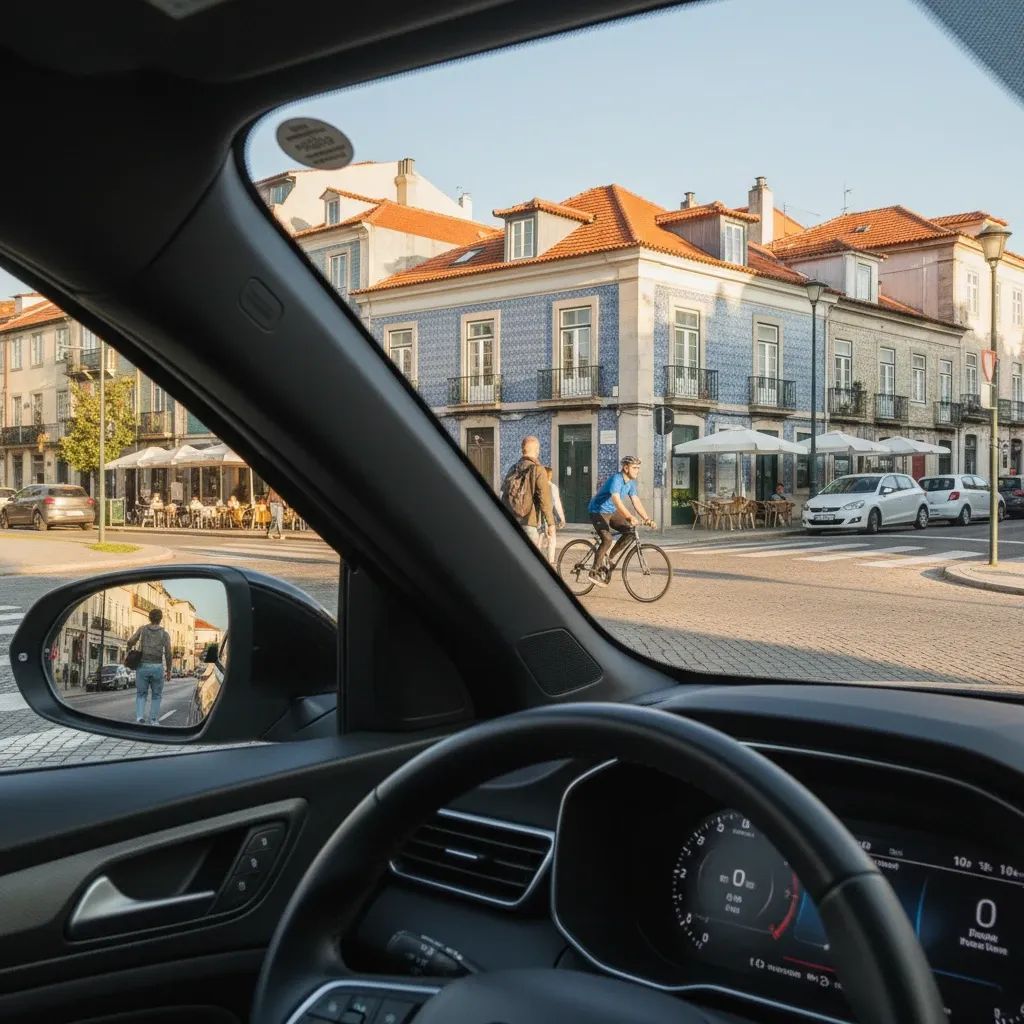
The Portugal automotive market faces a growing design paradox: modern vehicles are getting safer in crash tests while simultaneously becoming more dangerous to drive due to deteriorating sightlines. A multi-year investigation by ADAC—Europe's largest motoring organization—reveals that structural design priorities are systematically blocking drivers' direct view of pedestrians, cyclists, and other vulnerable road users, a trend with life-or-death consequences on Portuguese streets.
Research published through early 2026 from both European and US transport safety agencies confirms that visibility has degraded across virtually every vehicle category sold in Portugal over the past two decades. The culprit isn't a single flaw but a cascade of design choices: thicker A-pillars, rising beltlines, elongated hoods, and flatter windscreens that together create visual dead zones large enough to conceal entire human beings.
Why Modern Cars Hide the Road
The ADAC testing program—spanning more than 400 vehicle evaluations—identifies the A-pillars (the structural supports flanking the windscreen) as the primary offenders. In certain models now circulating through Portugal's roads, these pillars have grown so wide that they can completely obscure pedestrians, motorcyclists, or cyclists at critical moments, particularly when navigating curves or approaching intersections.
But A-pillars aren't working alone. High window sills on side glazing reduce lateral awareness. Extended front overhangs and aggressive frontal styling push the visible horizon further from the driver. Steep windscreen angles that look dramatic in showrooms translate to reduced forward coverage in real-world conditions.
The US Department of Transportation's Volpe Center applied quantitative measurement techniques to popular models sold between 1997 and 2023, revealing startling losses. The Honda CR-V, a common sight in Portuguese cities, saw forward visibility within 10 meters plummet from 68% coverage in the 1997 version to just 28% in the 2022 iteration—a 58% reduction. The Chevrolet Suburban dropped from 56% to 28% over a similar period, while the Ford F-150 fell from 43% to 36%.
Sedans fared marginally better than SUVs, but the direction of travel is universal: less glass, more metal, smaller visual aperture.
The Human Cost
ADAC data shows that 28% of accidents outside urban areas in Germany occur at curves or intersections, locations where sightline obstructions prove most lethal. In 30% of these incidents, drivers either detected the victim too late or failed to see them entirely before impact.
The pattern is straightforward: a motorcyclist entering an intersection or a cyclist passing alongside can vanish entirely behind an A-pillar or B-pillar, remaining invisible until the collision is unavoidable. For Portugal—where motorcycles and scooters represent a significant share of urban transport and cycling infrastructure is expanding—these blind spots translate directly into trauma center admissions.
The Insurance Institute for Highway Safety (IIHS) research, released in mid-2025, correlates declining visibility with the documented rise in pedestrian and cyclist fatalities across Europe and North America, even as overall road deaths from other causes have decreased. The conclusion is uncomfortable: vehicles are becoming fortresses for occupants while growing more hazardous to everyone outside the cabin.
What This Means for Drivers in Portugal
If you're shopping for a vehicle in Portugal right now, visibility should rank alongside fuel economy and safety ratings in your decision matrix. ADAC specifically called out models available in the Portuguese market: the Volkswagen ID.3 and Toyota Prius both received negative evaluations for A-pillar obstruction, while the Mini Cooper earned praise for expansive glazing and a steeply raked windscreen that preserves sightlines.
Before signing any purchase contract, conduct your own visibility audit:
• Sit in the driver's seat adjusted to your normal position
• Check how much of the forward and side view is blocked by pillars
• Look for high beltlines that cut across window areas
• Assess whether you can see the ground immediately in front of the hood
• Compare across multiple models—differences can be dramatic
Your height matters. Shorter drivers—a demographic reality in Portugal—face disproportionate challenges with high sightlines and thick pillars. Ensure you can achieve an ergonomic seating position that doesn't force you to peer around obstructions.
Technology Isn't the Solution (Yet)
Modern vehicles increasingly ship with 360-degree camera systems, parking sensors, and blind-spot monitors. These technologies undeniably help and, according to specialist analysis through 2026, can effectively eliminate certain blind spots during low-speed maneuvers.
But ADAC deliberately excludes cameras from its core visibility assessment, and the reasoning is sound: cameras fail. They get dirty, malfunction, suffer electrical faults, or simply aren't activated at the critical moment. Direct vision works regardless of battery charge, software bugs, or lens contamination.
Camera systems excel at parking assistance and low-speed maneuvering—contexts where you can afford to look at a screen. They're far less useful when you need split-second awareness of a cyclist entering your path at an intersection or a child stepping between parked cars. Human peripheral vision and direct sightlines remain irreplaceable for dynamic threat detection.
Experts emphasize that Advanced Driver Assistance Systems (ADAS)—including lane departure warnings and emergency braking—are becoming mandatory in new vehicle designs from 2026 onward under evolving EU regulations. These systems can mitigate some risks, but they function as supplements to visibility, not substitutes.
Regulatory Pressure Builds
European regulators are responding, though the measures target commercial vehicles first. UNECE Regulation 167, addressing heavy goods vehicles (categories M2, M3, N2, N3), became mandatory for new vehicle types as of January 7, 2026, with full enforcement across all new units by January 2029. This regulation establishes minimum visible volume requirements around trucks and buses to protect vulnerable road users.
For passenger cars (category M1), UNECE Regulation 125—adopted in September 2023—limits vehicles to a maximum of two A-pillars, each with an obstruction angle not exceeding 6 degrees (10 degrees for armored vehicles).
The broader EU General Safety Regulation II (2019/2144), in force for all new vehicles from July 2026, doesn't mandate specific pillar dimensions but emphasizes accident prevention and protection of vulnerable road users—implicitly requiring manufacturers to balance crash protection with visibility.
The Euro NCAP testing protocol is introducing new 2026 criteria focused on urban scenarios with vulnerable road users, meaning visibility will factor more heavily into safety ratings that influence Portuguese buyer decisions.
Compensating for Poor Design
If you already own a vehicle with compromised sightlines, active compensation techniques can reduce risk:
• Move your upper body and head deliberately to look around A-pillars before entering intersections or curves
• Adopt a scanning pattern: left pillar check, center, right pillar check, mirrors, repeat
• Slow down when approaching locations where visibility is inherently limited
• Use technology strategically: activate parking cameras before maneuvering, monitor blind-spot indicators before lane changes
• Keep all glass and camera lenses scrupulously clean—dirt compounds visibility loss exponentially
The Industry Must Act
ADAC's position is unambiguous: constructive visibility must return as a primary safety objective in vehicle development, on par with crash protection and emissions compliance. This means:
• Designing A-pillars that minimize obstruction while maintaining structural integrity
• Lowering beltlines to expand glazing area
• Prioritizing windscreen angles that maximize forward coverage
• Resisting styling trends that sacrifice function for aggressive aesthetics
The organization argues that good baseline visibility should be guaranteed through design, with technical systems serving only as supplements. Only this approach delivers sustainable improvement in active road safety, particularly for the pedestrians, cyclists, and motorcyclists who populate Portugal's streets and lack the protective shell that drivers enjoy.
Portuguese drivers shopping for vehicles today find themselves navigating a market where style has often trumped visibility. The ADAC evidence—reinforced by US transport research and emerging European regulations—makes the stakes clear: what you can't see can kill. Choose accordingly, drive compensatively, and demand better from manufacturers who control these design choices.


