The World Bank has issued stark warnings that 300 million people globally are already grappling with acute food insecurity, and that figure is set to spike by 20% in rapid succession as a prolonged conflict in the Middle East disrupts energy markets, fertilizer supply chains, and agricultural production worldwide. For anyone living in Portugal—a country that imports the bulk of its food and remains exposed to global commodity volatility—this crisis signals higher grocery bills, potential supply shortages, and broader economic pressure throughout 2026, particularly from late summer onward.
Why This Matters
• Energy-linked food inflation: Oil prices above $95/barrel are driving fertilizer costs up by as much as 64%, which will hit harvests later in 2026.
• Export bans spreading: Iran and other producers have already suspended food exports, a move that amplifies scarcity and inflates prices further.
• Portugal's vulnerability: As a net food importer in the eurozone, the country will feel the squeeze through both direct price increases and indirect fiscal strain over the coming months.
• Timeline risk: The World Bank's "pessimistic scenario" assumes conflict through August 2026, but April tensions suggest that deadline may already be optimistic.
The Fertilizer-Fuel Nexus Driving Scarcity
Speaking on the sidelines of the International Monetary Fund (IMF) and World Bank spring meetings in Washington, Indermit Gill, the Bank's chief economist, identified surging oil prices as the principal accelerant. On April 20, 2026, Crude benchmarks reached critical levels: Brent crude jumped nearly 5.6% to breach $95/barrel, while West Texas Intermediate (WTI) climbed above $88.9/barrel as new flare-ups between the United States and Iran threatened shipping lanes through the Strait of Hormuz—a chokepoint that handles roughly one-third of global fertilizer transit.
Fertilizer prices are the transmission mechanism. Urea, the raw material for nitrogen-based compounds, surged 64% between January and April 2026, while potash rose 17% and phosphorus climbed 14%. When oil gets expensive, so does the energy needed to synthesize ammonia, the building block of most nitrogen fertilizers. Farmers facing tighter margins respond by cutting fertilizer use, which in turn suppresses yields for cereals and other staple crops. The result is a vicious cycle: lower production, tighter inventories, and higher food prices that disproportionately punish low-income households.
After April 20, fertilizer futures dropped 18% when news broke of the Strait's tentative reopening, but that relief may prove short-lived if hostilities resume. The World Bank warns that any supply disruption lasting into the third and fourth quarters of 2026 will directly impact harvests currently being planted across Sub-Saharan Africa and South Asia, regions where farmers have already begun the growing season without adequate inputs.
Export Restrictions and the Domino Effect
Gill expressed acute concern about export bans, which he described as a policy tool that "worries us enormously." In the opening days of the current conflict, Iran announced a blanket suspension of all food exports, setting a dangerous precedent. When major producers or transit hubs withdraw from global markets—whether out of protectionism or logistical necessity—importing nations are left scrambling. Portugal, which sources significant portions of its wheat, maize, and vegetable oils from international markets, is particularly exposed to such disruptions.
History offers a sobering precedent: during previous commodity shocks, countries from Russia to India imposed export curbs to shield domestic consumers, inadvertently amplifying global price spikes. The World Food Programme (WFP) estimates that a sustained Middle East conflict could push an additional 45 million people into acute hunger by mid-2026, raising the worldwide total to 318 million across 68 countries.
Regional Fallout: Asia First, Africa Next
Asia is currently the continent most affected by hydrocarbon price surges, given its reliance on imported energy and its role as a manufacturing hub for agricultural inputs. But Gill cautioned that as the crisis drags on through 2026, the epicenter will shift. "Very quickly, it will spread first to Africa," he noted, pointing to a continent where more than 87 million people in the east and south already face hunger, with another 52 million in west and central Africa expected to join them by mid-year.
Conflict zones are faring even worse. The Gaza Strip and Sudan are simultaneously experiencing confirmed famine conditions for the first time this century. In Sudan, millions subsist on a single meal per day amid a third year of civil war. South Sudan is sliding toward "widespread famine and collapse," Yemen counts 18.1 million people in critical food distress, and Haiti has seen gang violence sever supply chains, leaving 5.9 million people—more than half the population—in crisis.
For Portugal, the direct humanitarian stakes are distant, but the economic and geopolitical ripples are not. Refugee flows, remittance pressures, and strained multilateral budgets all feed back into European fiscal calculations, while commodity traders price in worst-case scenarios that lift costs for every importer.
Inflation Meets Stagnation: A "Double Hard Blow"
The World Bank's pessimistic scenario projects global inflation accelerating from 3% to 4.7% in 2026, driven by food and energy—categories that command a larger share of household budgets among lower-income groups. Portugal's own inflation rate has remained above the eurozone average in recent quarters, and any sustained jump in commodity prices will compound that divergence.
Meanwhile, if the conflict persists through summer 2026, global growth could decline by roughly 40% compared to pre-crisis projections. Gill described the combination of high inflation and weak growth as a "double hard blow" to debt sustainability in poor countries, undermining their ability to service existing obligations or respond to new shocks. While large economies—the United States, China, India—may weather the turbulence, smaller and import-dependent nations face acute vulnerabilities that aggregate statistics tend to obscure. "When you exclude the top economies from these estimates," Gill observed, "you start to see many more vulnerabilities."
What This Means for Residents
For households in Portugal, the practical implications are threefold:
Grocery inflation will intensify by late summer and autumn 2026. While the food currently on supermarket shelves was grown under earlier, cheaper input costs, the next planting cycle is already compromised. Expect price increases for bread, pasta, cooking oils, and imported vegetables by late summer and through autumn 2026.
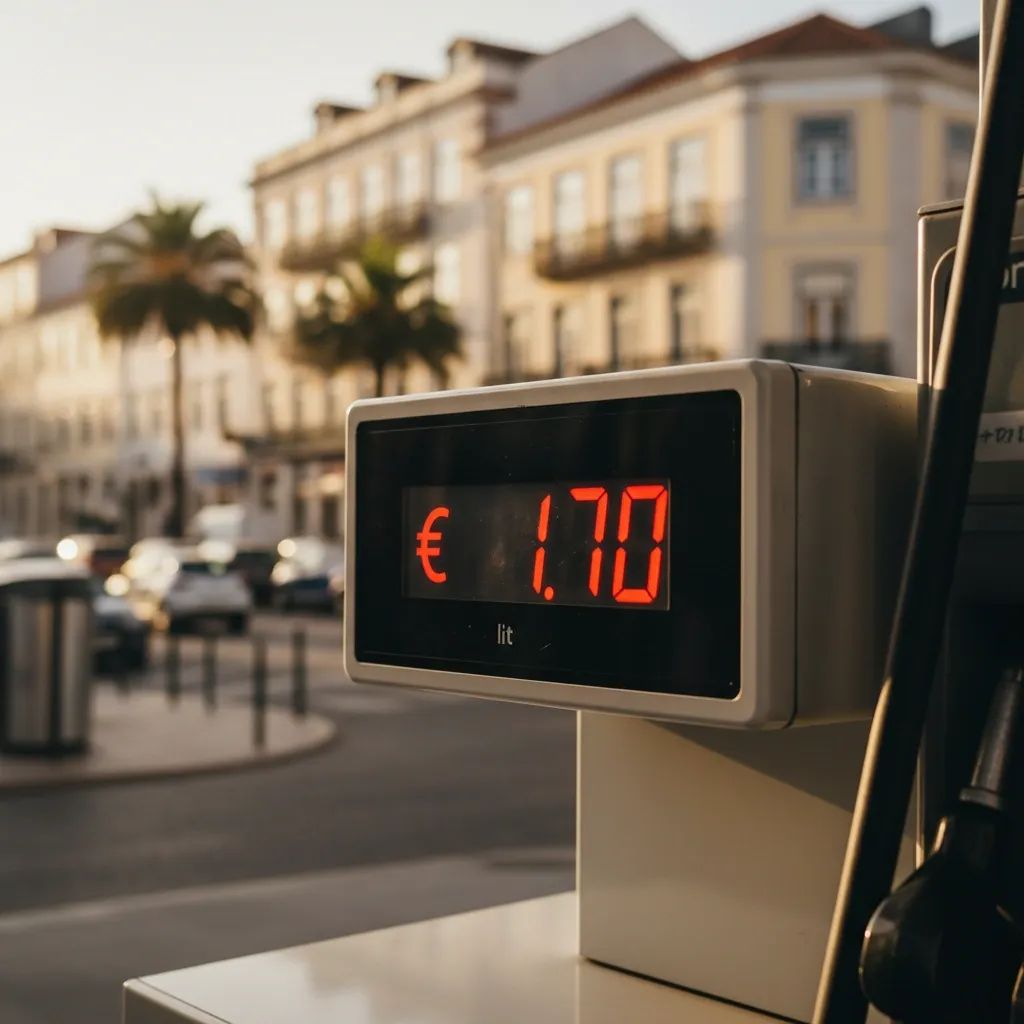
Fuel costs remain elevated throughout 2026. Diesel and petrol prices track crude benchmarks with a lag. Persistent conflict in the Middle East keeps the floor high, which cascades into transport, logistics, and ultimately retail prices.
Fiscal pressure may tighten social spending. Portugal's government, like others in the eurozone, must balance inflation control with growth support. If global conditions worsen through the year, belt-tightening measures—whether through subsidy reductions, tax adjustments, or spending caps—become more likely.
Alternative Strategies Gain Traction
The crisis has accelerated interest in biofertilizers, compost, green manure, and precision agriculture—techniques that reduce dependence on synthetic inputs and can be produced locally. Organic fertilizers derived from animal and plant waste, for instance, have allowed some farmers to cut costs by as much as 60%. Remineralizers—mineral-based soil amendments—and nitrogen-fixing cover crops offer further pathways to resilience.
Portugal's agricultural sector, heavily oriented toward horticulture, wine, and olive oil, may find these alternatives particularly relevant as import costs climb in 2026. The government's emphasis on sustainable farming within the EU's Common Agricultural Policy could provide both technical support and subsidies for producers willing to transition.
Outlook and Uncertainty
The World Bank's baseline assumes hostilities continue through August 2026, a timeline that Gill acknowledged is "no more extreme than that" given the current trajectory. Yet even a ceasefire would not offer immediate relief. Recovery of food production, normalization of shipping routes, and rebuilding of disrupted supply chains will take months, if not years. Fertilizer inventories depleted during the spring planting season cannot be restocked overnight, and the lag between input shortages and harvest shortfalls means the worst effects may not materialize until the fourth quarter of 2026.
For Portugal, the path forward hinges on diversification—of suppliers, of agricultural practices, and of energy sources. Policymakers and consumers alike must prepare for a period of sustained volatility throughout the remainder of 2026, where the cost of inaction is measured not only in euros but in food security and social stability.