

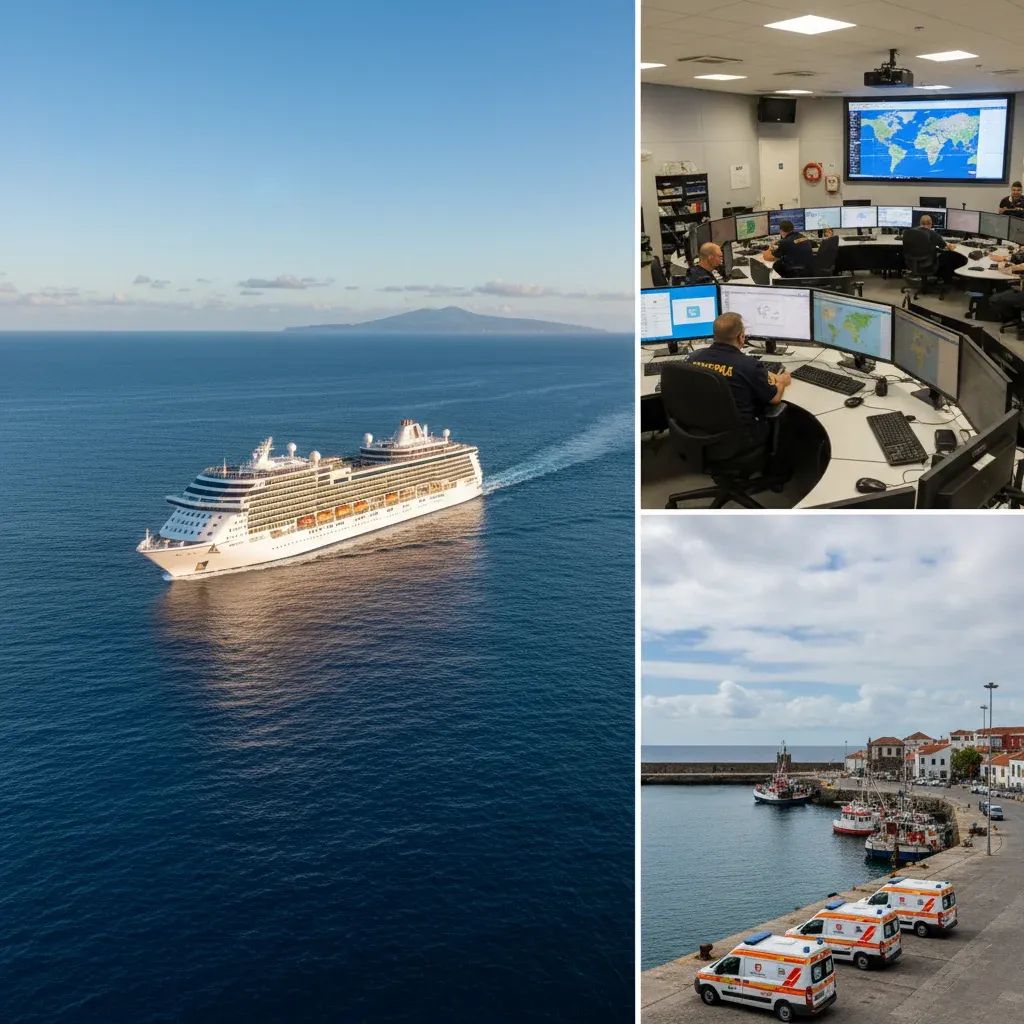
The Portuguese Navy coordinated a high-stakes medical evacuation from a cruise ship in the mid-Atlantic this week, airlifting a 76-year-old Canadian passenger suffering life-threatening gastrointestinal bleeding to hospital in the Azores. The operation, carried out 93 kilometers south of Pico Island late Thursday night, underscores the archipelago's critical role as an emergency medical hub for transatlantic cruise traffic.
Why This Matters:
• Medical infrastructure tested: The Azores archipelago functions as the primary emergency response zone for cruise ships crossing the Atlantic, with Portugal's Navy and Air Force coordinating multiple rescues each month during peak season.
• Rising cruise traffic: The incident represents one of several medical evacuations from cruise ships in Azorean waters in recent months, highlighting the importance of reliable emergency services in this remote region.
• Response capability: The Portuguese Air Force deployed an EH-101 helicopter as part of a coordinated multi-agency response, demonstrating the effectiveness of established maritime emergency protocols.
Distress Call at Sea
The Maritime Search and Rescue Coordination Centre in Ponta Delgada (MRCC Delgada) received an urgent request from the cruise ship at 10:10 PM local time on April 30. The ship's medical team reported a passenger in critical condition—a Canadian national experiencing gastrointestinal hemorrhage with hemodynamic instability, medical terminology indicating the patient was losing blood faster than their cardiovascular system could compensate.
The cruise liner was positioned approximately 50 nautical miles south of Pico Island, far enough from shore that conventional ambulance transport was impossible. The passenger's deteriorating condition required immediate intervention.
Multi-Agency Rescue Operation
The Portuguese Navy activated its maritime emergency protocol, coordinating resources across multiple agencies. An EH-101 Merlin helicopter from the Portuguese Air Force launched from Lajes Field on Terceira Island, working in tandem with the Maritime Urgent Patient Coordination Centre (CODU-MAR), which provides real-time medical consultation for at-sea emergencies.
The Air Force's Lajes Rescue Coordination Centre (RCC Lajes) handled flight operations while the Navy maintained communication with the cruise ship. The multi-rotor helicopter, designed for long-range maritime rescue missions, reached the vessel and successfully extracted the patient using winch-assisted techniques—a procedure that requires precise coordination between ship crew, flight crew, and medical personnel.
After the airlift, the helicopter delivered the Canadian passenger to Terceira Island, where a ground ambulance from the Azores Regional Civil Protection and Fire Service (SRPCBA) transported him to a hospital facility. The Praia da Vitória Port Authority also participated in the operation, ensuring clear communication channels and logistical support.
What This Means for Residents
For those living in the Azores, this rescue is part of a broader pattern that places the archipelago at the center of Atlantic maritime safety operations. The Portuguese emergency services maintain 24/7 readiness for maritime medical emergencies, reflecting the strategic importance of maintaining reliable emergency response in one of Europe's most remote regions.
The incident underscores the operational demands placed on emergency services in the region, particularly during cruise season when numerous large passenger vessels transit Azorean waters. These operations depend on seamless communication between civilian maritime authorities, military aviation assets, and regional health services.
Medical Protocols on International Cruise Ships
Modern cruise ships operate medical centers comparable to small urgent care facilities, staffed 24/7 by licensed physicians and nurses with emergency medicine training. Ships affiliated with the Cruise Lines International Association (CLIA) follow guidelines established by the American College of Emergency Physicians, requiring at least one medical professional on duty at all times.
These floating clinics are equipped with cardiac monitors, defibrillators, X-ray machines, and laboratory equipment. Starting this year, CLIA member vessels must also carry ultrasound equipment. However, their capacity for complex surgical procedures or prolonged intensive care remains limited, making shore-based facilities essential for serious cases.
When a patient's condition exceeds onboard capabilities—as with gastrointestinal hemorrhage requiring blood transfusions or surgical intervention—the ship's medical officer and captain initiate evacuation protocols. The decision factors in the patient's stability, proximity to shore facilities, weather conditions, and the ship's ability to provide a safe helicopter landing zone.
Cruise Industry and Azorean Infrastructure
The Azores' position as a mid-Atlantic waypoint makes it indispensable for cruise operators navigating between North America and Mediterranean destinations. The archipelago receives numerous cruise ship visits each year, bringing tourist revenue but also placing demands on local emergency infrastructure.
Hospital do Divino Espírito Santo in Ponta Delgada functions as the primary public medical center, offering 24-hour emergency services and surgical capabilities. For cases requiring specialized treatment unavailable in the archipelago, the facility can arrange helicopter evacuation to mainland Portugal—a secondary layer of medical escalation that mirrors the ship-to-shore transfers.
The Portuguese Navy's investment in maritime rescue capabilities—including the EH-101 helicopter fleet and the MRCC Delgada coordination center—reflects the strategic importance of maintaining reliable emergency response in one of Europe's most remote regions.
Practical Considerations for Travelers
Passengers boarding cruise ships should understand that medical services aboard are fee-based and often expensive, with evacuation costs potentially reaching tens of thousands of euros. Travel insurance covering maritime medical emergencies is essential for anyone cruising through international waters, particularly older passengers with pre-existing cardiovascular conditions—the most common cause of shipboard medical evacuations.
Travelers are advised to carry sufficient prescription medications in hand luggage, accompanied by original prescriptions, and to notify cruise operators of any chronic health conditions before departure. Maintaining copies of recent medical records, including electrocardiograms and medication lists, can assist ship doctors in providing appropriate care during emergencies.
The incident involving the Canadian passenger serves as a reminder that while modern cruise ships offer substantial medical resources, they remain dependent on shore-based infrastructure for critical cases—and in the middle of the Atlantic, that infrastructure is overwhelmingly Portuguese.


