
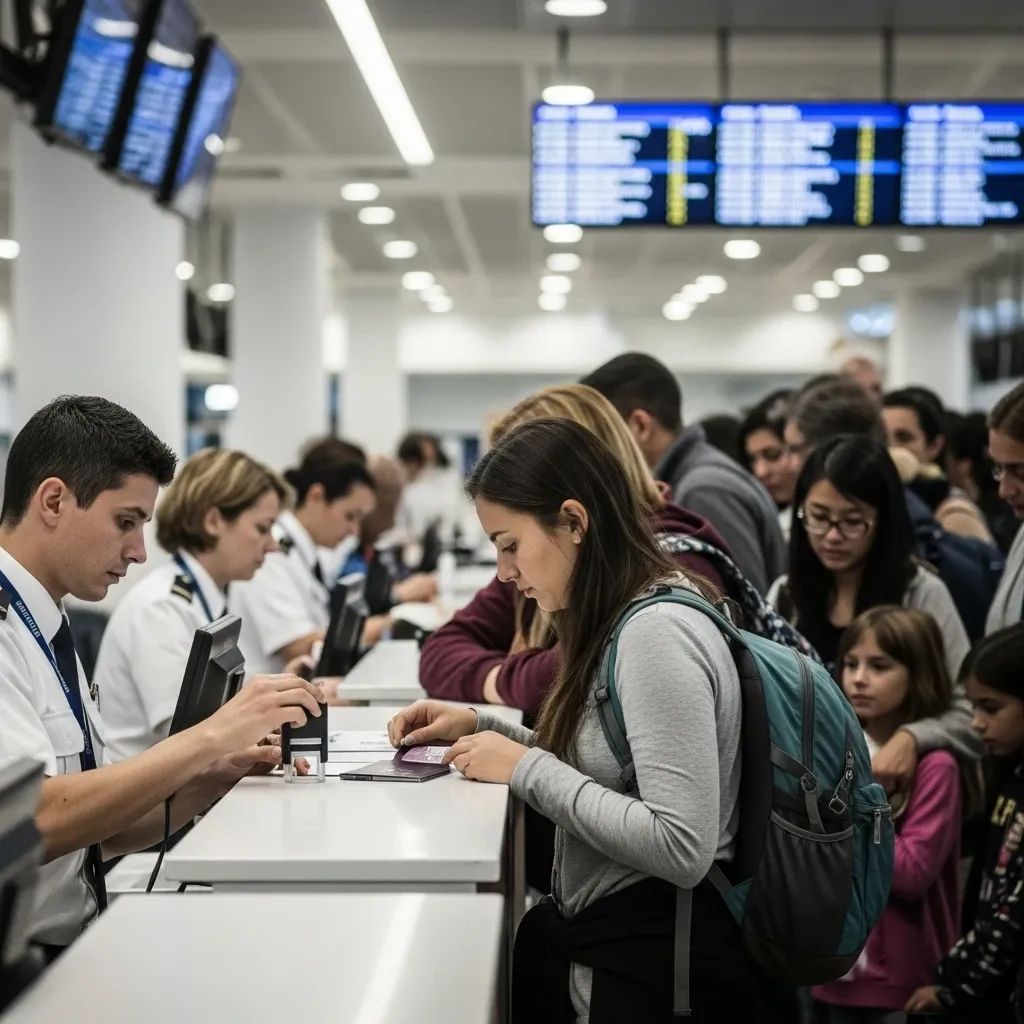
With holiday crowds still fresh in memory and the Easter rush only weeks away, many people in Portugal are wondering whether the frantic queues that paralysed Lisbon’s Aeroporto Humberto Delgado at Christmas will return. Brussels is asking for answers, Lisbon is promising fixes, and passengers are caught in between.
The situation in a nutshell
• EU officials want extra clarification after Portugal put the new Entry/Exit System (EES) on ice for 3 months.
• Lisbon blames seven-hour waits, staffing gaps and poor planning for the temporary halt at the capital’s airport.
• Traditional passport stamps are back for non-EU nationals at Lisbon until early April.
• A 30% boost in equipment and fresh National Republican Guard (GNR) officers are part of the stop-gap plan.
• The Commission stresses that Portugal must still be ready for the Schengen-wide 10 April 2026 go-live date.
Brussels wants chapter and verse
The European Commission confirmed on Wednesday that it has written to the Portuguese authorities seeking “more details” about the decision to pause the biometric Entry/Exit System. While the move is not viewed as a breach of EU law per se, Brussels says it needs assurances on data integrity, security standards and the new timeline for full roll-out. A spokesperson signalled that the request is procedural, but sources in Brussels told Público that other capitals fear a domino effect if queues erupt elsewhere.
What drove Lisbon to pull the handbrake?
Portugal’s Ministry of Internal Administration admits the launch “went badly wrong”. Travellers—many of them Brazilian visitors arriving for the holidays—were stuck in winding lines that at times reached the baggage carousels. Officials cite three core problems:
Under-staffing of first- and second-line border agents after a hiring freeze.
Construction works at Terminal 1 squeezing the arrivals hall.
Hardware growing pains as brand-new biometric kiosks struggled with high passenger volumes.
How the pause actually works
Only Lisbon Airport is affected. Porto, Faro, Funchal and the land borders with Spain continue to test EES on a reduced scale. At the capital, officers have reverted to manual passport checks, re-introducing the familiar ink stamp as proof of entry for non-EU nationals. The government insists that Schengen security rules remain intact, and that manual checks are “100% compliant” with existing legislation.
The human factor: reinforcements and retraining
To keep lanes moving, Lisbon is deploying 100 extra GNR officers and rolling out 18 additional automatic gates configured for the previous system. Border police are undergoing accelerated courses on crowd-management and new EES software so that, once the pause ends, trained staff and upgraded servers can handle peak loads. Officials say these measures will raise overall processing capacity by roughly one-third.
Why this matters for travellers living in Portugal
• Residents expecting family from Brazil, the U.K. or the U.S. should warn them to allot extra time at arrivals—queues are shorter than in December but still unpredictable.• Anyone with dual nationality who normally travels on a non-EU passport will continue to receive the classic stamp; switching to a Portuguese ID can speed things up.• Expats planning Easter getaways should note that EES may be switched back on just as seasonal traffic peaks.
The looming 10 April deadline
Under current EU timetables, all external Schengen border points must be fully digital by 10 April 2026. Brussels has not shifted that date, and insiders say Portugal’s three-month pause is acceptable only if it leads to a “clean re-start” before summer. Failure to comply could expose Lisbon to infringement proceedings and reputational damage at a time when the country is positioning itself as the Atlantic gateway for North-South flights.
Economic and political reverberations
Tourism bodies, including the Associação da Hotelaria de Portugal, warn that another meltdown during the high season would jeopardise recovery gains. Airlines are lobbying for better data-sharing so they can stagger arrivals, while opposition parties accuse the government of “reacting rather than planning”. Conversely, unions representing border officers welcome the pause, arguing that quality must trump speed.
What happens next?
The Commission’s letter gives Lisbon 15 days to submit a detailed action plan. Inspectors from the EU’s Schengen Evaluation Mechanism are due back in March for an on-site audit. If benchmarks are met, Portugal can phase EES back in early April—just in time for the official EU roll-out.
Until then, passengers will continue to hear the familiar thud of a passport stamp at Lisbon arrivals—a nostalgic sound that, paradoxically, signals Europe’s high-tech border of the future is merely on pause, not abandoned.


