
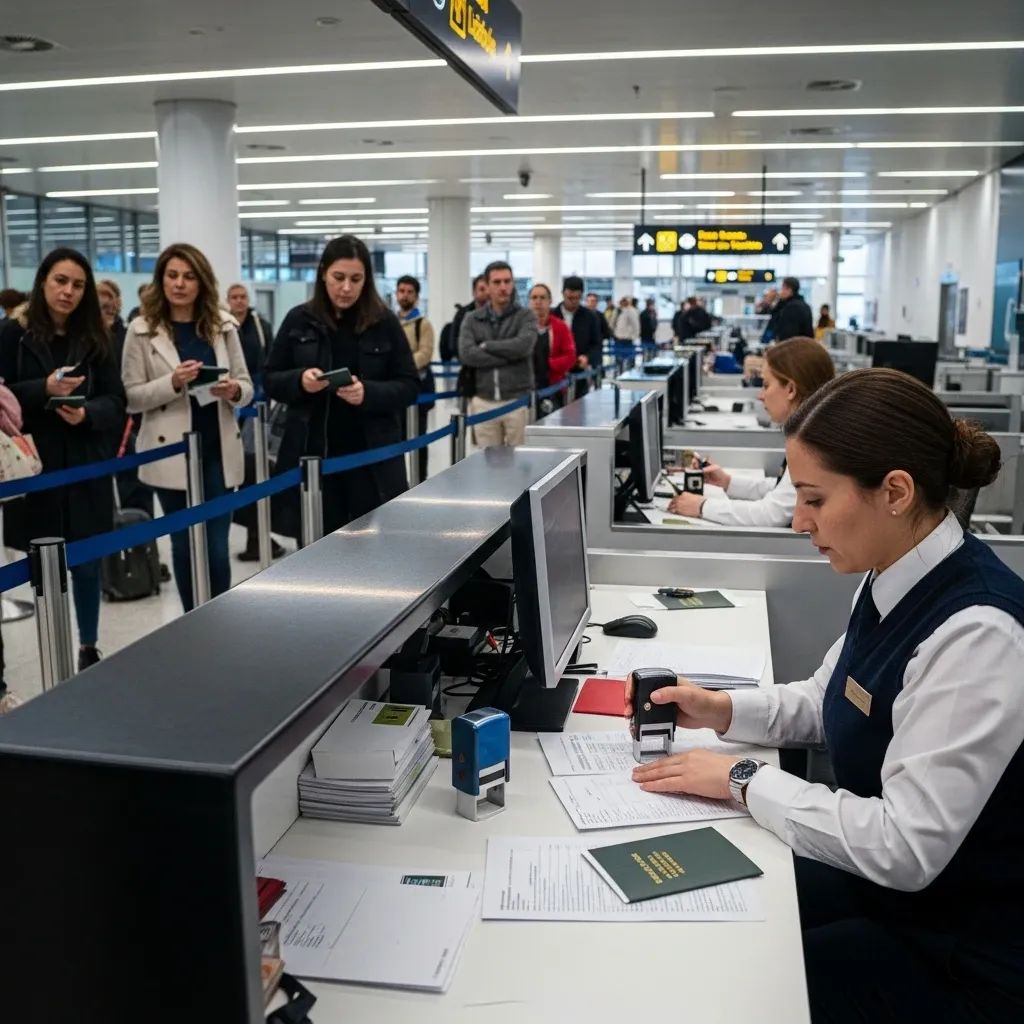
Long-haul travelers arriving in Lisbon over the festive period were met with shorter queues and calmer corridors than anyone expected a month ago. Portugal’s government has quietly frozen the new pan-European Entry/Exit System (EES) at Humberto Delgado Airport for three months, betting that a brief return to old-school passport stamping will restore order without sacrificing safety.
Quick takeaways
• Three-month suspension of the high-tech EES at Lisbon airport runs until late March
• Manual passport controls, extra GNR/PSP officers and traditional carimbo stamps have replaced the e-gates
• Checks against Europol & Interpol databases continue, so border security is intact
• EU still wants every Schengen border running the EES by 10 April 2026
• Travellers should plan for longer lines at Easter 2026 when the system is expected to reboot
From eight-hour lines to 20-minute strolls
In October 2025 Lisbon became an early adopter of the EES biometric kiosks designed to log every non-EU visitor’s fingerprints and facial image. The roll-out stumbled immediately. Some passengers waited up to eight hours, missing connections and sleeping on terminal floors. Airlines decried the sky-high delay costs while a discreet European Commission audit in mid-December 2025 flagged serious deficiencies in first- and second-line checks. Facing a potential infringement procedure, Lisbon opted for the emergency shutdown: switch the system off, fix the bottlenecks, and start again.
Why security chiefs are sleeping well
Paulo Simões Ribeiro, the junior minister for internal affairs, insists the pause is purely operational. All travellers are still run through the Schengen Information System (SIS), Europol alerts, and Interpol notices. To plug staffing gaps, 40 border-trained GNR soldiers joined regular PSP agents at arrival halls, a measure union leaders describe as 'the right-sized plaster'. Aviation analysts note that manual controls are hardly exotic—Madrid, Athens, and Frankfurt revert to the stamp-and-smile method whenever their kiosks crash.
The numbers Portugal cares about
Lisbon handled 33.6 M passengers in 2023, nearly 50 % of Portugal’s traffic and already operating at the edge of capacity. Every extra minute at border control snowballs: ANA Airports estimates a one-minute delay adds €600 to airline costs through crew-hour overruns and missed slots. Since the EES blackout, average processing time for non-EU arrivals has fallen from 114 minutes to 27. The government hopes to keep that figure below 45 once the upgraded kiosks and additional staff arrive on schedule.
Lessons from Europe’s other choke points
Lisbon is not alone. Amsterdam Schiphol, Paris-CDG, Milan Malpensa, and Heraklion have warned of similar choke points. Airports that stayed ahead—Luxembourg, for example—invested early in extra e-gates, staggered arrival banks, and launched pre-registration apps. Portuguese officials are studying those playbooks. Sources confirm ANA has ordered 120 new kiosks, is negotiating extended training contracts, and may pilot an online enrolment portal before summer.
Looking beyond the Easter rush
The European Commission deadline of 10 April 2026 is immovable, leaving Portugal 15 months to lock in a durable fix. A phased re-start is pencilled in for late March, right before the Easter getaway.
First-time biometric enrolment should take 3-5 minutes per traveller, much faster on return trips
A dedicated returning-enrollee lane for those already in the database
Real-time queue estimates via the airport’s mobile app in English and Portuguese
What you should do if you fly soon
Keep your passport handy; Lisbon travellers will still get a nostalgic ink stamp at Humberto Delgado. Allow an extra 30 minutes on busy mornings, especially in the 06:00-10:00 window. And watch this space: if the upgraded EES launches on time, summer 2026 could be Portugal’s first real test of a border that is both biometric-smart and queue-proof.


