

Lisbon's Arts Calendar Just Got Ambitious—Here's What's Coming in Spring and Fall
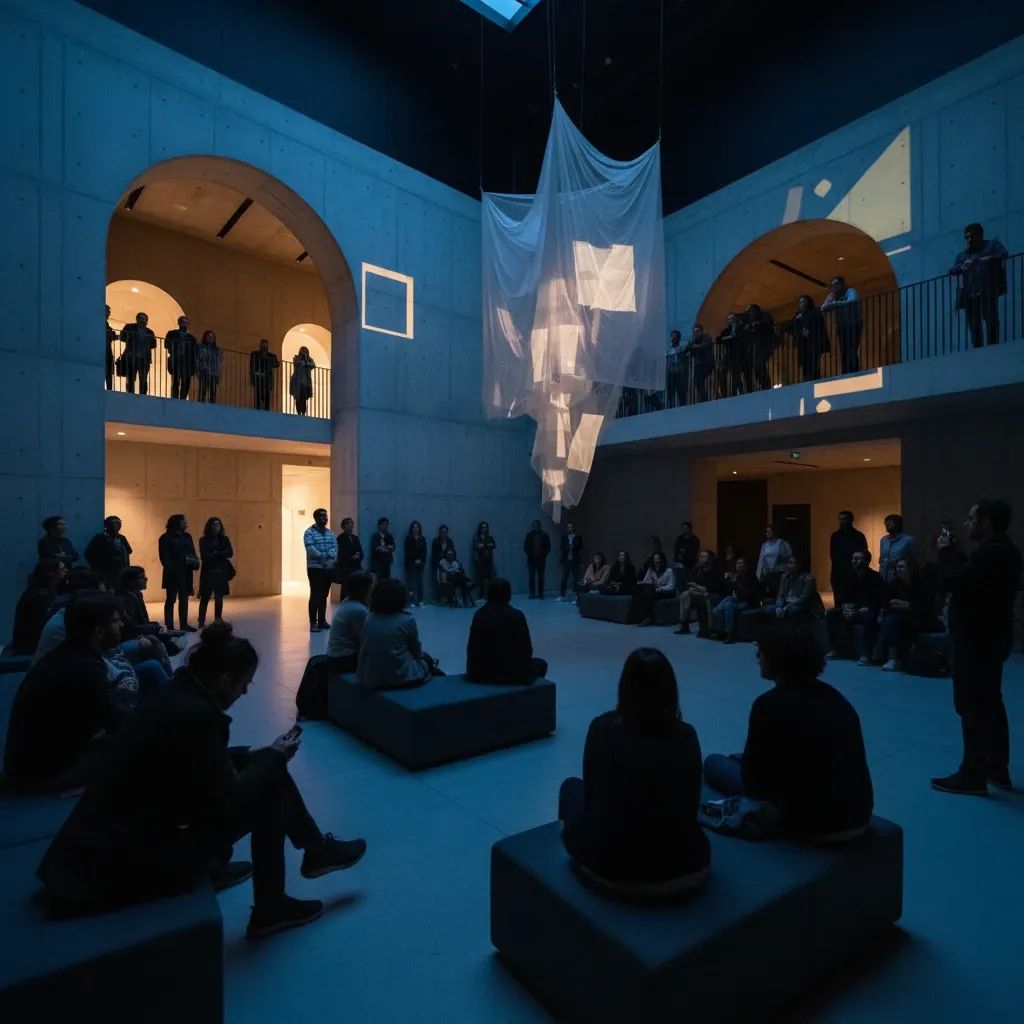
The Temps d'Images festival is expanding its reach across Lisbon with 14 works (12 main program pieces plus two commissioned works through the Estaleiros program) spanning May through October, marking the 24th iteration of an event that has quietly shaped how the city experiences experimental performance and film. Unlike a single concentrated burst, this year splits the program into two phases—a four-week May-June run and a month-long October block—effectively giving residents two distinct windows to engage with boundary-pushing contemporary work.
Why This Matters
• Two festival windows: Split programming between May 21–June 7 and October 8–31 means twice the opportunity to experience cutting-edge work without battling summer tourist congestion.
• Expanded venue network: Fourteen works across 11 cultural spaces transforms Lisbon's patchwork arts infrastructure into a single navigable ecosystem for a limited time.
• New sonic and visual language: Portuguese artist Surma designed the festival's first cohesive audio identity in years, signaling leadership's commitment to a unified sensory experience.
• Confirmed early work: Performance piece "O Direito do Mais Fraco à Liberdade" (The Right of the Weakest to Freedom) arrives June 6–7 at CCB's Small Auditorium, with additional lineup details arriving mid-April.
How Lisbon's Arts Infrastructure Gets Reorganized
The Temps d'Images footprint covers neighborhoods rarely bundled together. Galeria Appleton and Rua das Gaivotas 6 sit in intimate central quarters; Centro Cultural de Belém and Culturgest anchor the institutional wing; Cinema Ideal near Rossio provides a historic single-screen environment; and Jardins do Bombarda offers outdoor installation potential. Add Teatro Ibérico, Duplacena77, Centro de Artes de Lisboa (CAL), and the Planetário da Marinha—a naval planetarium rarely deployed for arts programming—and the festival essentially creates temporary corridors between otherwise disconnected cultural pockets.
For anyone tired of Lisbon's tendency to concentrate arts offerings in Belém or Chiado, the geographic distribution is tangible relief. A resident or expat can spend an evening moving through neighborhoods they might not otherwise associate with contemporary art. The Planetário da Marinha, in particular, represents unconventional territory—a spherical projection environment designed for astronomy that festival curators have activated as installation and performance space.
The Estaleiros Section: Where Different Artists Collide
Embedded within the 14 works are two commissioned pieces emerging from the Estaleiros program, the festival's explicit laboratory for interdisciplinary collision. The concept is straightforward but ambitious: commission work that mandates collaboration between artists trained in separate mediums. A choreographer partners with a sound designer. A video artist works alongside a theater maker. The friction produces hybrid forms that resist easy categorization—performance scored to algorithmic visuals, or cinematic installations where audience movement triggers narrative branches.
This model reflects European festival trends. Paris's Ecoperformance Film Festival similarly investigates intersections between movement, ecology, and screen-based media. Temps d'Images positions itself within this lineage, rejecting the assumption that cinema lives separately from performance or that theater functions independently of visual art.
The two Estaleiros commissions remain under wraps until the mid-April program reveal, but past iterations suggest work that challenges medium assumptions. Artist Cristina Planas Leitão is confirmed for a piece titled "[O Sistema]", exploring collective work and solidarity—language suggesting a performance or installation with social engagement at its core.
What This Means for Residents and Cultural Workers
For general audiences: Concentrated programming creates rare discovery windows. Rather than tracking 10 different institutions' separate calendars year-round, residents can invest one evening or a few days into Temps d'Images and encounter work that might otherwise require months of gallery monitoring. Ticket pricing typically aligns with municipal theater rates (€5–15), maintaining accessibility while showcasing international-caliber production.
For artists and cultural professionals: The festival functions as a professional convening. International programmers and curators attend, making domestic visibility possible without travel costs. The Estaleiros commissions, in particular, signal funding pathways for interdisciplinary projects that don't fit traditional grant categories—a crucial consideration in a cultural economy that still privileges medium-specific funding buckets.
For neighborhood revitalization: Venues like Jardins do Bombarda and Rua das Gaivotas 6 operate outside the Belém-Chiado axis that captures most cultural foot traffic. Festival programming in these spaces draws attention to areas expats and longtime residents alike might not otherwise explore, creating secondary cultural nodes.
For schedule flexibility: The October extension aligns with favorable weather and lower tourist density than high summer, offering participants a potentially more relaxed festival experience. For anyone traveling in late May or constrained by summer plans, the autumn block provides a reset.
A Thematic Lens: Memory, Intimacy, Transformation
The curatorial framework for this edition centers on "memory, intimacy, and image as materials in continuous transformation"—language that suits Lisbon's character as a city layered with historical sedimentation and contemporary reinvention. Rather than treating these concepts abstractly, the festival distributes them across disparate spaces and disciplines, allowing work in a theater to dialogue with installation in a garden or performance in a gallery.
This thematic unity across decentralized venues mirrors how Lisbon itself functions—a city where neighborhoods maintain distinct identities yet share underlying historical layers. The festival becomes a kind of urbanism, temporarily connecting neighborhoods through shared aesthetic preoccupations rather than geographic proximity.
Organizational Continuity, Visual Refresh
DuplaCena/Horta Seca produces the festival with financial backing from Portugal's Direção-Geral das Artes and Lisbon's Municipal Council—a financing structure typical of European cultural institutions where public investment enables programming that ticket revenue alone cannot sustain. The organization has consistently emphasized support for independent production, a coded phrase in festival-speak meaning work that commercial venues won't program and institutional theaters may deem too unproven.
Since 2003, Temps d'Images has presented over 400 works, many world premieres, by Portuguese and international creators. The festival expanded from its original performance-video axis to embrace dance, photography, and music—a trajectory reflecting broader European recognition that medium boundaries matter less than conceptual rigor and audience experience.
The new visual identity and sonic branding by Surma—a Portuguese artist known for blending folk elements with electronic production—represents deliberate institutional introspection. The organization describes these changes as a "reapproximation to the original matrix" centered on dialogue between performative arts, cinema, and video. Practically speaking, expect cohesive audiovisual language across promotional materials, venue signage, and interstitial moments between works, creating a unified sensory environment as audiences move through Lisbon's disparate cultural spaces.
Timing and Next Steps
The full program announcement arrives mid-April, leaving five weeks for advance ticket sales before the May 21 opening. Festival veterans know that certain venues—particularly the Planetário da Marinha and smaller gallery spaces—operate with limited capacity, making early booking advisable for headline works. The organization has committed to maintaining its "focus on diversity of approaches and support for independent production," which translates to a mix of established artists and emerging practitioners, with deliberate attention to work that challenges rather than confirms existing aesthetic assumptions.
For residents accustomed to fragmented cultural offerings, Temps d'Images offers a temporary unification of Lisbon's experimental arts ecosystem. Whether the May phase or October extension works better depends on personal schedules, but either window provides uncommon access to the kind of risk-taking work that typically requires either institutional connections or months of determined gallery navigation.


