

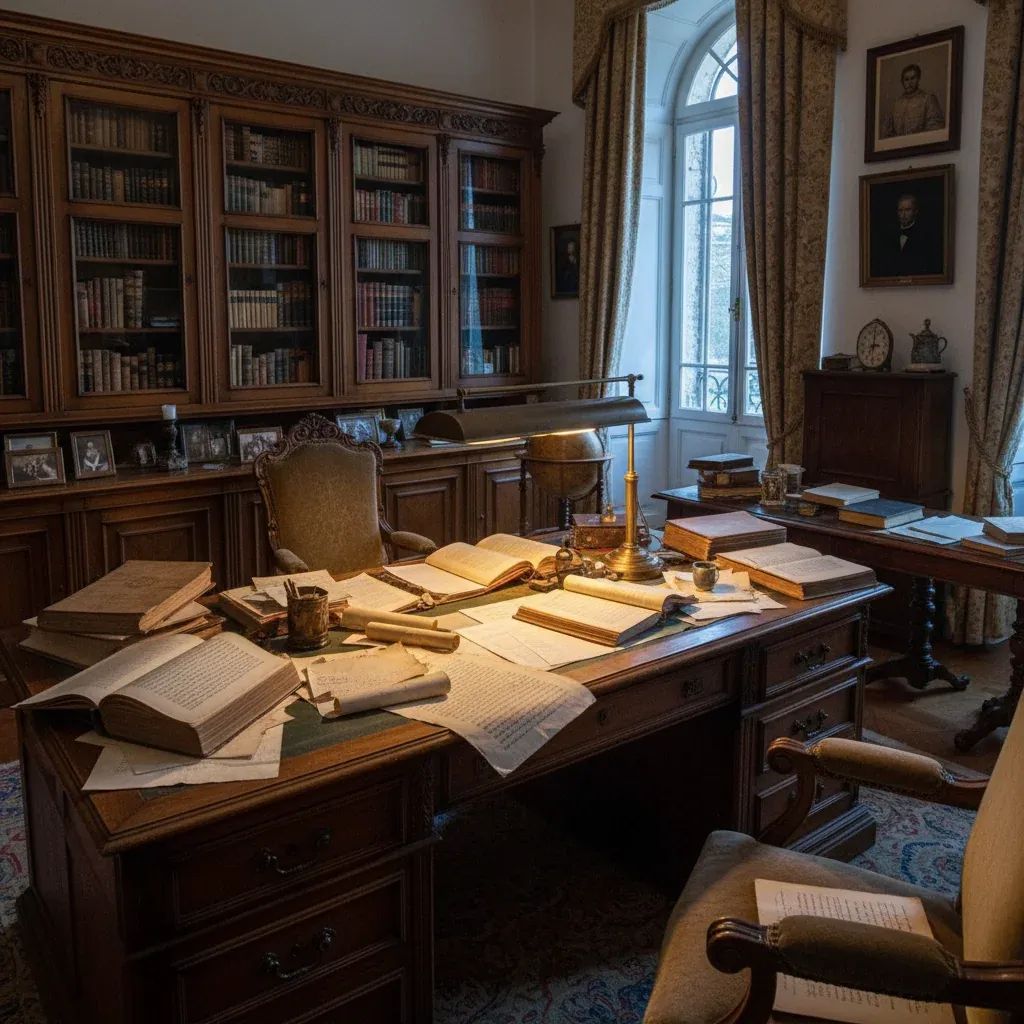
Lisbon is getting a major cultural facility before year's end. The Portugal Lisbon City Council confirmed that a new public library devoted to the late author António Lobo Antunes will open in the Benfica district by summer or early autumn 2026—a commitment made more poignant by the writer's death in early March at age 83.
Why This Matters
• Major cultural investment: The library will hold Lobo Antunes' personal collection of over 20,000 specialized volumes, offering researchers and readers unusual access to a major 20th-century literary figure's working library.
• Benfica gets cultural infrastructure: The neighborhood will gain a dedicated cultural venue of this scale; the space will also serve as a multipurpose community hub.
• Corporate partnership model: Teixeira Duarte construction firm is sponsoring the project—an increasingly common funding approach for Portuguese municipal cultural projects.
The Facility and Its Purpose
Located in the shell of the former Fábrica Simões on Avenida Gomes Pereira, the library occupies an industrial building that sat vacant for decades. The Lisbon Municipal Chamber has overseen its conversion into what will become Lisbon's 19th municipal library. The space will eventually house approximately 40,000 documents once completed, mixing the donated Lobo Antunes collection with standard library holdings.
The design incorporates distinct zones: family-oriented sections, adult reading areas, separate children's and teen wings, and a central multipurpose gallery. At the building's heart sits the Espaço António Lobo Antunes—a dedicated exhibition and research area showcasing the writer's manuscripts, first editions, annotated volumes, and personal memorabilia. The facility is positioned to host conferences, seminars, and rotating exhibitions focused on his literary output and influence.
The Benfica Parish Council has indicated that the opening timeline remains flexible between summer and autumn 2026. For residents eager to access the collection and programming, the distinction matters considerably—summer means potential integration with academic calendars and tourism seasons, while autumn suggests a quieter institutional launch.
A Writer's Life: From Medicine to Literary Icon
António Lobo Antunes' biography itself shaped his literary voice. Born in Lisbon on 1 September 1942, he obtained a medical degree from the University of Lisbon in 1969 and trained as a psychiatrist, practicing at the Hospital Miguel Bombarda. His shift to full-time writing in 1985—a move he attributed to his belief that depression is universal—marked the beginning of an extraordinarily prolific career that would earn international recognition.
His debut novel, Memória de Elefante, established what became his signature approach: unsparing psychological realism presented without concern for reader comfort or conventional narrative pleasantness. Lisbon Mayor Carlos Moedas captured this quality when speaking to journalists upon arriving at the funeral mass on 7 March: "He wrote the truth with unique humanity, never to please." That determination to excavate emotional and psychological depths without sentimentality animated all his subsequent work and attracted readers far beyond Portugal.
The Portuguese state honored him accordingly. He received the Grand Cross of the Order of Santiago da Espada in 2004 and the Order of Liberty in 2019. France granted him the rank of Commandeur in its Order of Arts and Letters in 2008. Most significantly, he won the Camões Prize in 2007—the highest literary honor in the Portuguese-speaking world, equivalent in prestige to the Nobel Prize for Portuguese-language writers. These recognitions reflected not merely domestic appreciation but international standing as one of contemporary Europe's most significant literary voices.
A Parallel Archive: Research Meets Accessibility
While Lisbon builds its public-access library, the existing Biblioteca Municipal António Lobo Antunes in Nelas—a town in central Portugal's Beiras region—is launching a complementary Centro de Investigação António Lobo Antunes (Research Center) in 2026. The center represents a €120,000 investment focused on comprehensive scholarly study: it will house all Lobo Antunes' published works across multiple languages, plus the complete academic archive analyzing his oeuvre—dissertations, journal articles, critical studies, and secondary literature from international scholars.
This dual approach reflects coordinated regional strategy. Nelas positions itself as the intellectual hub for Lobo Antunes scholarship, drawing researchers and academics, while Lisbon emphasizes popular access and community engagement. The parallel projects avoid wasteful duplication while maximizing the writer's cultural footprint. They also implicitly acknowledge that one institution cannot serve all functions equally: research centers demand specialized climate control, preservation protocols, and cataloging rigor; public libraries prioritize accessibility, programming, and circulation.
How Portugal Honors Literary Legacy
Dedicating libraries and cultural spaces to national writers represents an established Portuguese tradition. Albufeira named its municipal library after novelist Lídia Jorge, whose work explores Portuguese identity and postcolonial experience. Coimbra maintains multiple literary landmarks: the Casa-Museu Miguel Torga and Casa-Museu Fernando Namora (themselves Camões Prize winners), the Casa da Escrita, and a memorial site for poet João Cochofel. The Fundão operates the Casa da Poesia Eugénio de Andrade, dedicated to another Camões laureate. Even smaller towns participate: Póvoa de Varzim received the personal library of Chilean author Luis Sepúlveda from his widow, poet Carmen Yáñez, and is establishing a dedicated space.
This pattern mirrors international practice. Edinburgh maintains the Writers' Museum honoring Robert Burns, Walter Scott, and Robert Louis Stevenson. Paris sustains Shakespeare and Company as a living monument to anglophone literary culture. Dublin's Trinity College Library displays busts of celebrated authors. Lisbon itself celebrates literature through historic bookshops, literary cafés, and public monuments to Fernando Pessoa, Eça de Queirós, and José Saramago. These spaces serve dual purposes: they function as archival repositories for scholars while operating as pilgrimage sites where readers experience physical proximity to creative genius.
What Residents Should Expect
The Lisbon Municipal Chamber should publish concrete timelines, staffing plans, and programming calendars well before opening. Transparency regarding construction progress and final preparations would build public confidence and allow community stakeholders to prepare. Neighborhood residents deserve clarity on whether the facility's multipurpose spaces will prioritize cultural programming, community meetings, or other activities.
For book lovers and researchers specifically, official announcements should detail collection access policies: Will the Lobo Antunes personal library require appointment-based research viewing, or will it circulate as standard collection material? How will the library balance preservation imperatives—many volumes contain author annotations and deserve archival handling—against public access principles?
The library's success ultimately hinges on operational execution and community engagement. The Benfica library will be judged by whether it functions as a genuine resource for students, researchers, neighborhood residents, and Lobo Antunes enthusiasts.
What Happens Now
Work continues at the Benfica site. Residents should monitor official Lisbon City Council communications for concrete opening dates, staff announcements, and program details. For now, the space awaits its builders' final work and its city's welcoming of this new cultural resource.


