

Green respites have never been scarce in Lisbon, but the cluster of parks around Amoreiras is quietly turning into the city’s most surprising open-air laboratory—linking neighbourhoods, staging cultural marathons and even reviving the mulberry trees that once powered Portugal’s silk trade.
Quick Glance
• Jardim das Amoreiras, formally Jardim Marcelino Mesquita, has been refreshed without losing its 18th-century charm.
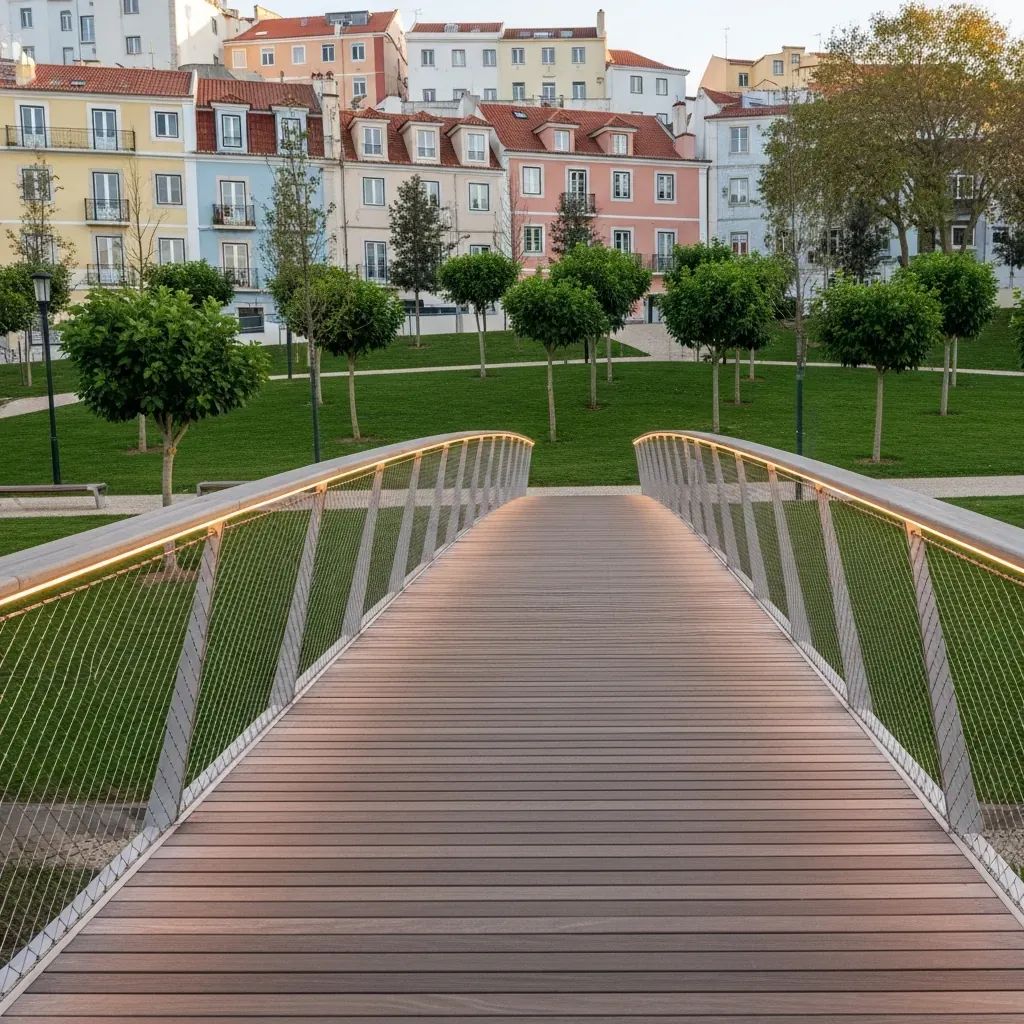
• A brand-new Campo de Ourique Garden footbridge now stitches Campo de Ourique to Amoreiras, shrinking a 20-minute detour into a three-minute stroll.
• Pop-up markets, art festivals and family workshops pulled record crowds in 2025, and the calendar for 2026 is filling fast.
• City Hall has earmarked €250 M for green spaces by 2026, with Amoreiras set to gain extra lawns, lighting and learning hubs.
• Ten distinct tree species—among them ancient morus, mighty ginkgo and a lone sycamore maple—anchor a growing inventory of urban wildlife.
A Garden With Silk in Its Roots
When the Marquês de Pombal planted rows of mulberry trees (amoreiras) in 1759, he was betting on a domestic silk industry. Two and a half centuries later, the park that bears their name is still a pocket of tranquillity framed by baroque aqueduct arches and pastel town houses. A 2019 makeover replanted flowerbeds and repaired pathways, but resisted the temptation to sterilise the space: the gravel crunches underfoot, grandmothers still gossip on iron benches, and children chase pigeons across the central lawn.
Fresh Green Connection: Campo de Ourique’s New Walkway
In March 2025 the city cut the ribbon on the Campo de Ourique Garden, a contemporary deck built directly over EPAL’s water reservoir. The wooden boardwalk, lined with LED-lit railings and native shrubs, now offers a seamless link between Campo de Ourique and Amoreiras, eliminating the once-dreaded climb along Artilharia Um. The first construction phase delivered a playground, a kiosk and a fenced dog park; phase two—cafeteria, open-air auditorium and the Águas Livres Academy—was delayed by contractor issues but remains on the municipal agenda for late 2026.
Culture Under the Mulberries
The old garden no longer dozes through summer. Highlights from the past 18 months include:• The Spot Market – Open Air: sixty indie labels turned the lawns into a fashion and design bazaar, maxing out exhibitor slots within days.• “Vieira da Silva em Festa”: birthday tributes to the modernist painter spilled from the neighbouring foundation into workshops, readings and surprise performances.• Recurring Jardim das Artes weekends, where ceramicists and digital artists share pop-up studios under canvas canopies.Organisers report consistently full workshops and “sold-out” stall space—evidence that Lisbon’s appetite for open-air culture survived the pandemic and then some.
What Grows Here: Trees, Birds and Bugs
A municipal tree census logged ten arboreal species inside the garden limits. Beyond the headline mulberries, walkers will spot fan-leaf ginkgo, glossy pittosporum and a stately Acer pseudoplatanus shading the north gate. Bird-watchers tick off blackbirds, greenfinches and the increasingly vocal ring-necked parakeet, while nightfall brings bats that patrol for midges. Insects dominate the food web—ladybirds, mason bees, dragonflies—and underpin the city’s broader biodiversity plan aimed at boosting pollinators by 30% by 2027.
City Hall’s 2026 Green Agenda
Lisbon’s draft budget pumps 64 % more cash into parks than four years ago. For Amoreiras that means:• Scrapping the stalled Artilharia Um detailed plan in favour of blended housing and a new micro-park.• Upgrading lighting and CCTV around the Reservatório da Mãe d’Água, soon to host night-time art projections.• Fast-tracking repairs on the western stretch of the Águas Livres Aqueduct—scaffolding should vanish by spring.Across town, the municipality is carving out 14 ha of greenland in Marvila-Beato and sinking €3.1 M into the baroque Tapada das Necessidades, but officials insist Amoreiras will remain a flagship for small-scale, high-impact interventions.
Why It Matters to Residents
For people living in Lisbon—especially those squeezed between busy Avenida Eng. Duarte Pacheco and the shopping centre’s traffic vortex—these tweaks are not cosmetic. Cooler micro-climates, safer crossings, new cultural programming and plain old breathing room all stack up against rising summer heat and urban densification. If you have opinions on the next round of pergolas, benches or native plantings, City Hall’s participatory budgeting portal is open until 15 February.
Step off the asphalt, listen for the rustle of ancient mulberries and imagine what another 250 years of careful stewardship could look like. The blueprint is right there in Amoreiras—written in shade, birdsong and the laughter of kids discovering the simplest luxury Lisbon still offers: space to linger.


