
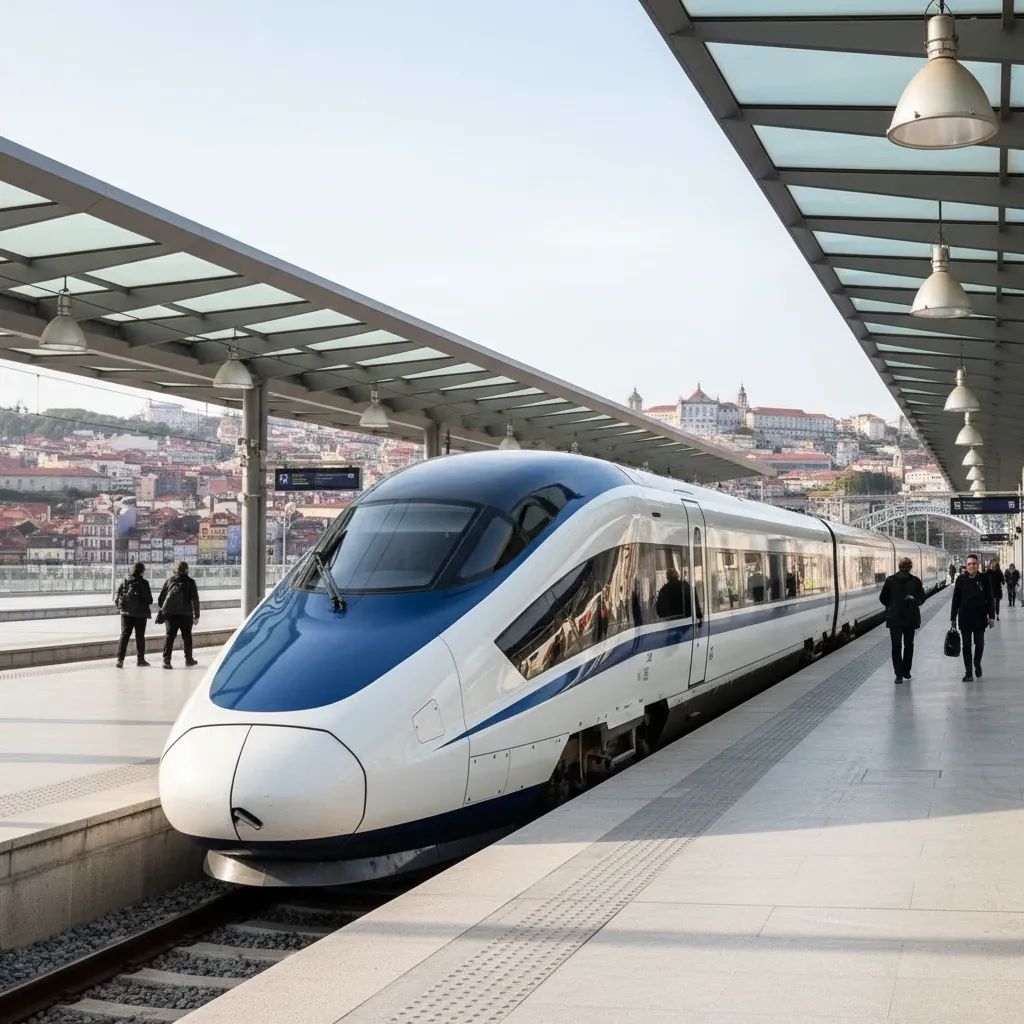
Planning a trip between Portugal's two biggest cities? The 300 km journey from Lisbon to Porto is one of the country's most popular routes, and for good reason — it's fast, scenic, and surprisingly affordable. Whether you're chasing the best views, the lowest price, or total flexibility, there's an option that fits every budget and schedule.
This evergreen guide answers the most-searched questions (including "Lisbon to Porto train") with clear, quotable answers you can use right away. All information is based on current 2026 services from Comboios de Portugal (CP), Rede Expressos, FlixBus, and official highway data.
What is the best way to travel from Lisbon to Porto?
For most travelers, the train is the clear winner — comfortable, eco-friendly, and city-center to city-center in under three hours. It beats the bus on speed and comfort, and the car on hassle (no tolls to pay or parking to find). Buses win on price, and driving wins if you want to stop in Coimbra or Aveiro along the way.
How to travel from Lisbon to Porto by train (most popular option)
The Lisbon to Porto train is the smartest choice for the majority of travelers — fast, reliable, and with stunning views of the Portuguese countryside.
How long does the train from Lisbon to Porto take?
The fastest Alfa Pendular high-speed trains take 2 hours 40 minutes. Standard Intercidades services take around 3 hours. Trains run roughly every hour from early morning until late evening (first departure around 06:30–07:00, last around 22:00).
How much does the Lisbon to Porto train cost?
One-way tickets in 2nd class start from around €25–€35 when booked in advance (Alfa Pendular ~€35.70, Intercidades ~€28.05 as of 2026 pricing). Last-minute fares can rise to €45–€50. First-class (Conforto) adds extra comfort and costs €10–15 more.
Which stations do Lisbon to Porto trains use?
- Lisbon departure: mainly Lisboa Oriente (easiest access, on the metro) or Santa Apolónia.
- Porto arrival: Porto Campanhã (main hub) or sometimes São Bento for city-center convenience.
Pro tip: Book directly on cp.pt or the CP app for the best prices and seat selection. EU residents over 65 or under 30 often qualify for discounts.
Related reading: For the latest on Portugal's rail network upgrades and what the future holds, see our deep dive on the Porto–Lisbon high-speed rail revolution.
Lisbon to Porto by bus: the budget choice
If you're watching every euro, the bus from Lisbon to Porto can cost as little as €5–€10 one way — cheaper than a coffee in some cafés.
- Duration: 3 hours 15 minutes to 4 hours.
- Operators: Rede Expressos (the national leader) and FlixBus (modern fleet with Wi-Fi and power outlets).
- Stations: Lisbon Oriente or Sete Rios → Porto Campanhã.
- Frequency: Dozens of daily departures, including overnight buses.
Buses are reliable and comfortable for the price, but they can get busy on weekends and public holidays. Book early on the operator websites for the lowest fares.
Driving from Lisbon to Porto: maximum flexibility
Driving the A1 motorway gives you total freedom — stop for pastéis de nata in Coimbra or explore Aveiro's canals on your own schedule.
- Distance: 314 km via the A1 motorway.
- Driving time: around 3 hours without stops (realistically 3–3.5 hours with traffic).
- Tolls: approximately €24–€25 one way for a standard car (Class 1 vehicle, 2026 rates). Get a Via Verde device from your rental company to avoid toll queues.
- Fuel cost: €30–€50 depending on your vehicle.
The route is straightforward, well-maintained, and scenic. Renting a car makes sense for groups or if you want to explore central Portugal en route. Always check Google Maps or Waze for real-time traffic.
Note on current services: Occasional rail works or bad weather can affect long-distance trains. Replacement buses are usually provided — always double-check the latest timetable on cp.pt before you travel.
Quick comparison: train vs bus vs car from Lisbon to Porto
- Train (Alfa Pendular / Intercidades): 2h40m–3h · €25–€40 one way · high comfort · best for most travelers.
- Bus (Rede Expressos / FlixBus): 3h15m–4h · €5–€15 one way · medium comfort · best for budget travelers.
- Car (via A1): about 3 hours · €55–€80 in tolls + fuel · maximum flexibility · best for road-trippers and groups.
Pro tips for a smooth Lisbon to Porto journey
- Book trains and buses at least 2–3 weeks ahead for the cheapest seats.
- Arrive at stations 20–30 minutes early — Oriente in particular can be busy.
- Download the CP or FlixBus app for live updates and mobile tickets.
- If you're traveling with luggage, trains and buses both have generous free allowance.
- Keeping an eye on the impact of the new high-speed line? Read our reporting on how the new line affects Porto-area homes.
Whether you choose the speedy train, the wallet-friendly bus, or the open-road adventure by car, traveling from Lisbon to Porto is easy, affordable, and full of beautiful views. Safe travels — and enjoy every moment between these two incredible Portuguese cities. For the absolute latest schedules and any temporary changes, always verify directly on cp.pt, rede-expressos.pt, or your chosen operator's site.


