

The Lisbon Municipal Assembly voted unanimously this Saturday to approve a formal motion of condolence for António Lobo Antunes, the towering Portuguese novelist who died March 5 at age 83, and whose donated personal archive will soon anchor a public library in Benfica bearing his name. The resolution, tabled by Assembly President André Moz Caldas, passed with support from every political faction during an extraordinary session held today, followed by a minute of silence in tribute to an author many regard as the country's most important literary voice since the 1970s.
Why This Matters
• A library housing Lobo Antunes's 20,000-title collection — including annotated volumes and prize diplomas — is scheduled to open in Benfica by late 2026.
• The state funeral March 7 at Jerónimos Monastery placed him symbolically alongside Luís de Camões, cementing his status as Portugal's de facto literary successor.
• President Marcelo Rebelo de Sousa announced the posthumous award of the Grand Collar of the Order of Camões, the nation's supreme literary honour.
• A posthumous book of poems the author wrote over his lifetime will appear in April, fulfilling his regret at never having been a poet.
Legacy of a Library and a City
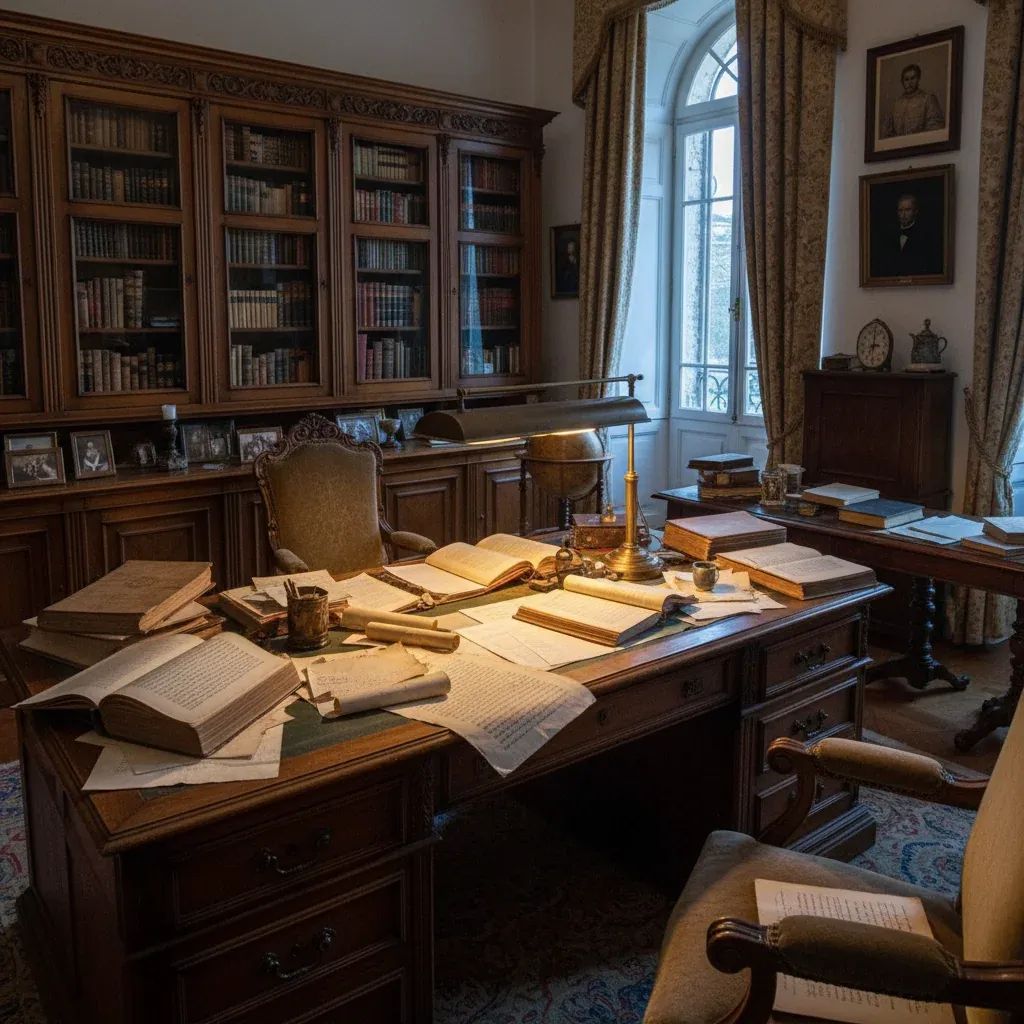
The motion adopted by the Lisbon Municipal Assembly underscored Lobo Antunes's "vast literary output" and emphasized that his donated archive—approximately 20,000 volumes from his personal shelves, many carrying his marginalia or dedications from fellow writers—will form the nucleus of the Biblioteca António Lobo Antunes. Located in the converted Fábrica Simões industrial building under the FÁBRICA 1921 rehabilitation project, the facility is Lisbon's 19th municipal library and covers 1,850 m² across two floors. Mayor Carlos Moedas has publicly committed to opening the space by the end of 2026, with estimates pointing to late first or early second semester.
The library's ground floor will offer informal seating, family areas, and a multipurpose hall; the upper floor is designed for concentrated study and research. A dedicated interpretive centre will provide students and scholars with every international edition of Lobo Antunes's novels—currently published in more than twenty languages—alongside manuscripts and first editions. When complete, the archive is expected to hold roughly 40,000 documents, including diplomas from the Camões Prize (2007), the Juan Rulfo Prize (2008), and the Jerusalem Prize (2005).
"The legacy he leaves his city is that of a writer who turned Lisbon into a universal stage where memory refuses to be forgotten," the Assembly's text declared. The sentiment captures a truth widely repeated since the novelist's death: Lobo Antunes anchored his dense, stream-of-consciousness narratives in the streets, hospitals, and twilight cafés of the capital while interrogating Portugal's colonial trauma and post-revolutionary disillusionment in language that resonates far beyond the Tagus.
A State Farewell and Presidential Tribute
President Marcelo Rebelo de Sousa—who described himself as a "reader, admirer, and friend"—delivered a personal homage on the day of Lobo Antunes's death, calling him a "master of portugalidade" rooted in historical consciousness yet striving forward. The government declared Saturday, March 7, a day of national mourning, and the funeral service took place at the Monastery of Jerónimos, the national pantheon where Luís Vaz de Camões rests. Placement beside Camões was a final wish of the writer, whose first novel Memória de Elefante (1979) the President singled out.
At the close of ceremonies, mourners sang the Benfica club anthem—a nod to Lobo Antunes's lifelong passion for the Lisbon football team—blending solemnity with the idiosyncratic humour that marked his public persona. Prime Minister Luís Montenegro hailed him as "a towering figure of Portuguese culture," while Foreign Minister Paulo Rangel emphasized his role as "a tremendous ambassador of the Portuguese language" characterized by "distant lucidity." Culture Secretary Alberto Santos called his death "a great loss for Portugal and for literature," praising his humanity and the way he portrayed the Portuguese condition.
Writers across generations joined the chorus. Dulce Maria Cardoso noted that his work offers "an understanding of the world, of life, of what it means to be Portuguese," lauding "the beauty in his words." Alice Vieira remembered "one of the greatest writers, not only in Portugal but also in other countries where he was translated." Gonçalo M. Tavares described him as "an absolutely important, absolutely central writer" who placed language at the heart of every book from first to last. Actress Maria Rueff quoted the author directly: "We think intelligence is the greatest virtue, but kindness is the greatest."
The Making of a Modern Master
António Lobo Antunes was born in Lisbon on September 1, 1942. He graduated from the University of Lisbon Faculty of Medicine in 1969, specialized in psychiatry, and later worked at Hospital Miguel Bombarda. Between 1971 and 1973, he served as an army doctor in Angola during Portugal's colonial wars—an experience that seared itself into his imagination and became the gravitational core of novels such as Os Cus de Judas (1979) and O Esplendor de Portugal (1997). By his own account, the war remained "an open wound" and a "constant delirium" that shaped both individual and collective Portuguese destiny.
In 1985, he chose full-time writing as a remedy for what he called universal depression. Over four decades he published 32 novels and multiple volumes of newspaper chronicles, many serialized weekly for years. His prose is baroque, fragmented, and polyphonic, built from competing interior monologues, circular time structures, and layers of metaphor that peel away the "raw and cruel reality" of existence. The style can demand patience—critics and fans alike describe it as dense—but the reward is access to the "innermost recesses of the soul" and the "root of human nature."
Internationally, Lobo Antunes broke through boundaries rarely crossed by Portuguese fiction. In 2018, the venerable Bibliothèque de la Pléiade in Paris announced it would publish his work, making him only the second Portuguese author—after Fernando Pessoa—to enter that canon, and one of the few living writers ever admitted. France named him Commandeur de l'Ordre des Arts et des Lettres in 2008. Elsewhere he collected prizes from Mexico (Juan Rulfo), Chile (José Donoso), Austria (European Literature Prize), Romania (Ovid Prize), and Italy (Nonino, Bottari Lattes Grinzane), among others. The Portuguese Republic decorated him with the Grand Cross of the Order of Santiago da Espada (2004) and the Grand Cross of the Order of Liberty (2019). Despite repeated speculation, he never won the Nobel, earning the unofficial title of "eternal candidate."
Impact on Residents and the Literary Ecosystem
For people living in Benfica and greater Lisbon, the library opening represents both a cultural asset and a practical research facility. Students, doctoral candidates, and independent scholars who have long travelled to other archives to consult Lobo Antunes materials will gain local access to first drafts, annotated editions, and the interpretive centre's comprehensive international holdings. Publishers and teachers will benefit from a single, authoritative repository that illuminates how a mid-century psychiatrist transformed the Portuguese novel from collective engagement into individual psychological archaeology.
Beyond the bricks-and-mortar benefit, the municipal gesture underscores Lisbon's commitment to preserving intellectual legacy in situ. Lobo Antunes's donation mirrors practices common among major European and American authors—endowing their city of origin with personal libraries to foster scholarship—and sets a precedent for future Portuguese literary estates.
The Lisbon Municipal Assembly also approved, by unanimous vote, a separate motion of condolence for Nuno Morais Sarmento, the lawyer and former Minister of the Presidency in José Manuel Durão Barroso's government, who died March 7 at 65. Proposed by the Social Democratic bloc, the text praised Morais Sarmento's "political intelligence, democratic culture, and measured approach to great national issues," as well as his passion for Lisbon and maritime heritage. A minute of silence marked that tribute as well.
What Comes Next
D. Quixote, Lobo Antunes's longtime publisher, confirmed that "Poemas"—a volume of verse the novelist composed throughout his life—will launch in April. The book fulfils a personal lament: "I always regretted not having been a poet," he once said. Literary commentators expect strong demand; posthumous releases often rekindle debate over an author's range and influence.
For readers unfamiliar with his work, the canonical entry points remain Memória de Elefante and Os Cus de Judas, both published in 1979 and both wrestling with the Angola experience. Mid-career novels such as Fado Alexandrino (1983), As Naus (1988), and Manual dos Inquisidores showcase the full flowering of his polyphonic technique. Later works—Sôbolos Rios Que Vão, O Arquipélago da Insónia—push fragmentation to near-musical extremes, demanding that readers assemble meaning from overlapping voices and recursive memory.
Critics and younger novelists, including Valério Romão and Ana Margarida de Carvalho, credit Lobo Antunes with shifting Portuguese fiction away from the overtly political towards the intimately psychological, without abandoning historical reckoning. His influence reverberates through a generation that began publishing after 2000, solidifying the vitality of contemporary Portuguese letters on the global stage.
The Benfica library will serve as the most tangible monument to that legacy. When its doors open later this year, residents and visitors alike will walk among the same annotated volumes Lobo Antunes consulted while crafting sentences that the Camões Prize jury once called "a singular expression of intensity and truth" in the Portuguese language.


