
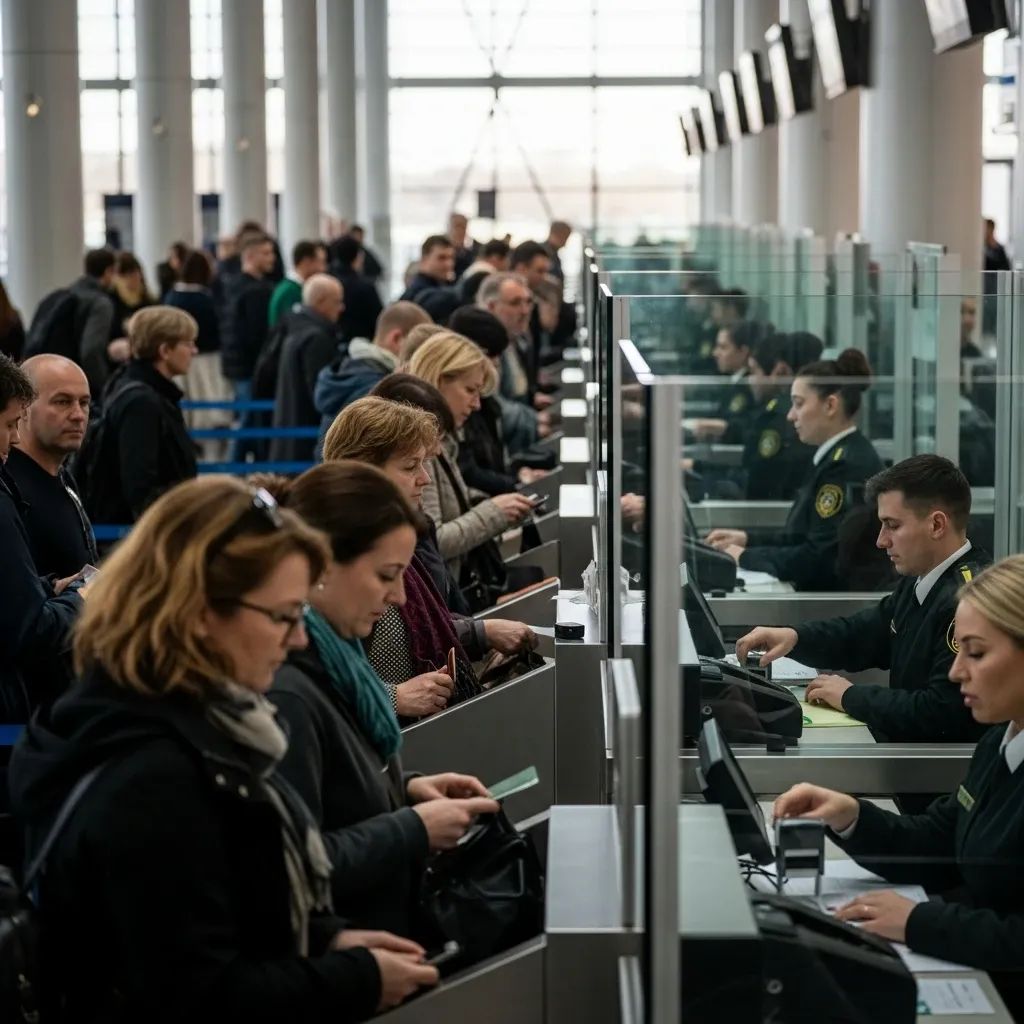
A three-month pause on Portugal’s brand-new biometric border system is easing the epic queues at Lisbon airport, yet officials insist the country’s security architecture remains intact and that manual passport stamping is only a stop-gap while technology catches up with reality.
Quick glance at what matters
• Long delays for non-EU travellers triggered a temporary shutdown of the Entry & Exit System (EES)
• Government pumped in extra police, new booths and a 30 % capacity bump to keep lines moving
• Interpol and Europol checks never went offline, according to the Ministry of Internal Administration
• Brussels has asked for clarification; Lisbon says the suspension is legal, short-lived and transparent
How Lisbon reached breaking point
When the EES’ second phase went live in December, every third-country passenger had to provide four fingerprints plus a facial scan. At Humberto Delgado Airport, where traffic from Brazil, the U.S. and Africa has ballooned five-fold in five years, that extra minute per traveller snowballed into seven-hour waits. Defective kiosks, fingers too sweaty for sensors and a shortage of trained agents turned the arrivals hall into what one airline manager described as a “human accordion.”
The decision to hit pause
The Interior Ministry invoked an EU regulation that permits temporary suspension of automated checks when infrastructure cannot cope. Deputy Secretary of State Paulo Simões Ribeiro told MPs that the move is “exceptional, proportionate and time-bounded.” Crucially, border guards reverted to traditional stamp-and-scan procedures, boosted by 24 GNR soldiers and 80 PSP officers already on Christmas duty. Hardware upgrades worth €7.5 M were simultaneously authorised.
Security screens still running in the background
Officials emphasise that pausing biometric capture has not unplugged critical databases. Every document is still cross-referenced with the Schengen Information System, Interpol’s Stolen and Lost Travel Documents file and Europol alerts. “Breaches of national security are not on the table,” Ribeiro underlined, pushing back against opposition suggestions of an “open-door revival.” Private security analysts concur, noting that manual stamping may be slower but remains forgery-resistant when paired with live database queries.
Airlines, tourists and the tourism economy
TAP, Ryanair and United Airlines report hundreds of missed connections in the final week of December, forcing them to rebook passengers and absorb extra hotel nights. Hoteliers feared reputational damage as social media filled with images of lines snaking past duty-free shops. Since the pause, average processing time has dropped to under 25 minutes for intercontinental flights, according to ANA Aeroportos. The tourism lobby applauds the short-term relief but warns that Portugal’s plan to hit 35 M annual visitors by 2030 hinges on a frictionless border experience.
Brussels keeps a watchful eye
The European Commission demanded a written explanation within ten days, stressing that all Schengen members must adopt EES by April. Lisbon’s reply cites the clause allowing suspension for “technical or operational failure” and pledges full compliance by Easter. Insiders in Brussels say the response is “within parameters,” though the Commission will monitor whether Portugal meets its new timeline.
Experts see an unexpected window of opportunity
Security lawyer Wilson Bicalho views the hiatus as “a gift wrapped in frustration,” granting authorities time to re-train staff, recalibrate sensors and fine-tune passenger flow. Aviation consultant Maria João Andrade suggests installing more self-service e-gates for EU nationals, freeing agents to handle biometric first-timers. Both agree that blending technology with robust human oversight is the only path to a scalable solution.
What travellers should expect next
For at least the next two months, arrivals from outside Schengen will queue at conventional booths, receive a physical stamp and proceed. Authorities advise arriving earlier than usual for connections and keeping passport pages clear for stamps. If hardware upgrades remain on schedule, a phased re-activation of EES kiosks could start in late March, with full biometric processing restored by April’s holiday rush.
Bottom line for residents in Portugal
The temporary rollback reflects a pragmatic choice: avoid headline-grabbing chaos now to deliver a modern, secure border later. For the average resident—whether you fly out for business, pick up relatives at arrivals or depend on tourism dollars—the key takeaway is simple: Portugal’s skies stay open, the country stays safe, and the government has two months to prove that digital borders can work without grinding the gateway to a halt.


