
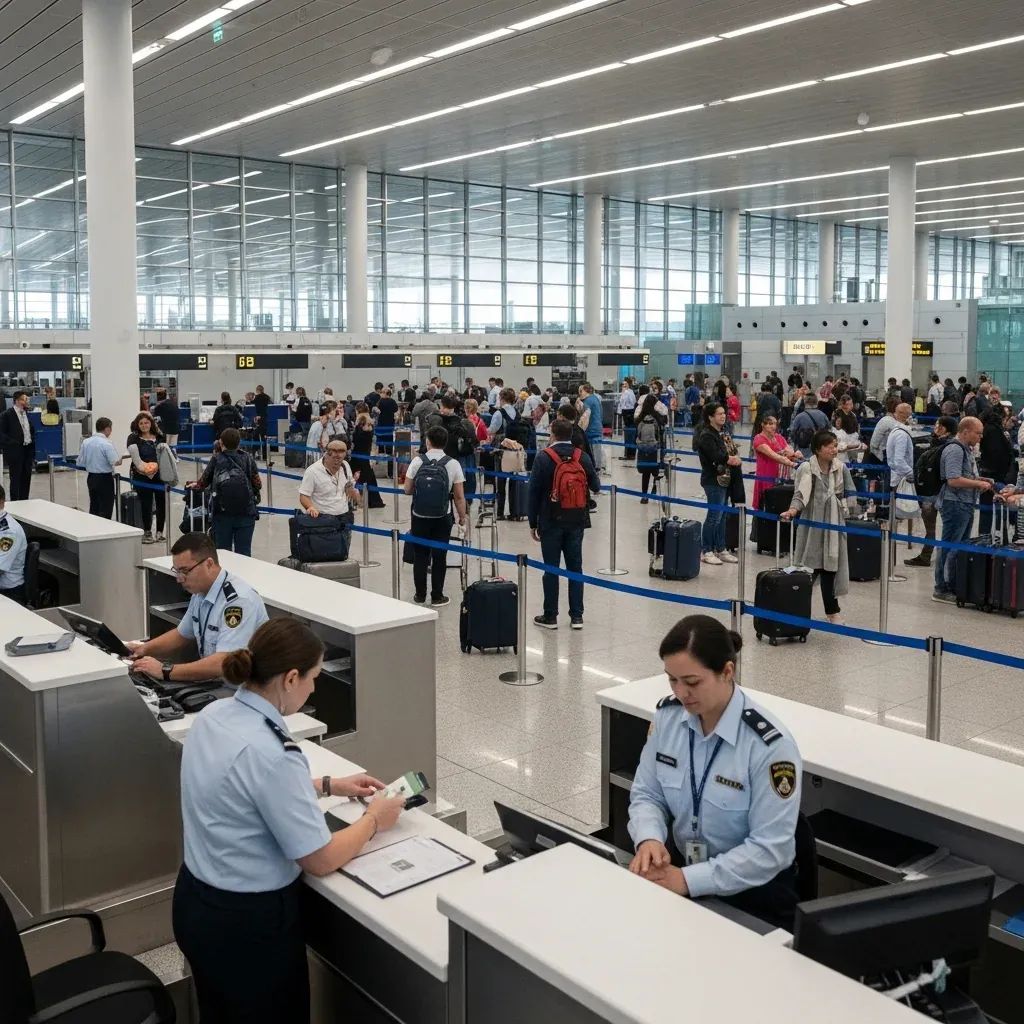
A surge of border chaos at Lisbon’s main airport has pushed officials to take drastic action. Over the next three months, passport queues that recently stretched well past seven hours should shrink after the government froze the EU’s new biometric system and drafted in additional GNR officers. Below is what anyone living in Portugal—or expecting guests from abroad—needs to know about the makeover at Humberto Delgado.
The Bottleneck in Plain Numbers
• 36 M passengers used Lisbon airport last year, a post-pandemic record
• 30 % of them arrived from non-Schengen countries
• Wait times hit 7-9 h for some long-haul flights in late December
• A 3-month suspension of the Entry/Exit System (EES) began this week
• 24 GNR agents reinforce checkpoints alongside the PSP
• A fresh 30 % boost in e-gates and booths is budgeted
Why Travellers Felt Stranded
Lisbon’s arrival hall became a test case for the limits of the brand-new EU Entry/Exit System, designed to swap passport stamps for facial recognition and fingerprint scans. Each enrolment took longer than the traditional in-and-out stamp, and with traffic from Brazil, the United Kingdom and the United States soaring, every extra 30 sec per head snowballed into hours. Airport operator ANA admits the layout of Humberto Delgado, hemmed in by the city’s northern suburbs, offers little spare room for emergency lines or extra desks.
Government’s Emergency Toolkit
The Ministry of Home Affairs triggered a multi-layer reaction:— Suspending the EES for 3 months, reverting to manual stamps— Calling up GNR troops with certified border-control training— Tasking the PSP to remain lead force while sharing lanes with the GNR— Ordering ANA to re-allocate floor space for pop-up booths during peak wavesThe temporary rollback allows Portugal to dodge EU penalties because the regulation foresees opt-out windows “for operational safety.” Brussels nevertheless requested a formal justification report, expected later this month.
Technology Hiccup or Growing Pain?
Across Europe, airports in Amsterdam, Madrid and Milan also stumbled when the EES began phased testing last autumn. Their fix was to open “biometric trial corridors” limited to specific nationalities. Portugal instead chose a time-out, arguing that Humberto Delgado’s single terminal cannot segregate flows without a costly rebuild. Aena in Spain reports that once kiosks reach a density of 1 per 500 arriving passengers, the system evens out. Lisbon currently sits at 1 per 1 200—hence the rush to acquire more gates.
The €7.5 M Cheque
Cabinet approval of a €7.5 M line item for 2026-28 covers: e-gates, biometric servers, software licences, maintenance contracts, training modules, network upgrades, and backup power units. Officials say this is separate from the broader airport expansion plan still scarred by two decades of political stop-and-go. The cash comes from the national security reserve, not EU funds, signalling Lisbon’s desire to keep direct control over delivery deadlines.
How Other Hubs Stay Moving
European peers lean on three pillars:
Next-generation scanners that let liquids remain in hand luggage
AI scheduling tools that predict passenger surges hours ahead
Remote-tower tech to squeeze extra runway slots safelyLisbon already partnered with NAV Portugal and SESAR projects for air-traffic digitalisation, but the landside immigration fix lagged. The current crisis may accelerate long-planned upgrades, mirroring the Indra-ENAIRE rollout in Spain.
What Passengers Should Expect Now
For the rest of winter, arriving visitors will face the older ritual: passport handed over, officer stamps, traveller proceeds. The government targets a sub-90-minute ceiling for worst-case queues, with most flows clearing in 40-50 min outside weekend mornings. Locals meeting family at the airport should still plan generous buffer time—taxis and metro trains often choke after the first wave of incoming flights. If the EES relaunches in spring as planned, authorities promise a “stress test” during off-peak hours before flipping the switch for good.


