

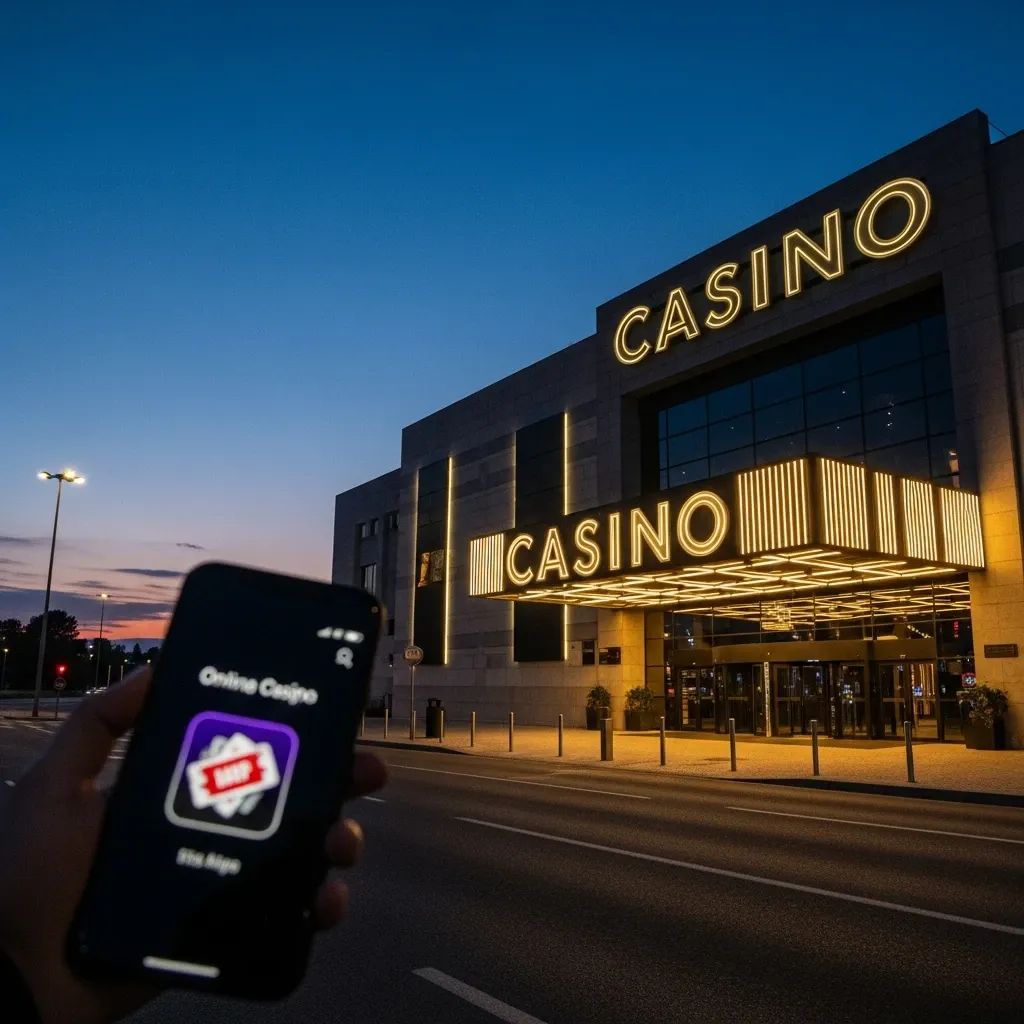
Portugal’s casino industry is quietly rewriting its own rules. From Chaves to Vilamoura, long-standing gaming halls are entering a cycle of licensing shake-ups, digital competition and tighter advertising laws—all while visitor numbers remain buoyant and online revenues surge. Whether you stroll into Lisbon’s futuristic complex or log on to a smartphone app, the business behind the bright lights is changing faster than many regulars realise.
Fast facts at a glance
• concession deadlines have slipped into 2026, buying operators time but creating room for foreign bids.
• revenue swings show traditional halls treading water while the online boom delivers double-digit growth.
• A draft plan for new taxation of players’ winnings could alter the pay-out equation as early as next year.
• responsible gaming campaigns and stricter distance rules for advertising are reshaping the public image of the sector.
Shifting sands of ownership and licences
For decades, Portugal’s casino map looked set in stone. Not anymore. The Estoril Sol and Solverde empires both face renewal battles after the government granted only a short “strictly necessary” extension to concessions in the Algarve, Espinho and Póvoa de Varzim. In Póvoa, French heavyweight Barrière is the lone bidder, raising the possibility of a fresh foreign flag flying over the neoclassical landmark. Meanwhile, the Tróia Resort changed hands in 2025 when Arrow Global committed €9 M to upgrade its golf course and rebrand two hotels, an investment that inevitably elevates the adjoining casino’s profile. Across the borderlands, Hotel Casino Chaves reports a 6 % rise in hotel guests yet remains absent from any large-scale expansion blueprint—proof that, for now, steady occupancy can outweigh bricks-and-mortar ambition.
Numbers behind the neon
The headline figure is stark: online gambling grossed €1.23 B in 2025, up 12 %, while brick-and-mortar properties booked €199.65 M for the first nine months—a marginal 0.2 % dip. Inside that territorial basket the stories diverge. Casino Lisboa grew 3.6 % to €53.1 M, contrasting sharply with Estoril’s 15 % slide to €33 M. Up north, Figueira da Foz posted a healthy 9.1 % increase, and Solverde’s Chaves outpaced them all with an 8.6 % jump—albeit from a smaller revenue base of €7 M. Age continues to skew online: nearly one-third of registered digital players are under 25, a demographic the state sees as vulnerable and therefore central to forthcoming safeguards.
Lisbon axis: a tale of two flagships
Parque das Nações’ glass-and-LED giant routinely draws the capital’s biggest weekend crowds, helped by 27 M visitors since opening in 2006. But Estoril, once Europe’s largest casino, is learning the hard way that heritage can’t fight market drift alone. Management has leaned into art galleries, garden concerts and fine-dining pop-ups to arrest the revenue falloff, banking on locals who prefer a night out by the sea to online anonymity. Whether that is enough ahead of the next full concession tender remains the suspense story of 2026.
Northern vanguard: reinvention on the Atlantic front
In Póvoa de Varzim, the possible exit of Estoril Sol and Barrière’s arrival could usher in the first radical makeover since the 1930s. The concession requires a slate of capital projects, rumoured to include a 600-seat show lounge and an overhaul of the façade that once symbolised Portuguese high society. Further south, Figueira da Foz locked in a 15-year extension under Amorim Turismo and quietly refreshed its slot machines in 2024; insiders hint at tech-heavy gaming zones to court crossover traffic from e-sports festivals hosted nearby.
Southern pulse: sun, sea and slots
The Algarve trio—Vilamoura, Monte Gordo and Praia da Rocha—await a final ruling on their contested licence. Until then, Vilamoura remains the south’s busiest gaming floor with 500+ slot machines and regular high-roller poker events timed to the golf calendar. Across the Sado estuary, Tróia’s marina-side casino benefits from Arrow Global’s resort overhaul. January’s poker championship filled hotel rooms in the shoulder season, an early test of whether broader tourism upgrades can lift gaming turnover, which slipped 4.3 % last year.
Screens over felt: the irresistible online climb
Seventeen licensed platforms now jostle for attention, led by Betclic, 888, Betano and a cadre of newcomers such as VersusBet and LeBull. January promotions illustrate a fiercely competitive landscape: 888Casino’s €8 no-deposit credit, Nossa Aposta’s 25 free spins and Casino Portugal’s 100 spins with zero rollover. Mobile apps have become the decisive battleground; operators see biometric log-ins, SSL certificates and instant withdrawals as must-have features to keep Portugal’s 4.9 M registered accounts from straying to offshore sites.
Guardrails and game plans
Regulators are tightening the screws. The 2025 resolution 161/2025 rewrote consumer-protection clauses, and fresh SRIJ proposals seek public feedback on tougher identity checks and ad rules. A draft law aims to tax individual winnings, but analysts warn Parliament lacks the data to accurately gauge IRS impacts. Advertising already faces a 250-m exclusion zone around schools and a ban on slogans promising "easy wealth"—rules that influencers flouting the line in livestreams may soon test in court.
Social stakes: when fun becomes risk
Health specialists see warnings in the upbeat revenue graphs. ICAD’s Joana Teixeira says 1.3 % of Portuguese display risky behaviour and 0.6 % already match clinical addiction criteria, figures higher than the 2012 baseline. The non-profit Institute of Player Support adds that four in ten online bettors still gamble on illegal sites, where self-exclusion tools are absent and payouts unregulated. Industry insiders counter that voluntary limits, pop-up reminders and funding for addiction research show the sector is not avoiding responsibility—yet they concede stricter monitoring will define 2026.
Why it matters for residents and workers
For communities hosting casinos, the debate is practical: concessions deliver jobs, tourism beds and local tax revenue, but uncertainty over licence renewals keeps investment on a short leash. Staff recruitment notices from Casino Lisboa, Solverde Hotels and Póvoa signal stable hiring, though future head-counts may depend on how aggressively halls reinvent themselves to compete with smartphones. Players, meanwhile, face a more complex landscape of bonuses, ID checks and possible tax reporting. Staying on the right side of regulation increasingly means asking one question before every spin or deal: is the operator carrying an SRIJ licence number?
The bottom line
Portugal’s gaming sector stands at a crossroads where heritage halls, mobile apps, public-health priorities and fiscal policy collide. The cards for 2026 are being shuffled now; whether luck, legislation or bold investment wins the hand will shape the next chapter of nightlife from the Minho to the Algarve.


