
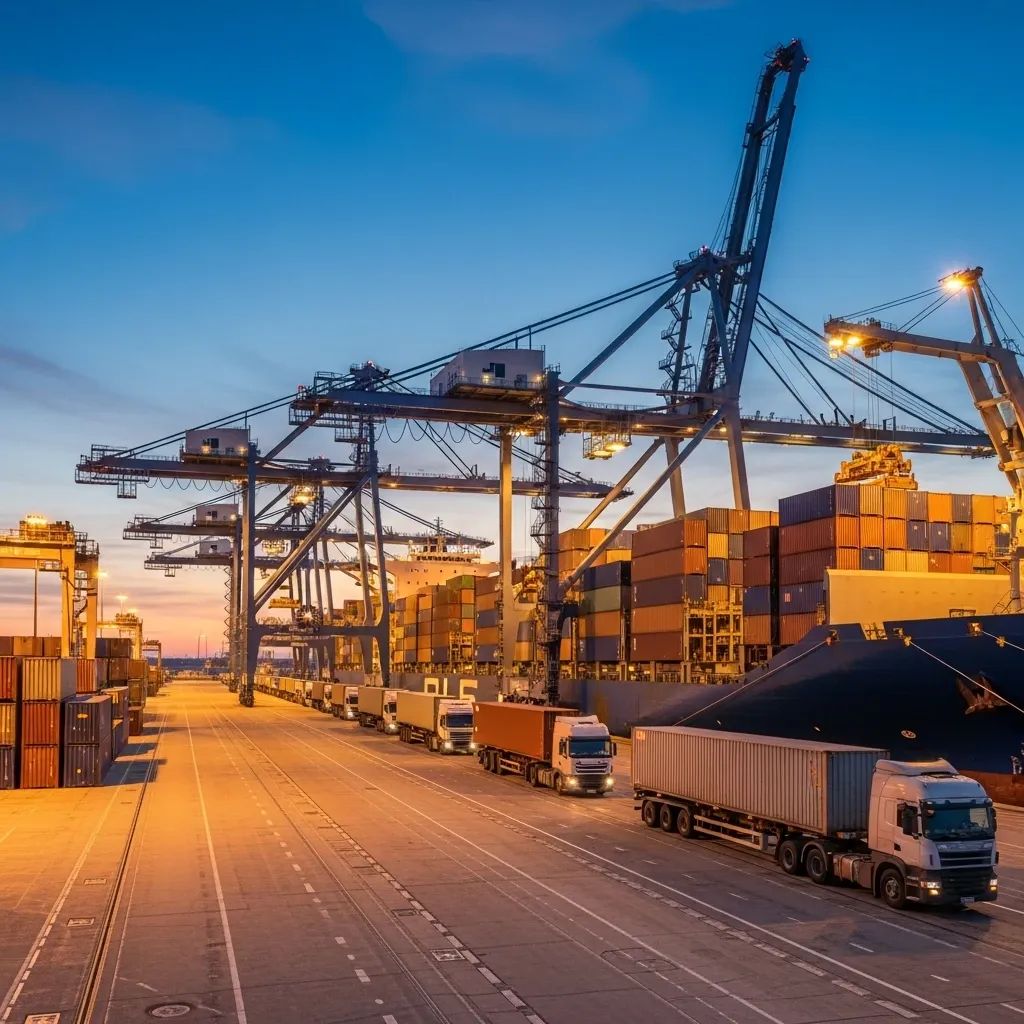
Container traffic at Porto de Leixões is finally moving again. After a week of computer-induced gridlock that left supermarket shelves in Madeira anxious, customs officers armed with clipboards and overtime pay expect to eliminate the last of the bottleneck before tonight, the government told reporters.
At a Glance
• Porto de Leixões overcame a week-long gridlock triggered by new customs software
• SiMTeM rollout created unexpected software glitches that blocked hundreds of containers
• Manual procedures and staff reinforcements are clearing the backlog today
• Madeira & Azores feared shortages as supply lines stalled during the holiday rush
Why it matters for households and firms
December is when northern SMEs push out their final shipments and when mainland supermarkets rush to restock the islands. The sudden paralysis at Leixões, Portugal’s second-busiest port, drove up wholesale prices for refrigerated goods and threatened fresh produce destined for Christmas tables. Shipping agents warn that missing the narrow export windows for textiles and wine could dent end-of-year inventory numbers. Even before the snag, national trade data showed a -5.2% slide in exports for October; an extended shutdown would have weighed on the fragile economic rebound the government is banking on, especially given this year’s elevated holiday demand.
What went wrong: a cautionary digital tale
The culprit was the eagerly awaited SiMTeM customs platform, built to harmonise Portugal with the EU data model. When it went live on 22 December, servers struggled to read older declaration formats, freezing authorisations and forcing the Terminal de Contentores de Leixões to halt new export bookings. By Christmas Eve, more than 800 containers sat idle, including medicines bound for Funchal and auto-parts needed by Braga’s factories. The Tax and Customs Authority later conceded that most errors were linked to faulty data entry, not hardware. That nuance matters: officials insist the platform itself remains the long-term solution, provided users receive better training and the vendor patches lingering interface bugs.
The sprint to normality
Late on 25 December, Lisbon activated a contingency plan. Teams from Porto and Lisbon airports were redeployed north, laptops in hand, to process stuck cargo via offline templates. Simultaneously, the port operator Yilport reopened night gates, while truckers formed a dedicated green lane for priority island freight. According to Infrastructure Minister Marta Guerreiro, throughput jumped from 400 TEU/day on Friday to 1,300 TEU/day on Sunday. Two feeder ships, the CSAV Madeira and the Nordic Azalea, have already left Matosinhos loaded with delayed supplies, easing fears of supermarket shortages on the islands.
Counting the damage
Associations estimate the episode cost exporters about €7 M in storage fees and penalty clauses. The National Forwarders Association speaks of a "logistical chaos" that could shave 0.1 pp off quarterly GDP impact if repeated. Still, the finance ministry argues the impact will be "statistical noise" once January’s catch-up surge appears. Preliminary customs tallies show import clearance times shrinking back to the pre-incident average of 28 hours, down from the peak of 96 hours recorded last Thursday. Insurers confirm no perishable cargo had to be written off thanks to accelerated cold-chain inspections.
Looking beyond the quick fix
Logistics experts say the flare-up underscores chronic capacity constraints at Leixões. Even before the software hiccup, the port was working at 105% utilisation. Construction of the new quebra-mar, promised for 2026, and the 300-m berth upgrade remain on schedule. Meanwhile, the Administration of the Ports of Douro, Leixões and Viana do Castelo is courting EU funds to double rail connectivity and to pilot a zero-emissions power grid that could make Leixões Europe’s first carbon-neutral harbour by 2035. Industry voices, however, warn that without a robust stress-testing protocol for future IT rollouts, Portuguese trade risks another holiday-season scare.
What to watch next
• Post-mortem report on SiMTeM expected mid-January
• Potential claims under the port’s force-majeure clauses
• Progress on the quebra-mar construction schedule
• Funding decision for the rail link in the EU’s CEF pipeline
• The Madeira regional election campaign’s use of the incident
• Release of December trade figures by Statistics Portugal in February
• Deployment of a SiMTeM patch across all national ports
• Roll-out of an expanded customs training programme
For now, container cranes keep swinging and island-bound ferries are back on their normal timetable—a fragile reminder that in modern logistics, a few lines of code can stall an entire coastline, and a few human hands are still needed to set it right.


