
Chega Madeira Files Formal Censure After Parliamentary Leader's Remarks Spark Constitutional Debate
The Portugal Parliament found itself at the center of a deepening territorial rights controversy this week after Hugo Soares, leader of the PSD parliamentary group, questioned whether mainland taxpayers should continue subsidizing flights for Madeira and Azores residents with outstanding tax obligations. The Madeira branch of the Chega party responded by filing a formal vote of censure set for debate on February 25, calling the intervention "politically dangerous" and accusing the government coalition of treating territorial continuity as charity rather than constitutional entitlement.
Why This Matters:
• Six PSD deputies elected by island regions broke party discipline and voted with opposition parties to remove debt-clearance requirements from the Social Mobility Subsidy—exposing internal rifts within the governing coalition.
• Regional governments in both archipelagos warn the government's stance threatens Portugal's constitutional guarantee of equal citizenship regardless of geography.
• Suspension extended to March 31: The controversial tax-verification rule for accessing airfare reimbursements remains frozen while lawmakers hash out competing proposals in committee.
The Constitutional Flashpoint
At the heart of the dispute sits Portugal's Social Mobility Subsidy (SSM), a reimbursement mechanism enacted in 2015 to offset the higher cost of air and sea travel for residents of the Azores and Madeira. The system allows eligible passengers to claim back the difference between actual ticket prices and capped resident fares—currently €119 round-trip from the Azores to the mainland and €79 from Madeira.
In January 2026, the PSD/CDS-PP coalition government introduced a new condition: beneficiaries must have zero outstanding debt to the Tax Authority and Social Security to qualify. The rule triggered immediate backlash from island administrations and was suspended one day before taking effect—first until the end of January, then extended through March 31.
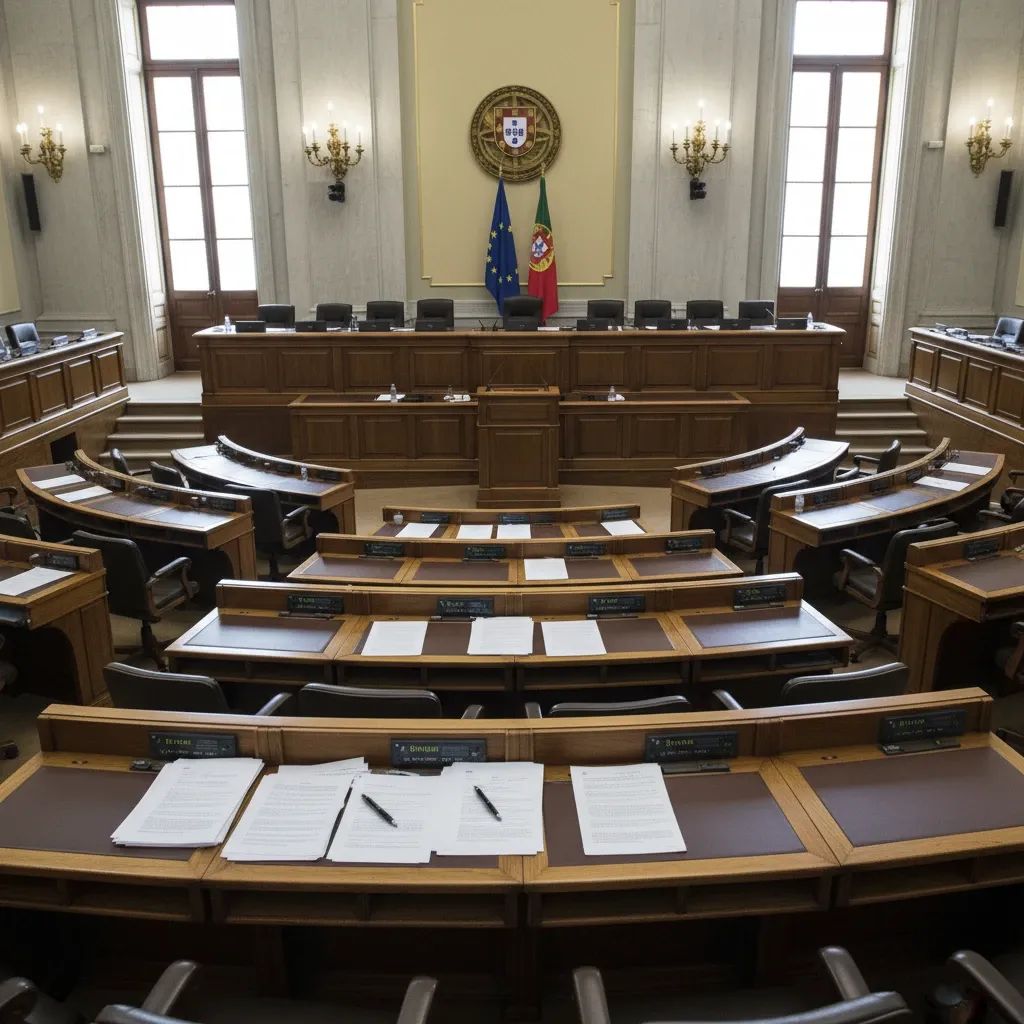
On February 18, Portugal's national legislature voted in preliminary approval on two regional proposals to permanently scrap the debt requirement. The vote passed with near-unanimous support, except for PSD and CDS-PP lawmakers—but with a critical exception: all six Social Democrat deputies elected from Madeira and the Azores defied party leadership and backed the change.
"Colocar Portugueses Contra Portugueses"
During the parliamentary debate, Hugo Soares posed a rhetorical question that ignited the current standoff: "Is it fair that taxes paid by working Portuguese—including those living on the islands—continue to subsidize trips for Madeira and Azores residents who fail to settle their fiscal debts with the State?"
Miguel Castro, leader of Chega's three-member caucus in the Madeira Regional Assembly, issued a scathing rebuttal in a statement released Thursday. "What was said in Lisbon is not merely unfortunate. It is dangerous," Castro argued. "To pit Portuguese against Portuguese, to treat insularity as a cost rather than a condition the State has a duty to compensate—this is unacceptable in a rule-of-law democracy. This, in fact, is xenophobia."
The censure motion highlights that territorial continuity is enshrined in Article 16 and Article 227 of the Portuguese Constitution, which mandate equal treatment of citizens across all regions, including autonomous territories. The document accuses Soares of framing mobility rights through a transactional lens—"who pays for whom"—rather than recognizing them as fundamental guarantees.
What This Means for Island Residents
For approximately 500,000 residents of the Azores and Madeira, the outcome of this legislative battle has tangible implications:
Immediate Relief (If Proposals Pass):
• Passengers will no longer face bureaucratic limbo or denial of reimbursement due to past-due taxes or social security contributions.
• Faster processing via the new ssm.gov.pt digital platform, expected to be fully operational by June 2026.
• One-way trips now qualify for 50% of the maximum eligible reimbursement (up to €300 on Azores routes, for example).
Financial Baseline:
• Azores residents currently pay a maximum of €119 per round-trip to the mainland (down from €134 before January), with ticket cost caps of €600.
• Madeira residents pay €79 (previously €86), with caps at €400 for Madeira island and €500 for Porto Santo.
• Students enjoy reduced caps: €89 (Azores) and €59 (Madeira).
The Risk If Debt Rules Return:If the government's original January policy were reinstated, any resident owing back taxes—common among self-employed workers, small business owners, or those in repayment plans—would lose access to the subsidy entirely, forcing them to absorb the full airfare (often exceeding €200–€300 one-way during peak periods).
Coalition Cracks and Regional Defiance
The parliamentary split exposed rare daylight between national PSD leadership and its island wings. The six defectors—Paulo Moniz, Francisco Pimentel, and Nuna Menezes (Azores), plus Pedro Coelho, Vânia Jesus, and Paulo Neves (Madeira)—exercised freedom-of-vote rights granted by Soares himself, yet their alignment with opposition forces sent an unmistakable signal.
José Prada, secretary-general of PSD Madeira, called the vote "a clear defeat for centralism," adding that the party's regional branch "will always place defense of Madeira's interests above partisan discipline."
Meanwhile, Miguel Albuquerque, president of the Madeira Regional Government (also PSD), warned that the three Madeiran PSD deputies could form an independent parliamentary bloc if tensions persist, a move that would further weaken the coalition's already fragile majority in the national assembly.
Azores Regional Government officials, governing under a PSD/CDS-PP/PPM coalition, expressed satisfaction that their proposal received the broadest support among competing bills. In a statement to Lusa, a government spokesperson noted the region's initiative was "the fastest in seeking resolution" and lamented that an urgent fast-track procedure had been denied on January 23.
What Happens Next
All three approved proposals—from Azores Parliament, Madeira Parliament, and Chega—now proceed to the 14th Commission on Infrastructure, Mobility, and Housing for detailed scrutiny. They join earlier petitions from the Socialist Party (PS) and Chega challenging the government's January decree.
Key differences among proposals:
Azores version: Straightforward elimination of the debt requirement; subsidy paid "regardless of contributory status."
Madeira version: Goes further—revokes the debt rule, allows passengers to pay only the resident cap upfront at ticket purchase (instead of claiming reimbursement later), and renames the scheme "Tarifa Residente Insular" (Insular Resident Fare) after a transition period.
Chega bill: Proposes renaming the subsidy "Right to Compensation for Territorial Continuity," removing the €600/€400 reimbursement ceilings, and tying payment directly to "purchase and effective use" of the ticket—a formula that could allow variable subsidies based on actual market prices.
Timeline: Final committee votes expected by mid-March, with plenary approval potentially before the current suspension expires on March 31. If no agreement is reached, the government's debt-check rule could theoretically reactivate—though political pressure makes that scenario unlikely.
The "Centralism" Accusation
The controversy has reignited decades-old grievances about Lisbon's treatment of Portugal's Atlantic archipelagos. Speaking at a conference in Ponta Delgada on February 20, José Manuel Bolieiro, president of the Azores Regional Government, accused unnamed "centralists" of suffering from an "existential crisis because they lost the empire."
"The State has never considered the tribute it owes to those who give it strategic and geopolitical value," Bolieiro said, referencing the Azores' role in NATO operations and U.S. military cooperation. "They continue to believe the main message is 'we're giving a lot in solidarity, and you must manage the little we provide.' That is not fair—it's a centralist, colonialist mindset from the last century."
Bolieiro's remarks echoed a broader sentiment among island politicians that the mainland views the SSM as fiscal generosity rather than recognition of geographic disadvantage. Alberto João Jardim, who governed Madeira from 1978 to 2015, used even blunter language at the same event, urging Prime Minister Luís Montenegro to "put on the street" whoever designed what he called the "mess" of the current subsidy system.
Historical Context: Why the Subsidy Exists
The Social Mobility Subsidy was created to address a structural inequality: residents of Madeira and the Azores have no alternative to air or sea travel for accessing healthcare, education, employment, or family connections on the mainland. Unlike continental residents who enjoy competitive bus and rail options, islanders face monopolistic pricing on most routes.
Before the subsidy, round-trip tickets routinely exceeded €300–€400, pricing out students and low-income families. The 2015 law established the principle that insularity must not penalize citizenship—a legal doctrine now invoked by critics of the debt-clearance rule.
Current passenger volumes: Approximately 2.3 million subsidized trips per year across both regions, representing roughly 40% of all inter-island and island-mainland passenger movements.
Political Calculations and the "PS-Chega Alliance"
Hugo Soares accused opposition parties of forming an "unholy alliance" to govern via parliament, bypassing the elected executive. "The PS and Chega are marrying again," he said, referencing prior occasions when the two ideologically distant forces voted in tandem to embarrass the government.
Both parties rejected the framing. Pedro Pinto, Chega's parliamentary leader, called the subsidy model "unjust, indecent, and disqualifying," while PS lawmakers framed their stance as defending constitutional principles rather than opportunistic politics.
Chega's broader gambit: The party, which holds three seats in Madeira's 47-member regional assembly, sees the issue as a wedge to peel away traditionally PSD-aligned voters in the islands. Its proposal to rebrand the subsidy as a "right" rather than a "social benefit" aligns with populist messaging about state obligations versus charity.
Practical Advice for Residents
Until March 31, 2026:
• No debt check is enforced. Submit reimbursement requests through the ssm.gov.pt portal or at CTT post offices as usual.
• Proof of purchase required: Keep boarding passes and payment receipts.
• Processing times: The digital platform promises reimbursement within 10 business days for participating airlines; legacy paper claims may take 4–6 weeks.
If you have outstanding tax or Social Security debts:
• Monitor legislative developments. Subscribe to alerts from the Madeira or Azores regional government websites for updates as the proposals move through committee.
• Payment plans count: If you're actively repaying debt under an official installment agreement, confirm with your regional government whether that qualifies as "regularized" status under any residual rules.
Long-term strategy:Regardless of the final legislation, the digital overhaul aims to make the subsidy automatic for advance bookings with partner carriers. Residents should register on the new platform early to avoid bottlenecks when the system fully launches this summer.
Impact on Expats and Investors
For non-Portuguese residents in Madeira or the Azores under digital nomad visas, golden visas, or other schemes, the SSM debate highlights an important nuance: most reimbursement programs remain restricted to legal residents with fiscal domicile in the autonomous regions. If you hold temporary residence tied to tax incentives, verify eligibility with the Regional Directorate for Mobility before assuming access.
Second-home owners from the mainland or abroad do not qualify unless they establish primary legal residence and meet minimum stay requirements (typically 183 days per year).
The Bigger Picture: Autonomy Under Pressure
Beyond the immediate subsidy fight, the episode reflects enduring tension between Portugal's unitary state structure and the special constitutional status granted to Madeira and the Azores. Both regions enjoy legislative autonomy in areas like taxation, land use, and transport—but rely on Lisbon for defense, foreign policy, and significant fiscal transfers.
The debt-check controversy underscores a recurring pattern: mainland policymakers impose conditions that treat island residents as supplicants for services the Constitution frames as rights. Regional leaders argue that no parallel requirements exist for, say, metro subsidies in Porto or Lisbon, nor for the free motorway tolls abolished in 2023 on the mainland while island residents still pay full airfare before reimbursement.
Bolieiro's warning about "progressive autonomy" suggests island governments may push for broader fiscal and regulatory independence if they perceive Lisbon as encroaching on hard-won self-governance. With regional elections in the Azores due by October 2028, political posturing around territorial dignity is likely to intensify.
What Observers Are Watching
Coalition stability: If the Madeiran PSD bloc formalizes independence, the Montenegro government loses three votes in a parliament where it already depends on abstentions from smaller parties. That could embolden opposition forces on other contentious issues (healthcare, pensions, labor law).
Legal challenges: Some jurists argue the original January decree violated Article 59 of the Constitution, which guarantees equal access to social security. If the debt rule resurfaces, expect a Constitutional Court challenge from regional governments.
Economic spillover: Airlines and tourism operators in the islands worry that uncertainty around the subsidy depresses advance bookings. TAP Air Portugal and regional carriers like SATA have urged swift resolution to stabilize demand forecasts for summer 2026.
The debate resumes in committee next week, with final votes expected before the March 31 deadline. For now, residents of Portugal's Atlantic outposts can claim reimbursements without bureaucratic hurdles—but the political battle over whether that remains a permanent right or conditional privilege is far from settled.


