

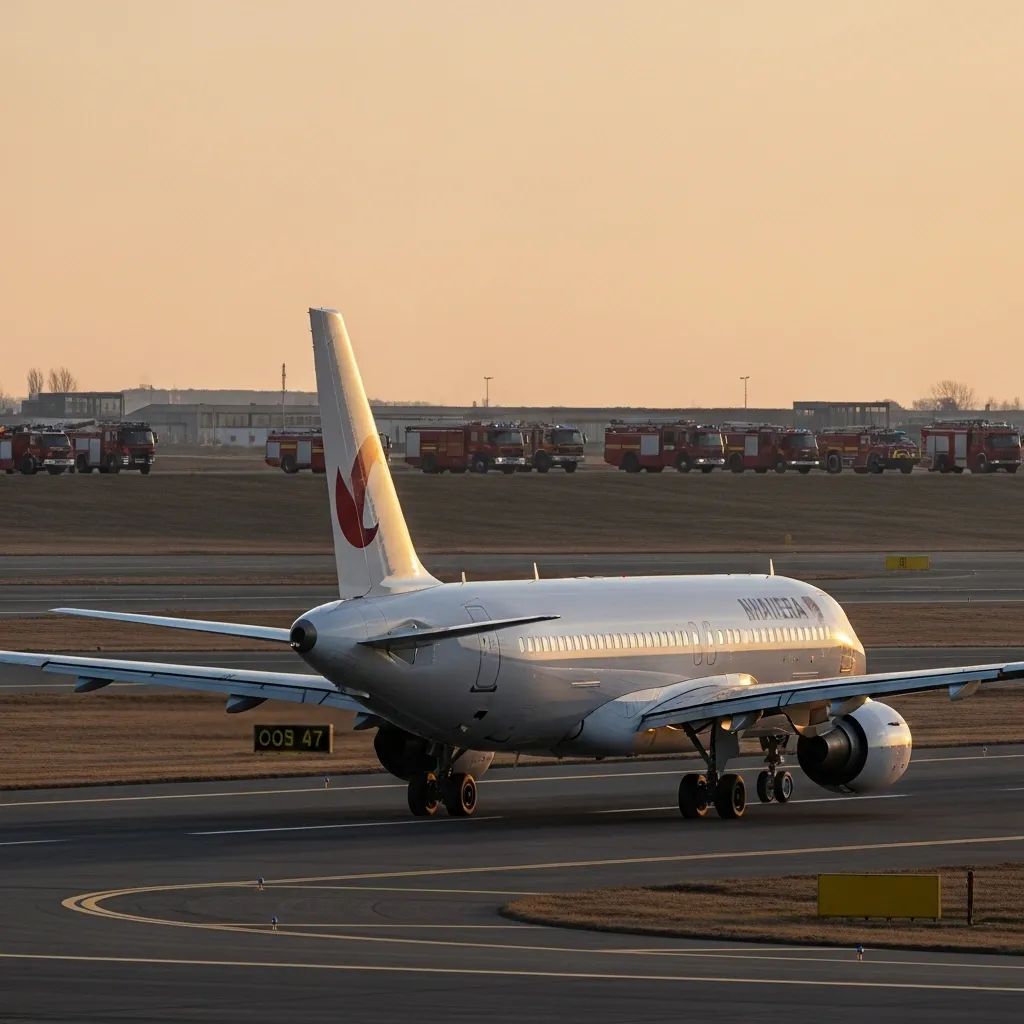
Hamburg’s early-morning calm was broken this week when a TAP Air Portugal Embraer 190 carrying 109 travellers executed a textbook emergency return minutes after departing for Lisbon. Everyone walked away unscathed, but the incident has reignited the perennial Portuguese debate over airline reliability, passenger rights and where the national carrier really stands on the global safety ladder.
Quick takeaways for Portuguese flyers
• Hydraulic malfunction forced flight TP561 back to Hamburg on 26 January.
• Pilots circled the river Elbe for roughly 2 hours to burn fuel before landing.
• No injuries reported; passengers were later rerouted to Lisbon.
• TAP’s safety record remains among Europe’s best, yet delays and cancellations still dog the airline.
• Travellers can invoke EU Regulation 261/2004 and ANAC rules for compensation or rerouting after technical disruptions.
What unfolded above northern Germany
Passengers had barely fastened seat belts when the cockpit crew declared a “total emergency” triggered by a suspected hydraulic system failure. Rather than attempt an immediate descent with heavy fuel, the crew vectored over the vast Elbe estuary, draining hundreds of kilos before requesting priority clearance. Fire engines lined Hamburg’s runway 23, but the touchdown proved uneventful—so smooth, one passenger later quipped, “it felt like a normal arrival, just in the wrong city.” Ground staff ushered the 109 passengers into the terminal, where hastily arranged vouchers and overnight accommodation awaited while TAP organised alternative flights south.
How unusual is a return-to-base call?
Statistically speaking, a modern commercial jet suffers a major technical diversion roughly once in every 10,000 flights. According to EASA’s latest briefing, hydraulic anomalies represent just 4 % of those cases. TAP’s own data mirror the trend: the airline recorded fewer than a dozen emergency returns between 2021-2025, none resulting in fatalities. Aviation analyst Rita Morgado notes that “TAP appears constantly in the global top-ten safety rankings, yet Portuguese headlines amplify each scare because our flag carrier is emotionally loaded territory.”
The carrier’s response and fleet checks
TAP confirmed the aircraft “landed in absolute safety” and underwent an overnight inspection by Hamburg Technik engineers. Early indications point to a faulty hydraulic pump, but definitive findings await a joint inquiry by the German BFU and Portugal’s GPIAAF. Within hours, the company dispatched a spare Embraer from Lisbon to collect stranded passengers. Fleet-wide inspections of similar components were ordered, though TAP insists “no systemic issue” has been detected. The episode comes as the airline prepares a €1.7 B privatisation process that will place its maintenance record under intense investor scrutiny.
Your rights when a jet turns back
Under EU Regulation 261/2004, technical problems entitle passengers to meals, hotel nights and rebooking. Cash compensation—between €250 and €600—depends on whether the defect was “extraordinary.” Regulators increasingly argue that routine mechanical failures are within airline control, so claims often succeed. Portugal’s civil-aviation watchdog ANAC advises travellers to:
Collect evidence: photos of departure boards, boarding passes, any written statements.
Submit a claim to the airline within 6 weeks.
If ignored, escalate online via anac.pt; mediation is free and decisions are binding in Portugal.
Expert view: why Portuguese flyers can still breathe easy
Despite January’s drama, industry insiders stress the remarkable safety gains of the past decade. IATA figures show a global accident rate of 1.13 per million flights in 2024—a level considered “vanishingly low” by veteran captain Henrique Valverde. TAP, he adds, “benefits from rigorous simulator programmes in Lisbon and a proactive data-driven safety culture demonstrated at ISASI 2024.” Even critics who ranked the carrier seventh-worst in Europe for punctuality concede its accident-free streak remains intact.
For now, Hamburg’s hydraulic scare ends as another case of aviation professionalism working exactly as designed: problems detected early, a calm crew, and 109 relieved passengers able to recount an unscheduled tour of the Elbe rather than a calamity.


