

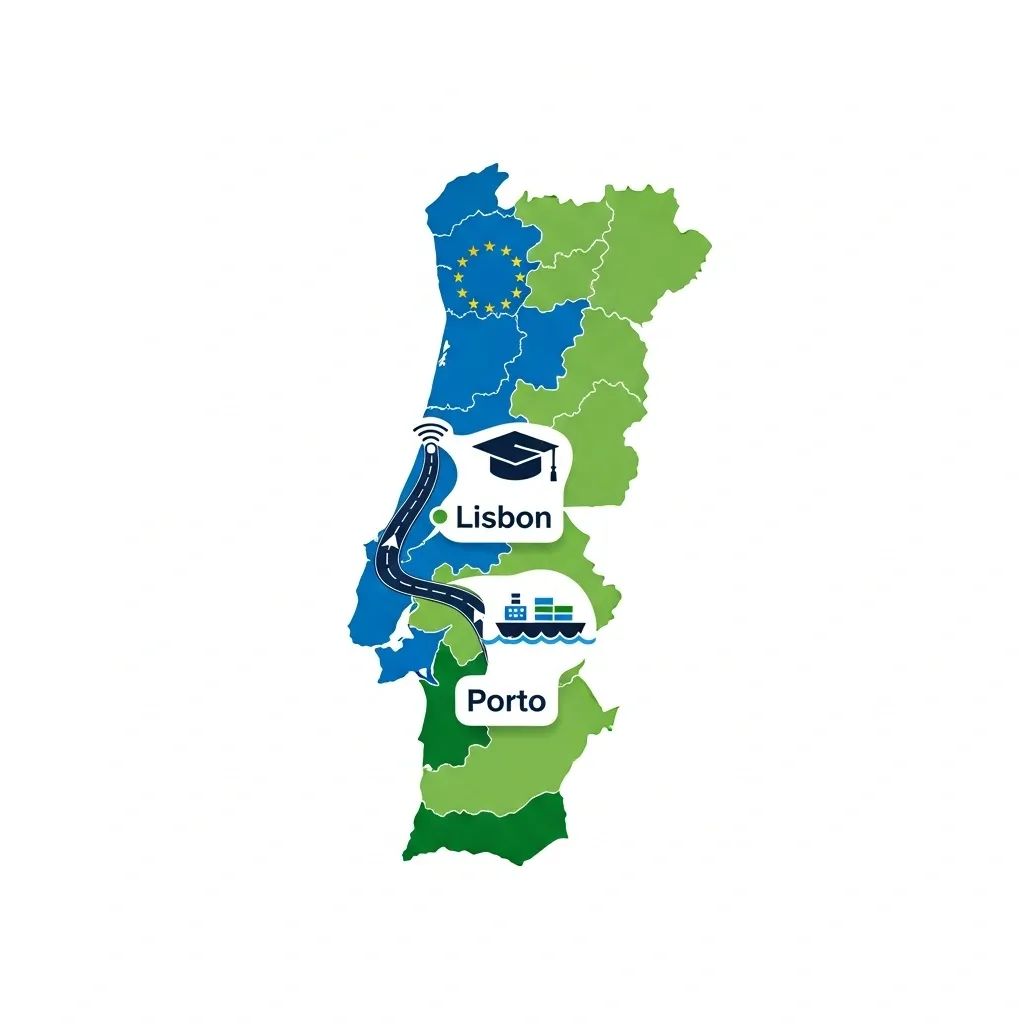
When you stroll through Lisbon’s boulevards or drive along the Algarve coast, the mark of four decades in the European Union is impossible to miss — from gleaming motorways to students swapping backpacks in bustling cafés.
Key Highlights of 40 Years in Europe
• Structural investments that transformed rural roads into high-speed corridors
• Erasmus+ exchanges sending tens of thousands of young Portuguese abroad
• Exports surging from €2.8 B to over €21 B in global goods sales
• EU solidarity lending firefighting aircraft during historic wildfire seasons
• €22.2 B Recovery & Resilience flows reinvigorating digital, green and social projects
A Modernisation Leap
Portugal’s inclusion in the EU in 1986 set off an era of intensive infrastructure renewal. Bridges, highways and broadband links sprouted across the mainland and islands, narrowing the gap in living standards with the Continent. Lisbon’s metro extensions and Porto’s upgraded port facilities stand as testament to Structural and Cohesion Funds that reshaped everyday life, especially outside the major urban centres.
Education Without Borders
The Erasmus+ programme has become a rite of passage for many Portuguese students. Over 55,000 scholars have enrolled at universities from Dublin to Ljubljana since 2021, honing language skills and forging professional networks. Meanwhile, campuses in Braga, Évora and Faro host learners from across the EU, injecting fresh perspectives into regional academia.
A Gateway to Lusophone Partnerships
Beyond Brussels, Portugal has leveraged its membership to deepen ties with Portuguese-speaking nations in Africa and Latin America. Lisbon’s role as a mediator was enshrined in the Lisbon Treaty, amplifying trade missions and cultural exchanges with Angola, Mozambique and Brazil. This network now underpins EU efforts to secure critical commodities and bolster diplomatic outreach in emerging markets.
United in Crisis Response
Climate-driven emergencies have tested Portugal’s resilience. When wildfires threatened communities in 2024, the EU’s Civil Protection Mechanism mobilised 11 water-bombing aircraft from Spain, Italy and Croatia within 48 hours. Such rapid collaboration—triggered 14 times since 2016—has become an essential lifeline that no single nation budget could sustain alone.
Riding the Single Market Wave
Portugal’s export economy has flourished under the EU’s customs union. Merchandise shipments climbed from 7.3% of GDP in 1986 to 7.6% in 2024, spanning automotive parts from Palmela and wines from the Douro to tech services out of Porto. Companies now enjoy tariff-free access to a market of 450 M consumers, fuelling clusters of innovation in sectors from renewable energy to advanced manufacturing.
The NextGenerationEU Injection
Under the NextGenerationEU umbrella, Portugal’s Recovery and Resilience Plan marshals €22.2 B in grants and loans. Funds are earmarked for decarbonisation projects in Sines, digital labs in Coimbra and affordable housing in Greater Lisbon. Disbursements hinge on milestone achievements, ensuring accountability as the country pivots from pandemic recovery to a greener, more competitive economy.
Navigating Future Challenges
As Lisbon negotiates the 2028–2034 cohesion budget, two trends loom large: an ageing population and a slow-growth Europe. Economists warn that without targeted support for interior regions, the demographic divide between coastal hubs and inland villages may widen. The next chapter for Portugal will hinge on preserving EU solidarity while inspiring a generation that knows no frontier beyond the blue flags fluttering across 27 nations.


