

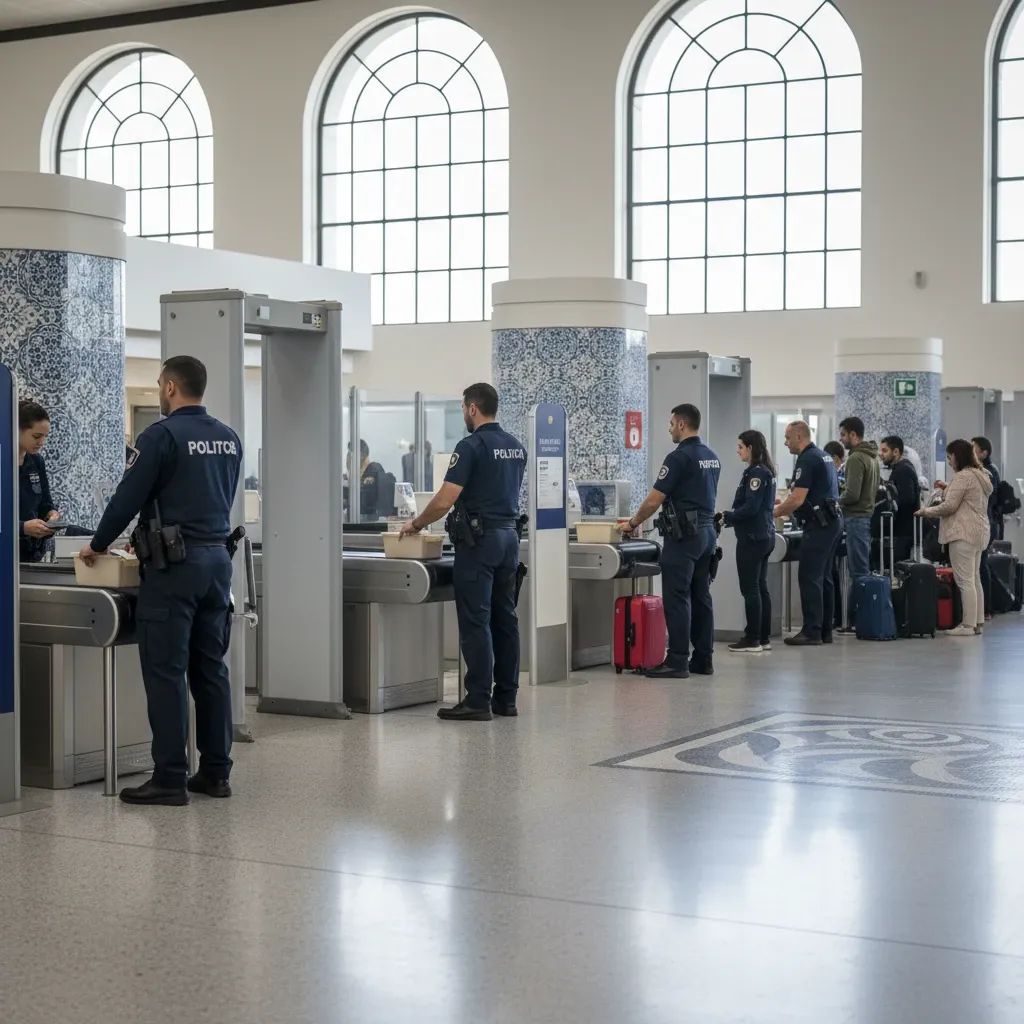
The Portugal National Police (Polícia Judiciária) has taken down an alleged illicit pharmaceutical network operating out of hospitals, prisons, and residential properties, arresting 5 suspects on April 16, 2026 in what authorities are calling "Operation West" — a case that exposes how controlled substances are being siphoned from public health facilities and sold on Portugal's growing black market for performance-enhancing drugs.
Why This Matters:
• Hospital pharmacy worker arrested: One suspect was employed at a hospital facility in the region, raising alarms about internal access to restricted medications.
• €10,000 seized, 11 vehicles confiscated: Authorities allege profits from steroid and prescription drug sales were being laundered through the vehicle trade and cash reserves.
• Prison connection: Searches extended to a prison facility in the region, suggesting the distribution network reached behind bars.
What the Investigation Uncovered
The National Unit for Combating Corruption, part of Portugal's judicial police, executed 16 search warrants across Greater Lisbon and the western coastal region, targeting homes, a hospital facility, and a correctional facility. Officers seized hundreds of packages of prohibited substances, primarily anabolic steroids and prescription medications that require doctor authorization under Portuguese pharmacy law.
Four additional suspects — 3 men and 1 woman — were caught red-handed in possession of banned substances and arrested on the spot. These flagrant detentions came alongside a fifth arrest warrant issued in advance, which was carried out at the hospital pharmacy where the employee worked.
The operation was coordinated with the INTERPOL Financial Crime and Anti-Corruption Centre and the Special Operations Canine Unit of Portugal's Public Security Police (Polícia de Segurança Pública), reflecting the complexity of the probe. The case is being prosecuted by the Loures Department of Investigation and Criminal Action (DIAP), the branch handling organized crime and money laundering offenses in the region.
How the Network Operated
Investigators believe the scheme involved diverting hospital-grade pharmaceuticals and anabolic steroids, then selling them through gym circuits, online platforms, and direct customer networks. The presence of a hospital pharmacy employee among the detained suggests the possibility of systematic theft or falsified prescriptions to obtain controlled drugs legally, then reselling them illegally.
Portugal's health regulator, Infarmed, places over 13 million medication packages under heightened surveillance each year due to diversion risks — substances like opioids, sleeping pills, and hormone treatments that have both therapeutic and black-market appeal. The monitoring system exists precisely because of cases like Operation West, where access to the supply chain becomes a criminal asset.
The prison facility search indicates the network may have penetrated correctional institutions as well. Previous busts have revealed that steroids and other banned drugs enter Portuguese prisons through corrupt guards or visitors, feeding a parallel economy inside the walls.
Charges and Legal Framework
The 5 suspects face accusations of trafficking prohibited substances and methods, money laundering, and embezzlement (peculato). The latter charge typically applies when a public employee or official diverts goods or funds entrusted to their role — in this case, likely referring to the hospital pharmacy worker's alleged misuse of access to controlled inventory.
Under Portuguese criminal law, trafficking prescription drugs without authorization carries prison sentences of up to 5 years, while money laundering linked to organized crime can push penalties to 12 years. The embezzlement statute adds another layer, as it targets those who abuse institutional trust for personal profit.
The 11 vehicles seized are believed to have been purchased with proceeds from drug sales, a common laundering technique where illicit cash is converted into tangible assets that can later be resold or transferred. The €10,000 in cash recovered will be traced through bank records and cross-referenced with sales data to build the prosecution's financial case.
What This Means for Residents
For people living in Portugal, this case highlights a troubling vulnerability in the integrity of the healthcare supply chain. If employees at public hospitals can systematically extract controlled drugs, it raises questions about inventory audits, pharmacy security protocols, and oversight gaps that criminal networks exploit.
Patients relying on these facilities should not panic — the vast majority of hospital staff are honest professionals. However, residents should be aware that medication shortages occasionally reported in the National Health Service (SNS) can be exacerbated by internal theft, not just global supply chain issues.
For gym-goers and fitness enthusiasts, the case serves as a warning: anabolic steroids purchased outside licensed pharmacies are illegal in Portugal, and possession can result in criminal charges. Even if marketed as "supplements" or "performance enhancers," substances like testosterone derivatives and human growth hormone are classified as controlled drugs. Buyers face fines, criminal records, and health risks from unregulated products that may contain toxic fillers or incorrect dosages.
Broader Context of Pharmaceutical Crime in Portugal
Portugal has emerged as a transit hub for international drug trafficking — both narcotics and pharmaceuticals — due to its Atlantic ports and proximity to North Africa. While most attention focuses on cocaine and cannabis shipments, the trade in fake or diverted medications is a parallel threat that authorities are increasingly prioritizing.
The Infarmed-Judicial Police partnership has intensified enforcement operations targeting pharmaceutical diversion across the country. Authorities are treating pharmaceutical trafficking with the same seriousness as narcotics smuggling and high-level corruption.
What Happens Next
The 5 detained individuals will face initial hearings before a judge who will decide whether to impose preventive detention, house arrest, or conditional release pending trial. Given the embezzlement and money laundering charges, prosecutors are likely to argue that the main suspect with hospital access poses a flight risk or evidence destruction threat.
Forensic analysis of the seized medications, financial records, and digital devices will continue over the coming months. The Judicial Police noted that the evidence collected will be "subject to detailed examination" to establish the full scope of criminal responsibility and expedite the conclusion of the investigation.
For hospitals and prisons in the region, the case will likely trigger internal audits of pharmacy inventory systems, with regulators checking whether similar vulnerabilities exist elsewhere. The hospital facility involved may face scrutiny over how a staff member allegedly had prolonged, undetected access to controlled substances.
The investigation also sets a precedent for interagency cooperation: the involvement of INTERPOL's financial crime unit signals that Portuguese authorities are treating pharmaceutical trafficking with serious enforcement measures that could lead to more aggressive prevention and stronger protections for the healthcare system.


