

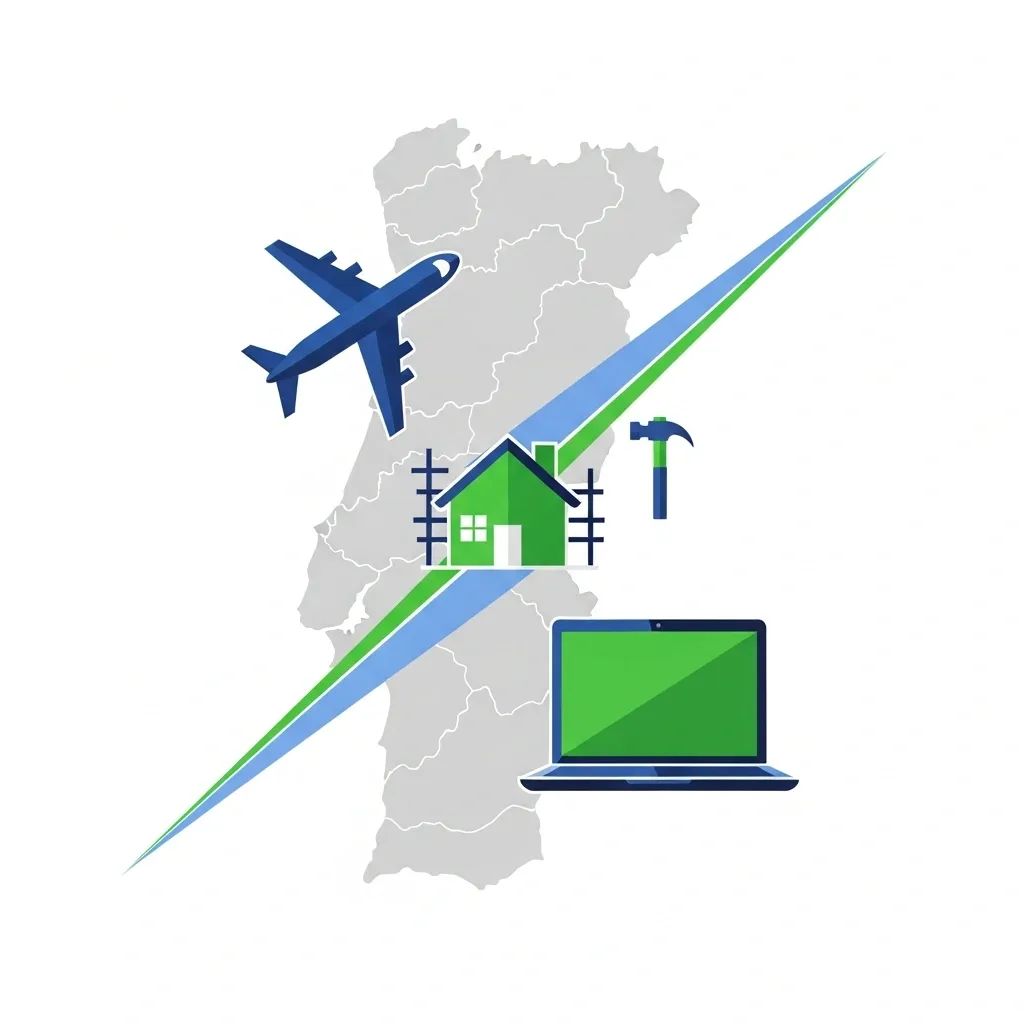
Portuguese households are stepping into 2026 with a spring in their step. Most see the coming year as a chance to tick long-postponed plans off their wish lists—whether it’s finally booking that long-haul flight, knocking down a kitchen wall or swapping an ageing laptop for a sleeker model. At the same time, they remain mindful of debt, signalling a preference for cash over credit unless the process is quick, cheap and digital.
Why nearly half the country has itchy feet
Leisure travel tops the priority chart for 44% of respondents to the latest Observador Cetelem barometer, a sharp reminder of how strongly tourism pulses through Portugal’s cultural DNA. The figure, broadly in line with pre-pandemic appetite, suggests families are ready to venture beyond the Algarve and Porto airport once more. Airlines serving Lisbon report that ticket searches for 2026 Easter breaks are already running 12 % ahead of last year. Industry analysts point to three triggers: a stable labour market, falling inflation and a strong euro that boosts purchasing power in non-euro destinations.
Beyond the personal bucket list, outbound Portuguese travellers play a vital role in Iberian aviation. Low-cost carriers such as Ryanair and easyJet are banking on the domestic demand surge to justify additional aircraft based in Faro and Madeira next summer. Tourism officials, for their part, hope the wave of holidaymakers will return home with new ideas—and spending power—to inject into local businesses.
Home makeovers and gadget upgrades: investing inward
Just behind holidays sit home improvements (30%) and tech purchases (19%). Economists link the renovation bug to incentives baked into the country’s Recovery and Resilience Plan, including a 6 % VAT rate on certain construction works and temporary IMT exemptions for first-time buyers. That policy cocktail has fuelled an urban-renewal boom from Braga to Évora and given contractors the confidence to invest in greener, modular building techniques.
Technology spending, meanwhile, is shifting from impulse buys to strategic upgrades. A growing share of consumers say they would rather pay more for devices that promise energy efficiency, longer warranties and AI-driven features—a trend retailers such as FNAC and Worten are already capitalising on with extended-service bundles.
Paying for dreams: cash still king, but credit keeps a foothold
Six in ten interviewees insist they will pay out of pocket for these big-ticket items. Among the remainder, a two-speed financing market is taking shape:
• 14 % lean towards classic personal loans negotiated with banks or fintech lenders.
• Another 14 % prefer the flexibility of a credit card, often chasing cashback or air-mile rewards.
• Only 5 % show interest in short-term Buy Now Pay Later (BNPL) plans at the checkout.
Regulators in Brussels plan to fold BNPL under the same consumer-credit rules by 2026, a move the Banco de Portugal welcomes as a guard-rail against over-indebtedness. Yet uptake could still climb; surveys from Klarna indicate that 71 % of Portuguese shoppers have tried BNPL at least once, primarily for appliances and travel packages.
The confidence curve: optimism edges higher
Half of those polled expect 2026 to outshine 2025—the most upbeat reading since Observador Cetelem began tracking sentiment a decade ago. Only 12 % foresee a decline in their household finances, unchanged year-on-year. Crucially, 23 % already feel better off than they did twelve months ago, a five-point jump that mirrors the fall in energy prices and a modest pickup in real wages.
Macro-data back that story: unemployment is hovering near a record-low 6%, while tourist arrivals—one of Portugal’s core growth engines—are on pace to break the 34 M visitor mark next year. The combination of steady paycheques and cheaper utility bills helps explain why half of respondents say their financial position is at least stable.
What the experts are watching
For Hugo Lousada, Marketing Director at Cetelem, the headline is less about where money is being spent and more about how easily consumers can act on their plans. “Cost still matters,” he told reporters, “but the decisive factors are now the simplicity of the process and the speed of approval. A seamless digital journey will make or break a lender in 2026.”
Banks seem to agree. Both Millennium bcp and Santander Totta have accelerated in-app loan approvals, promising a decision in under 15 minutes. Start-ups in the BNPL arena, meanwhile, are racing to adapt to forthcoming EU rules while keeping their checkout experience close to one-click.
Take-aways for 2026 planners
Portugal’s consumers are entering the new year with one foot on the accelerator and the other hovering over the brake. They are ready to spend—but mostly on experiences and assets that improve quality of life. Travel, renovation and smart tech headline the wish list, financed wherever possible with savings and, if necessary, with credit that is transparent and fast. For businesses—from airlines to DIY stores—the task is clear: make the purchase path frictionless, digital and trustworthy, and the Portuguese are likely to follow through on their 2026 resolutions.


