
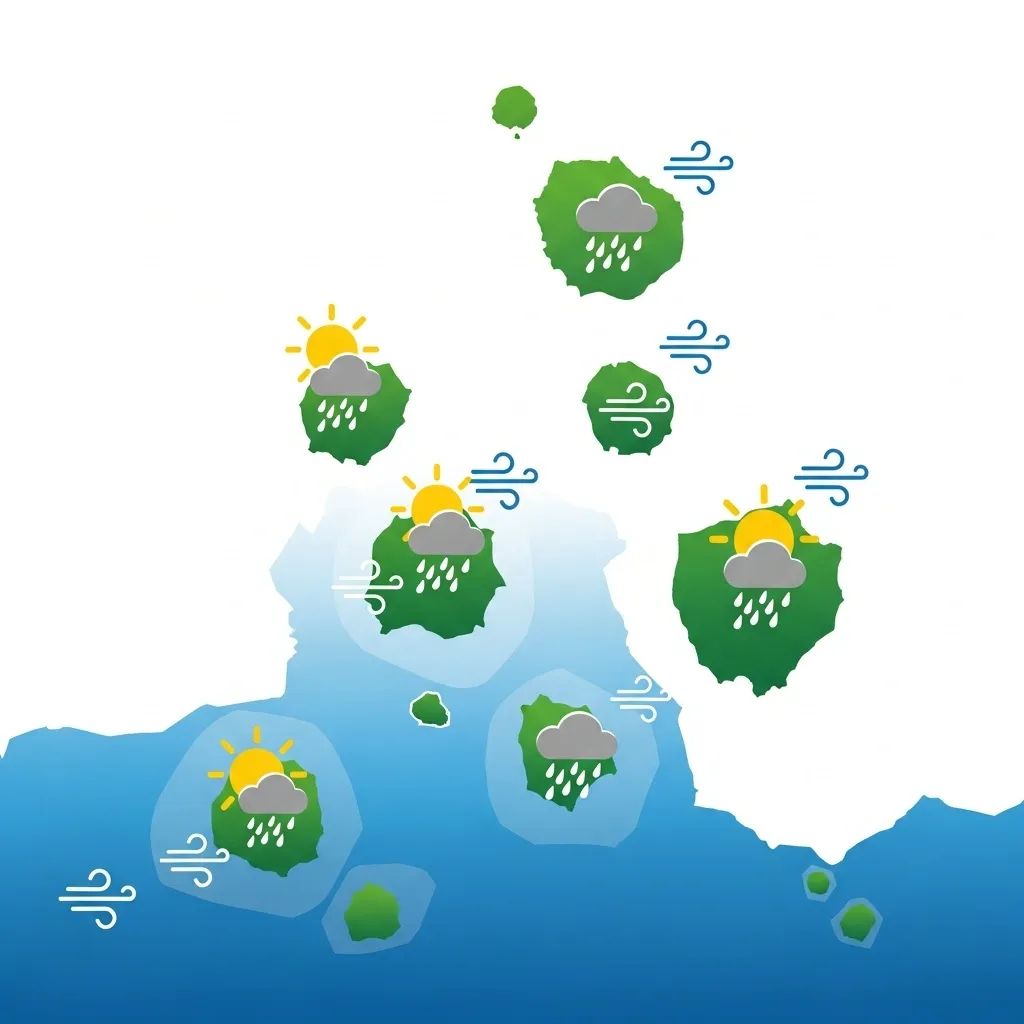
Portugal's President has appointed two new representatives to the country's autonomous island regions, installing an academic in the Azores and a senior judge in Madeira as his delegates. The move, announced April 15, reshapes the constitutional link between Lisbon and territories that wield significant legislative autonomy—and marks the first time a woman will serve as the Republic's Representative in the Azores.
Why This Matters
• Susana Goulart Costa, an Associate Professor with Habilitation in history and Socialist Party veteran, becomes the first female Representative in the Azores, overseeing veto powers on regional legislation and government appointments.
• Paulo Barreto Ferreira, a judge with extensive experience in Portugal's judicial system, takes the Madeira post with backing from across the political spectrum.
• Both officials will serve as Lisbon's eyes and ears on islands where regional governments often clash with the mainland over fiscal transfers, taxation, and regulatory independence.
The Constitutional Role at Stake
The Republic's Representative functions as a hybrid governor-ombudsman, a role created in 2004 when Portugal abolished the colonial-sounding title of "Minister of the Republic." These officials do not govern the islands directly—regional assemblies elect their own presidents and cabinets—but they hold three critical levers:
Legislative veto: They can block regional laws and send them back to the assembly for reconsideration. A veto on government decrees is permanent; a veto on parliamentary acts can be overridden by an absolute majority.
Constitutional oversight: They can trigger reviews by Portugal's Constitutional Court if they believe regional statutes violate national law or infringe on the autonomy framework enshrined in the 1976 constitution.
Government appointment: They formally nominate the president of the regional government after elections, reflecting the will of the electorate but retaining discretion in hung assemblies.
In practice, the role demands diplomatic finesse. Representatives sit on Portugal's National Defense Council and Internal Security Council, brief the President on regional security, and manage electoral administration. They are not technocrats—they are political appointees answerable only to Portugal's President, who can remove them at will.
Who Is Susana Goulart Costa?
Born in Angra do Heroísmo in 1969, Costa brings a rare combination of scholarly credentials and electoral experience. She holds an Associate Professor with Habilitation position—a senior academic title in the Portuguese university system requiring advanced research credentials—at the University of the Azores, where she directs the Department of History, Philosophy, and Arts. She is also a research affiliate at the Centre for the Humanities, a joint institute between the university and Lisbon's NOVA University.
Her political résumé includes stints as a Socialist Party regional deputy, director of culture for the Azores regional government, and municipal councilor in Lagoa, a coastal town known for its wine cooperatives and geothermal tourism. The PS/Açores branch praised her appointment, framing it as recognition of the islands' growing feminist movement, though it stopped short of claiming credit for her selection.
Costa's academic focus on Atlantic history and cultural policy may prove valuable as the Azores lobby Lisbon and Brussels for greater autonomy in managing marine resources and cultural heritage funds. The archipelago, located 1,500 km west of Lisbon, has long felt economically marginalised despite its strategic importance to NATO and transatlantic aviation.
Who Is Paulo Barreto Ferreira?
Ferreira is a senior judge born in Funchal, Madeira's capital, and entered the judiciary after graduating from Portugal's Centre for Judicial Studies, the training academy for judges and prosecutors. He spent decades in the Portuguese judicial system, holding various positions before advancing to senior levels of the bench. His reputation is that of a pragmatic institutionalist: punctual, procedurally orthodox, and deferential to legislative intent. Judicial sources describe him as cautious on constitutional questions, which may suit a role that requires balancing Lisbon's authority with Madeira's assertive regional government.
Political reactions on the island have been uniformly positive. The PS/Madeira highlighted his Madeiran roots and judicial pedigree as assets in a region where perceived neglect by the mainland fuels support for autonomy movements. Miguel Albuquerque, the Social Democratic leader who has governed Madeira since 2015, called the pick a "good choice," a tacit acknowledgment that Ferreira's moderate profile reduces friction ahead of budget negotiations. Even the populist Juntos Pelo Povo (JPP) applauded the appointment, expressing hope that a local son will "reinforce the Region's influence in Lisbon."
What This Means for Residents
For Azoreans and Madeirans, these appointments signal continuity rather than disruption. Neither Costa nor Ferreira is known for confrontation, which suggests the President prizes stability over ideological messaging. Here's what to watch:
Azores fiscal disputes: The regional government has been locked in a years-long battle with Portugal's Revenue Department over the allocation of VAT receipts from fuel sales at Ponta Delgada Airport. Costa's Socialist affiliation may smooth dialogue, but her academic independence could also embolden her to challenge Lisbon if the finance ministry overreaches.
Madeira's housing crisis: Ferreira will inherit oversight of a regional assembly under pressure to regulate short-term rentals, which have displaced thousands of locals in Funchal. If the assembly passes stringent caps and Lisbon's tourism lobby objects, he will face his first constitutional test: veto or sign?
Electoral integrity: Both representatives will oversee the next round of regional elections, scheduled for late 2027 in the Azores and early 2028 in Madeira. Their neutrality will be scrutinized if either race produces a fragmented result requiring coalition talks.
The Broader Context
Portugal's autonomous regions operate under statutes that grant them legislative powers comparable to those of Spanish autonomías or Italian regioni a statuto speciale. They collect certain taxes, set education curricula, and regulate land use—but remain bound by national law on criminal justice, defense, and monetary policy.
The Representatives act as a constitutional safety valve, preventing the islands from drifting toward quasi-independence while preserving the flexibility the 1976 settlement promised. Costa and Ferreira will serve 5-year terms unless the President removes them early, a power rarely exercised during recent presidencies.
The timing of the appointments is politically neutral—no major legislation is pending in either region, and both the Portuguese government and the Azorean and Madeiran administrations share ideological alignments that reduce the likelihood of early confrontation. For now, the story is less about policy than symbolism: a female historian in the Azores and a hometown judge in Madeira, each embodying a different facet of Portugal's effort to balance centralism with decentralization.



