A quieter December surprise for anyone budgeting in euros: price growth across the common-currency bloc dipped below the psychological 2 % line, settling at 1.9 %. For Portuguese households long accustomed to steeper bills, the slowdown is welcome—though not yet a green light to relax.
Snapshot – What matters for Portugal
• Energy-led relief shaved almost 0.2 percentage points off the Eurozone rate.
• Core inflation—stripping out food and fuel—eased to 2.3 %, signalling broader cooling.
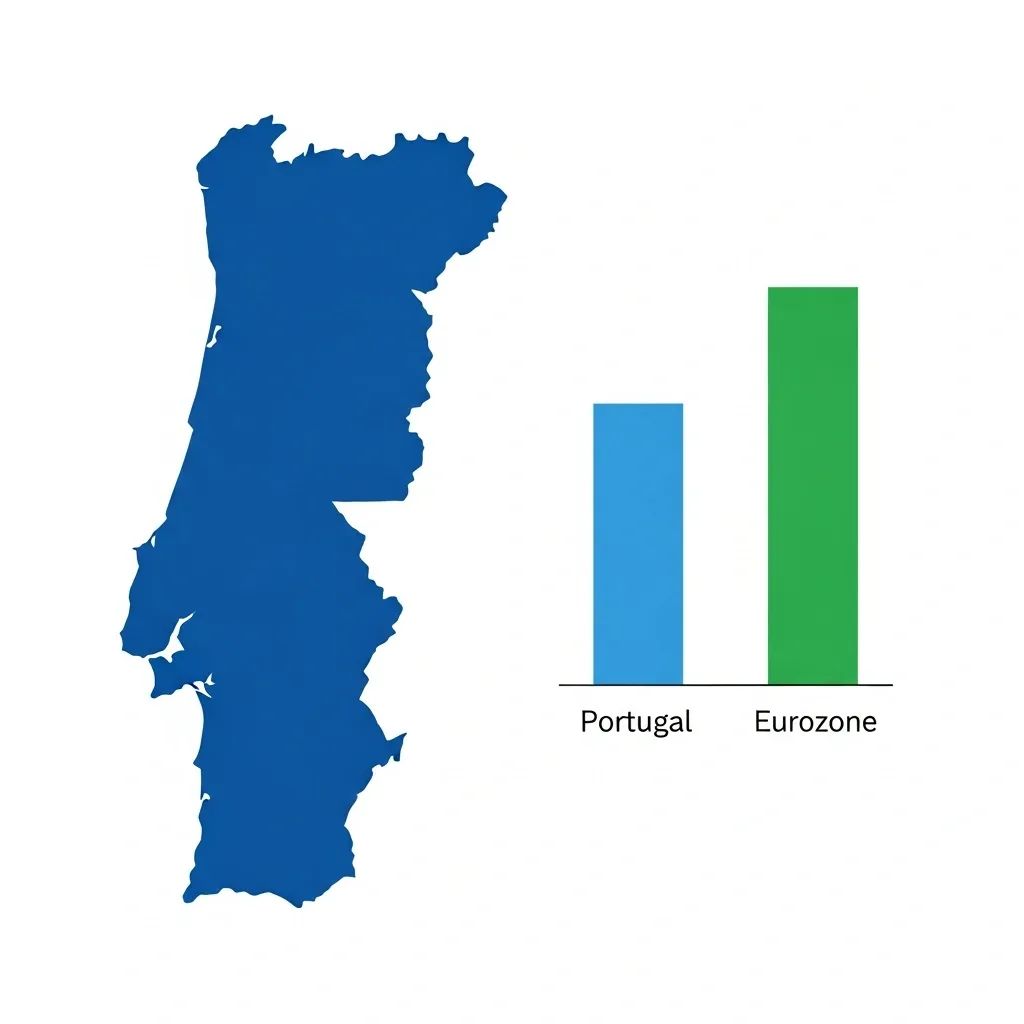
• Portugal’s own consumer index stayed a notch higher, at 2.4 %, reminding Lisbon shoppers that local dynamics still bite.
• Monetary guardians in Frankfurt kept rates on hold, hinting at a data-driven pause rather than an imminent cut.
• Forecasts from the IMF and OECD see both the Eurozone and Portugal gliding toward ~2 % inflation in 2026.
Energy tail-winds overpower lingering price pressures
A steep fall in wholesale gas and electricity costs during the autumn fed through to December statistics, turning the energy component into a drag of 0.18 pp on the headline index. That pullback outweighed stubborn price gains in food, alcohol and tobacco, which inched up to 2.5 %. Analysts across Brussels and Frankfurt note that the pass-through from international oil benchmarks has been faster than in previous cycles, partly because governments unwound temporary fuel-tax holidays earlier in the year.
Industrial goods—everything from household appliances to car parts—registered only a 0.09 pp contribution to overall inflation, confirming that supply-chain snarls dogging factories in 2022-23 have largely normalised. The upshot: euro-area inflation now sits a full half-percentage point below the level logged 12 months ago.
How does Portugal stack up?
The Iberian price thermometer still reads hotter than the bloc average. December’s 2.4 % Harmonised Index of Consumer Prices (HICP) marked a slight acceleration from November’s 2.1 %, although it remained sharply below the 3.1 % recorded a year earlier. Statistics Portugal attributes the uptick mainly to seasonal food items and a year-end rise in hospitality prices as tourism rebounded. Nevertheless, the Banco de Portugal insists the country remains on course to converge with the ECB’s 2 % goal by 2027.
For Portuguese wage-negotiators, the divergence matters: salary-indexation clauses often reference national HICP rather than the Eurozone figure. A 0.5 pp gap can translate into meaningful differences when collective agreements are renewed in spring.
Central bankers tap the brakes—but keep their guard up
On 18 December the European Central Bank left its three key rates untouched—the deposit facility remains at 2 % after June’s cut. President Christine Lagarde repeated that borrowing costs would stay in restrictive territory “for as long as necessary,” arguing that a single month below target is not victory.
The Bank of Portugal echoed that caution in its winter bulletin. It upgraded national GDP forecasts slightly yet warned that the fiscal room created by buoyant tax revenues could evaporate if growth stalls. Governor Mário Centeno urged policymakers to focus on productivity-enhancing reforms rather than counting on lower rates alone to sustain momentum.
2026 outlook: calm seas or hidden currents?
Major forecasters now cluster around a narrow range: the IMF, OECD and ECB staff all pencil in 1.9 %-2 % inflation for the Eurozone next year. For Portugal, projections hover at 2 .0 %-2.1 %, implying continued but shrinking divergence. Much hinges on two variables:
Energy markets. A geopolitically driven oil spike could quickly reverse December’s comfort. Futures curves currently point to moderate prices, but traders recall how swiftly that can change.
Services inflation. At 3.4 %, the category remains the bloc’s biggest source of price growth. If wage deals compensate workers fully for past inflation, hospitality and leisure costs could stay sticky.
What Portuguese consumers and companies should monitor
Households• Fixed-rate mortgages shield borrowers from immediate ECB moves, but new loans may become cheaper only once Frankfurt signals sustained disinflation.• Utility bills are likely to fall further into spring as retailers lock in lower wholesale rates.
Businesses• Import-reliant firms benefit from weaker energy costs, yet tight labour markets mean payroll expenses still head north.• Exporters need to watch the euro, which firmed modestly after the inflation release on speculation of a slower rate-cut cycle in the US.
Bottom line
December’s dip to 1.9 % is more than an accounting quirk; it shows that the ECB’s aggressive hikes are filtering through the economy. For Portugal, where prices remain above the bloc mean, the message is mixed: relief is finally visible, but local factors—chiefly services and fresh food—keep the squeeze alive. Policymakers and households alike will spend 2026 balancing optimism against vigilance, hoping that this time the 2 % target sticks for good.