

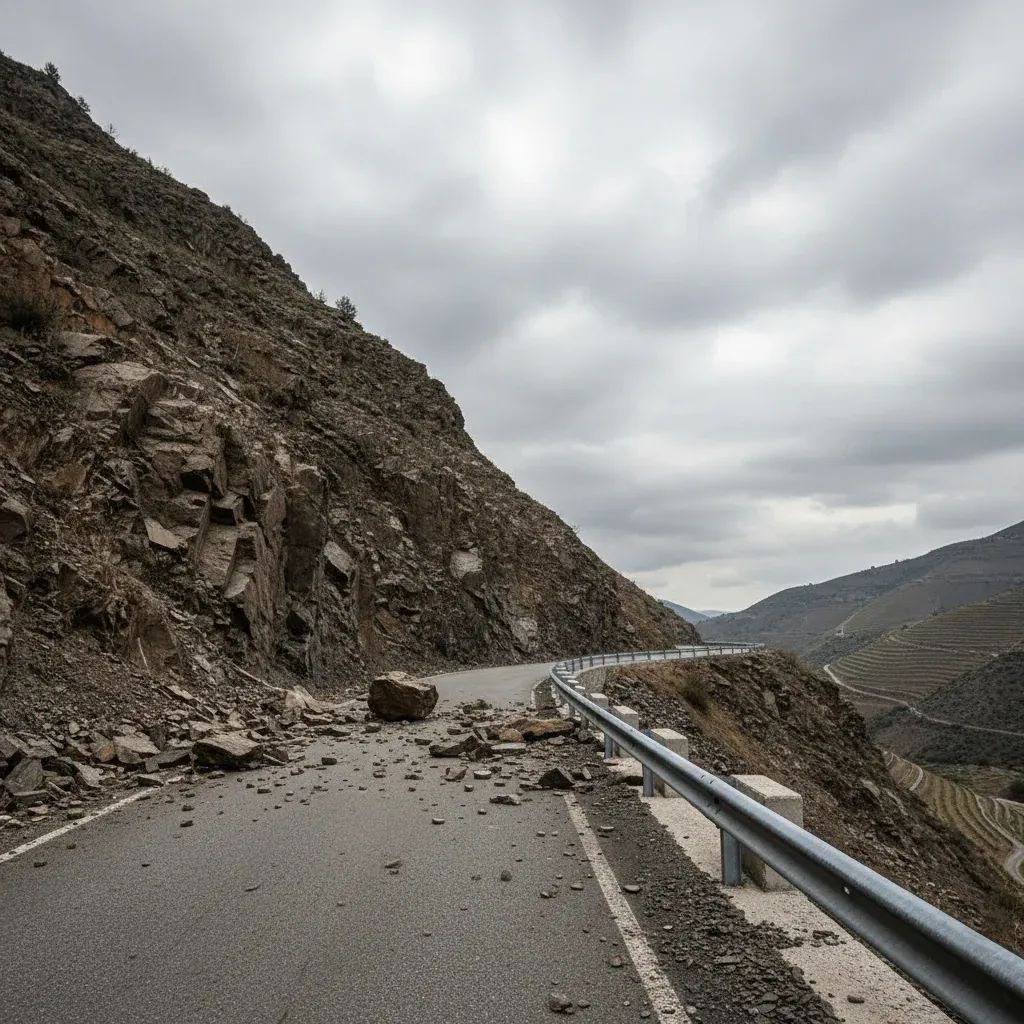
Infraestruturas de Portugal has reopened the EN222 between Vila Nova de Foz Côa and Almendra on a one-lane, stop-go basis, a move that restores the only direct artery for commuters, farmers and tour operators but leaves the route vulnerable to further rockfalls.
Why This Matters
• Single access road back in service – expect alternating traffic controlled by police at least through next week.
• Heavy rain forecast until Tuesday – the risk of fresh landslides remains "high", according to the Portugal Meteorological Institute.
• Tourism & wine logistics affected – detours add up to 40 km for freight heading to the Douro docks.
• Major upgrade already budgeted – €9 M set aside for widening and slope reinforcement, with works slated to start in late spring.
A Fragile Reopening
Police reopened the carriageway at 16:00 on 3 February after bulldozers removed nearly 200 m³ of schist and soil from the tarmac. Traffic now moves in alternating flows every five minutes. Any rainfall above 10 mm/hour will trigger an automatic shutdown, local civil-protection officials told this newspaper.
Why the Slopes Keep Crumbling
The stretch hugs the Côa valley, where steep schistose ridges fracture quickly when water seeps into existing fissures. Decades of vibration from quarry trucks and the absence of deep drainage channels have amplified the instability. Geologists from the University of Porto warn that climate-change-driven storm bursts could make such events “twice as frequent” by 2030.
The Engineering Fix in the Pipeline
Last autumn, Infraestruturas de Portugal finished reinforcing six cut slopes near km 207–214, applying double-twist mesh and steel bolts. The larger €9 M contract now out to tender will:
• Widen the platform from 6 m to 9 m over 17.5 km.
• Install sub-surface drains to channel run-off away from fracture zones.
• Repave the roadbed and integrate smart sensors that relay rock-movement data in real time to Guarda district control rooms.Work is expected to last 14 months, overlapping two harvest seasons.
What This Means for Residents
Tourism: Hoteliers near the UNESCO-listed Côa rock-art sites say bookings dropped 12 % during the 24-hour closure. Expect recovery only when motorists trust the hill won’t collapse again.Agriculture: Vineyard and almond-grove owners rely on the EN222 to move produce to Régua and Vila Nova de Gaia. Each day of full closure would cost growers roughly €4 000 in extra fuel and labour, according to the regional farmers’ union.Daily life: School bus timetables remain unchanged, but parents are told to plan for potential 30-minute delays if rain resumes.
Safety Tips if You Must Drive
Check the civil-protection app Prociv before departure; push alerts flag any instant road blocks.
Use low gears on the descent toward Almendra – sudden stops are common at the temporary signals.
Avoid parking lay-bys carved into the cliff; they are not yet net-protected.
Money and Accountability
The Portugal Ministry of Infrastructure confirmed that Brussels co-financing through the Connecting Europe Facility will cover 50 % of the upgrade bill. The remainder comes from the national road-safety envelope, conditional on the contractor meeting quarterly landslide-reduction benchmarks.
Looking Ahead
With rain lingering over the Douro plateau, further disruptions are probable. The local mayor, Pedro Duarte, insists the permanent fix “can’t slip another season.” For now, anyone travelling between Foz Côa and Almendra should allow extra time, keep an eye on weather alerts, and brace for short-notice closures until the valley’s slopes receive the full structural makeover they have needed for years.


