
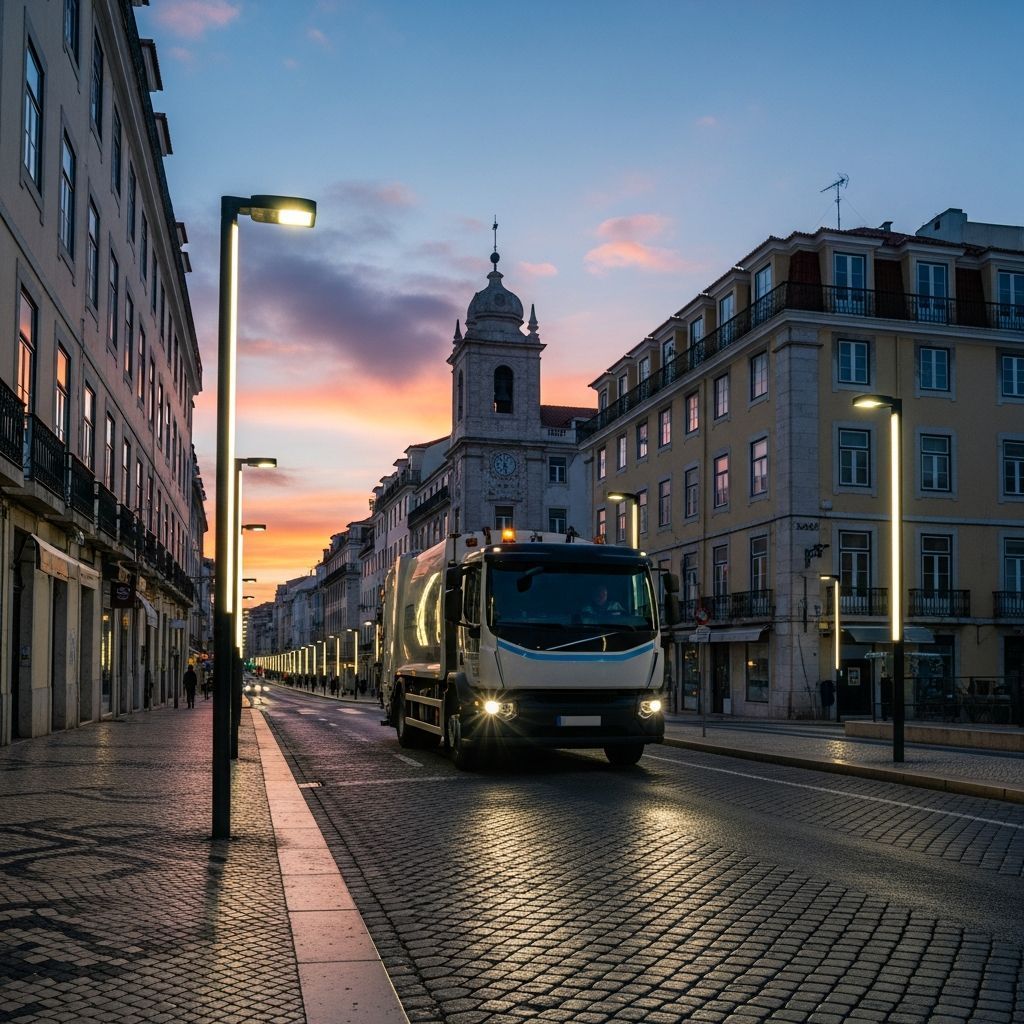
The rumble of diesel-powered garbage trucks in Lisbon is close to becoming a memory. City officials are wagering that an additional €12 million injection into urban hygiene for 2026 will not only polish the pavements but also push the capital further along its climate-neutral roadmap. With a fleet that should be 96 % electric by the end of next year, residents can expect cleaner air, quieter dawns and a bump in street-level employment.
A near-silent fleet on Lisbon streets
An order for 54 new vehicles—including 20 refuse collectors and seven sweepers—is the headline item. Municipal vice-president Gonçalo Reis insists the purchase is more than cosmetic. By retiring almost all combustion models, the city slices noise pollution during pre-sunrise collections and cuts CO₂, NOx and particulate emissions in neighbourhoods already battling traffic smog. Energy analysts estimate that each electric truck could save the municipality tens of thousands of euros in annual fuel and maintenance, a figure that compounds quickly when the fleet reaches full strength.
Where the money comes from and where it goes
The overall municipal blueprint for 2026 weighs in at €1.345 billion, a slight dip from the current year yet still labelled “balanced” by the coalition headed by Mayor Carlos Moedas. Within the hygiene chapter, spending rises to €61.3 million, up almost 50 % on this year’s out-turn. The council argues that front-loading cash into vehicles now will unlock operational savings later and free resources for other services, from pothole repairs to cultural grants. Parallel allocations include €10 million to modernise street lighting and €14.6 million for public-space upgrades, a nod to the city’s bid to meet EU climate targets by 2030.
Job opportunities and labour tensions
Alongside the hardware, City Hall wants to recruit 300 street cleaners and 30 drivers. The figure looks generous on paper, yet trade unions such as the STML caution that multiple vacancies stem from years of attrition, outsourcing and temporary contracts. They welcome permanency but demand that new hires enter the municipal payroll rather than short-term agencies. Negotiations are ongoing; the administration says posts will be “stable”, while labour leaders warn of strikes if promises are diluted.
More than brooms: lighting, parks and public space
Electric trucks are not the sole sustainability gambit. Lisbon has begun swapping 16 000 conventional luminaires for LED units equipped with smart controls, part of a broader €44.6 million venture supported by the European Investment Bank’s ELENA facility. City engineers anticipate €1.8 million in yearly energy savings—money that can be redirected to green corridors like the Tapada das Necessidades restoration, budgeted at €3.1 million. The goal is a stitched-together network of quieter, better-lit, tree-lined avenues that make walking after sunset both safer and more pleasant.
The politics behind the numbers
Mayor Moedas’s PSD/CDS-PP/IL coalition still governs without an absolute majority, so the spending plan will need at least tacit backing from opposition benches when it reaches the council chamber. In the previous mandate, the PS abstained to let four consecutive budgets pass, while PCP, BE, Livre and civic group councillors voted no en bloc. Observers suggest that the environmental pitch—near-silent trucks, lower emissions, LED lamps—may broaden consensus this time, but hard bargaining over labour contracts and neighbourhood priorities remains inevitable.
Why it matters: cleaner air, lighter bills
For residents of Alcântara or Areeiro, the shift means fewer 5 a.m. engine roars and, in the long run, city coffers less exposed to volatile diesel prices. The campaign dovetails with Portugal’s national pledge to phase out internal-combustion fleets in public services. It also positions Lisbon to claim more EU green-transition funding, a competitive edge against other Iberian capitals targeting the same pots of money.
What happens next
The draft budget is scheduled for debate later this month. Should it clear the political gauntlet, procurement procedures for the electric vehicles could start as early as February, with the first units expected on the streets before next summer’s tourist rush. Union talks will run in parallel. In the meantime, the city’s ageing trucks keep rolling, but if the numbers and alliances line up, Lisbon’s soundtrack of clattering rubbish collection could soon morph into a barely audible hum.


