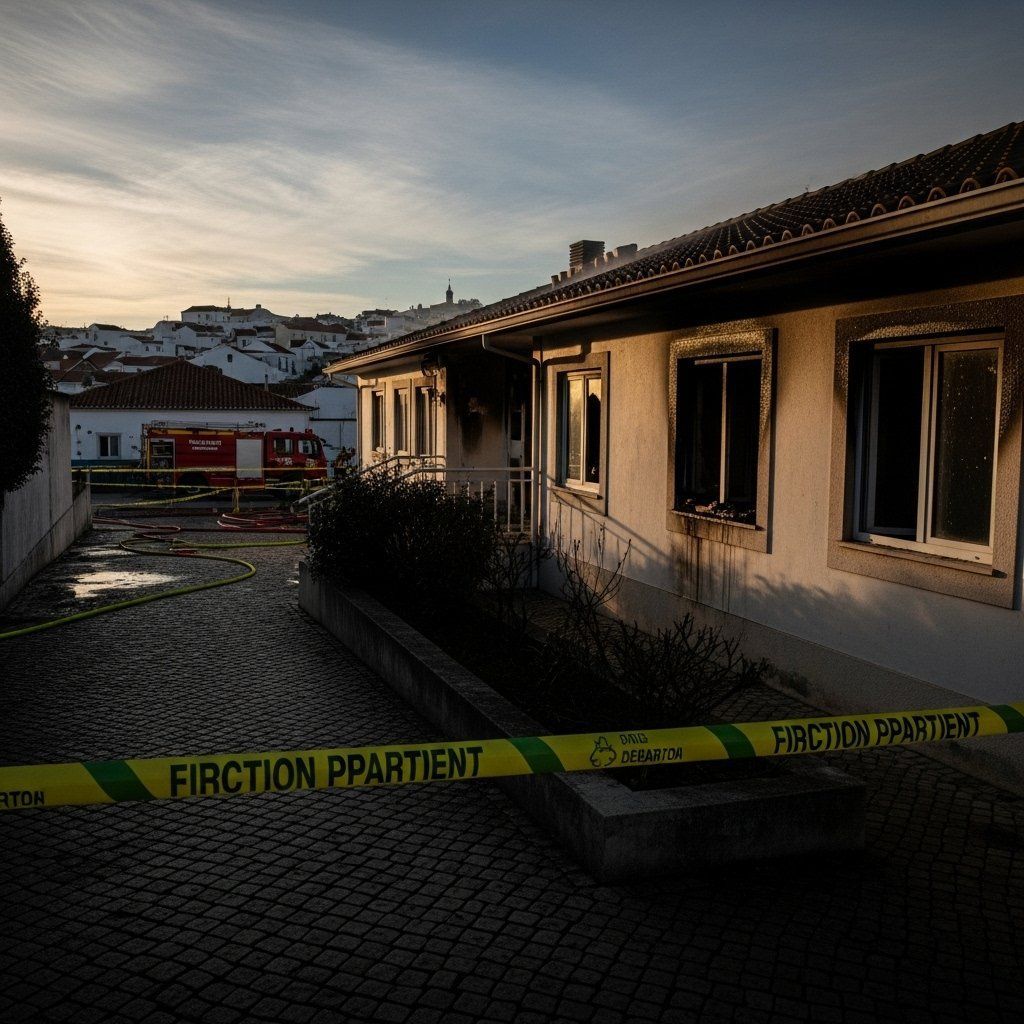
A 25-year-old woman died early Friday morning in Porto's Bonfim neighborhood following a scooter accident on Rua de Santos Pousada, marking the latest fatality in Portugal's growing micromobility crisis. Emergency services declared her dead at the scene at the intersection with Rua da Firmeza just after midnight. While initial reports varied—some describing the incident as a single-vehicle loss of control, others suggesting involvement of another rider—authorities have not yet confirmed the exact circumstances. The PSP police in Porto confirmed that the rider knew someone connected to the case, though investigators have not disclosed whether speed, impairment, or equipment failure contributed to the accident.
Why This Matters
• Portugal recorded 72 scooter accidents in just the first two months of 2026, according to the GNR national police force.
• 40% of fatal scooter crashes involve riders not wearing helmets—a legal requirement that carries fines up to €300.
• New mandatory insurance rules took effect in January 2026 for many e-scooters, though standard models under 250W remain exempt.
Emergency responders—Porto firefighters, Sapadores emergency crews, and INEM paramedics—responded immediately to the scene, but resuscitation efforts failed. The victim's body was transferred to the Institute of Legal Medicine for autopsy. Conflicting initial reports highlight a recurring issue in Portugal's scooter accident data: inconsistent documentation and a lack of standardized crash investigation protocols for lightweight electric vehicles.
A Pattern of Urban Fatalities
This death is the latest entry in a troubling ledger. Between 2019 and 2025, Portugal recorded 10 scooter fatalities, with half occurring in 2023 alone. The PSP logged three deaths in 2024 and one in 2025. By comparison, the GNR's 72 accidents in the first eight weeks of 2026 suggest the problem is accelerating, not stabilizing.
Setúbal district holds the grim record with three fatalities over seven years, but Porto and Lisbon dominate injury statistics due to their dense rental fleets and congested streets. The Bonfim neighborhood, where Friday's accident occurred, is a mixed-use zone with narrow roads, heavy nighttime foot traffic, and limited dedicated cycling infrastructure—a recipe for conflict between scooters, cars, and pedestrians.
Authorities blame the spike on three compounding factors: the explosive growth of rental fleets, widespread illegal modifications that disable speed limiters, and rider ignorance of traffic law. A GNR analysis found that most accidents stem from riding on sidewalks, ignoring signals, and failing to wear reflective gear or helmets after dark.
What the Law Requires—and What Gets Ignored
Portugal's Highway Code treats e-scooters as bicycles if they cap out at 250W and 25 km/h. Under Article 112, riders must use bike lanes where available, never sidewalks (except children under 10), and are banned from highways and tram tracks. After sunset or in poor visibility, riders must display front and rear lights and wear reflective clothing—violations carry €60 to €300 fines.
Helmet use is mandatory under Article 82, though enforcement remains patchy. Police rarely stop scooter riders for helmet checks unless they witness reckless behavior or respond to a crash. The law also forbids riding with one hand, towing, or using earbuds—rules borrowed from bicycle regulations but seldom observed on Porto's streets.
Since January 2, 2026, mandatory civil liability insurance applies to high-powered scooters exceeding 25 kg or capable of speeds above 25 km/h. Standard rental models—capped at 250W—remain exempt, though insurance providers now market low-cost policies for private owners. Critics argue the exemption creates a loophole: riders who modify their scooters to boost speed often escape both registration and insurance scrutiny.
Porto's Rental Rules and Enforcement Gap
The Porto City Council limits shared scooter services to 900 vehicles per operator, with scooters capped at 60% of each fleet. Rentals must shut down between 22:00 and 06:00, and riding is prohibited in pedestrian zones, historic district streets under the ZAAC car-restriction scheme, bus corridors, and on the upper deck of the Luís I Bridge.
In practice, these rules collide with reality. Scooters regularly appear on Ribeira's cobblestones, Santa Catarina's pedestrian boulevard, and even the tram tracks along Rua de Santos Pousada. The council's parking mandate—scooters may only be left at designated racks—goes unenforced, with sidewalk clutter a daily complaint.
Friday's fatal accident occurred well outside the rental curfew window, though investigators have not confirmed whether the scooter involved was privately owned or part of a shared fleet.
Impact on Residents and Riders
For anyone living or visiting Portugal, the takeaway is unambiguous: e-scooters carry real legal and physical risks. Riders without helmets face fines and, more critically, a 40% higher chance of death in a crash. Those modifying scooters to exceed 25 km/h not only void insurance protections but also face vehicle confiscation and steeper penalties under pending regulations.
Pedestrians, meanwhile, navigate an urban landscape where scooters occupy sidewalks, crosswalks, and bike lanes interchangeably. The lack of segregated infrastructure in Porto's older neighborhoods—Bonfim included—means walkers and riders share the same narrow corridors, often in dim light.
Private scooter owners should verify whether their model triggers the new insurance mandate. Policies start around €30 annually, a modest cost compared to the legal exposure of injuring a pedestrian or another rider. Rental users bear less financial risk—operators carry fleet-wide coverage—but remain personally liable for traffic fines and any criminal charges arising from reckless operation.
What Investigators Are Looking For
The PSP has not released details on speed, lighting conditions, or whether the rider wore a helmet. Toxicology results from the autopsy will clarify whether alcohol or drugs played a role—both banned under the Highway Code. Accident reconstruction will examine pavement quality, sight lines at the Santos Pousada–Firmeza intersection, and whether the scooter had been illegally modified.
If a rental scooter was involved, the operator's data logs—GPS coordinates, speed history, and braking events—will become evidence. These records have figured prominently in past investigations, sometimes exonerating riders and other times proving recklessness.
A Crisis Without a Roadmap
Portugal's regulatory framework for micromobility remains incomplete. A promised Regulatory Decree to govern high-powered scooters has been delayed since 2021, leaving a legal gray zone for devices that blur the line between bicycle and moped. Without clear rules, enforcement stays reactive—fines issued after crashes, not proactive stops to check equipment or sobriety.
Urban planners in Porto and Lisbon have called for protected bike lanes, stricter rental fleet caps, and mandatory safety briefings for first-time users. None have been implemented at scale. Until infrastructure catches up to the volume of two-wheeled traffic, Friday's accident in Bonfim will likely be remembered as part of a pattern, not an isolated tragedy.