

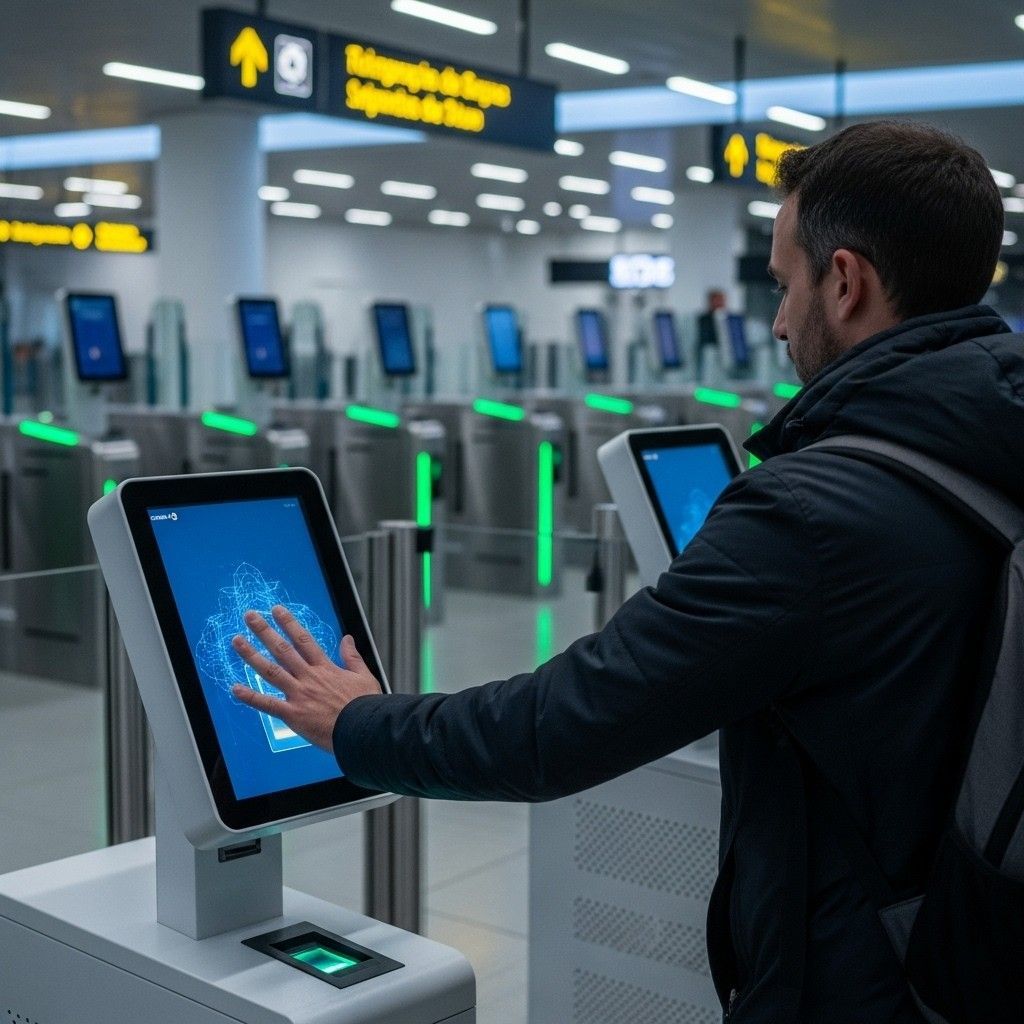
Portugal's main airport faced severe congestion as the European Union's new border registration system entered its mandatory phase—coinciding with peak Easter holiday travel in early 2026. The Portuguese Security Police (PSP) and airport operators warned that wait times could reach 2 hours or more at Lisbon's Humberto Delgado Airport during this period, with similar disruptions expected across the Schengen Area.
The system at the center of the delays is the European Entry/Exit System (EES), a biometric registration protocol that replaced passport stamps with digital fingerprint and facial scans for all non-EU travelers. While the system launched gradually in October 2025, the transition period ended April 9, requiring border authorities to register 100% of third-country nationals without the safety valve of a full suspension.
Why This Mattered
• Mandatory biometric checks: As of March 31, all non-EU arrivals in Portugal were registered in the EES—no exceptions. Full suspension of the system became impossible after April 9.
• Easter timing: The compliance deadline coincided with Easter 2026 (March 29–April 1), one of Europe's busiest travel periods.
• Recorded wait times: Lisbon Airport experienced 2-hour queues on peak days; some passengers reported waiting from 6:00 a.m. until 11:00 a.m. to clear border control.
• Technical challenges: Self-service kiosks experienced malfunctions, and automated gates remained underutilized due to staffing limitations.
How the System Works
The EES applies to 29 European countries, including Portugal, and captures biometric data—fingerprints and facial images—from travelers from the United States, United Kingdom, Brazil, and other non-EU nations staying up to 90 days within any 180-day period. The stated goal was enhanced security and streamlined migration tracking.
According to the European Airports Council (ACI Europe) and airline trade group A4E, processing times at border checkpoints increased significantly during the initial rollout. The organizations warned that "the combination of mandatory full registration and reduced operational flexibility would place substantial pressure on border control operations."
During the six-month transition, border authorities in Portugal and elsewhere could activate partial or total suspension of EES checks during peak passenger flows. That possibility concluded on April 9. After that date, only partial suspension remained possible under stricter conditions. The European Commission authorized member states to invoke suspension periods in exceptional circumstances, though the exact duration and conditions varied.
What Happened in Lisbon During Easter 2026
Passengers arriving at Lisbon's Humberto Delgado Airport during Easter week encountered extended queues. According to ANA—Aeroportos de Portugal, wait times peaked at approximately 2 hours during morning arrivals, with some travelers reporting waits of four to five hours. The PSP deployed additional officers to assist with the transition, and ANA accelerated installation of self-service kiosks. However, technical issues and the unfamiliarity of arriving passengers with the biometric enrollment process created bottlenecks throughout the terminal.
Which areas were most affected? Terminal 1 experienced the heaviest congestion, particularly at the main border control desks on the lower level. Terminal 2 saw somewhat shorter waits, though delays still exceeded typical levels. Porto Airport and Faro Airport reported similar but less severe delays, as they handle lower international passenger volumes.
What This Meant for Residents
For anyone living in Portugal—whether a Portuguese citizen, EU national, or legal resident—the EES did not apply directly when entering or leaving the Schengen Area. Residents continued to use standard EU passport lanes or automated e-gates. However, the system's operational strain had practical consequences:
• Airport congestion: Terminals became more crowded, and parking, check-in, and security queues lengthened as border processing slowed.
• Visitor delays: Those meeting family or friends flying in from non-EU countries—Brazil, the United States, Canada, the United Kingdom—experienced significant delays, especially during Easter week.
• Business travel impact: Companies in Portugal hosting international clients or remote workers from third countries needed to factor in longer transit times and potential missed connections.
• Practical guidance for residents picking up visitors: Arrive at the terminal 30 minutes later than usual to account for processing delays. If possible, arrange for visitors to use cell phone contact to confirm they have cleared border control before you leave the parking area. Short-term parking at Lisbon Airport fills quickly during peak periods; consider using the mobile app to monitor availability or use designated overflow lots. For taxis and ride-sharing, allow an extra 20–30 minutes for driver wait times.
Alternative Processing Options
The "Travel to Europe" pre-registration program allowed non-EU travelers to submit personal data and travel details before arrival. While promoted by airlines and travel agencies, adoption rates remained modest, largely due to low public awareness. The app generated a QR code that could be scanned at self-service kiosks, theoretically reducing processing time, though its effectiveness and actual time savings varied by airport and individual circumstance.
Other European countries implemented staged approaches. Spain opted for a slower rollout to avoid peak-season disruptions, while France delayed full implementation, citing infrastructure and staffing challenges across multiple border points.
The Broader EU Digital Border Strategy
The EES was the first component of a comprehensive digital frontier strategy. The European Commission planned to introduce the European Travel Information and Authorization System (ETIAS), a visa-waiver pre-screening program similar to the United States' ESTA. Travelers from visa-exempt countries would need to apply online and pay a fee before boarding flights to Europe. Combined, the two systems aimed to modernize border security.
For residents of Portugal, international travel—both outbound and hosting visitors—became more complicated during the transition period. Those planning Easter travel or summer holidays faced the need to build extra buffer time at the airport and advise international guests to prepare for extended processing times. Residents picking up visitors were encouraged to plan for significant delays at border control and to use the pre-registration app where possible to expedite entry.


