

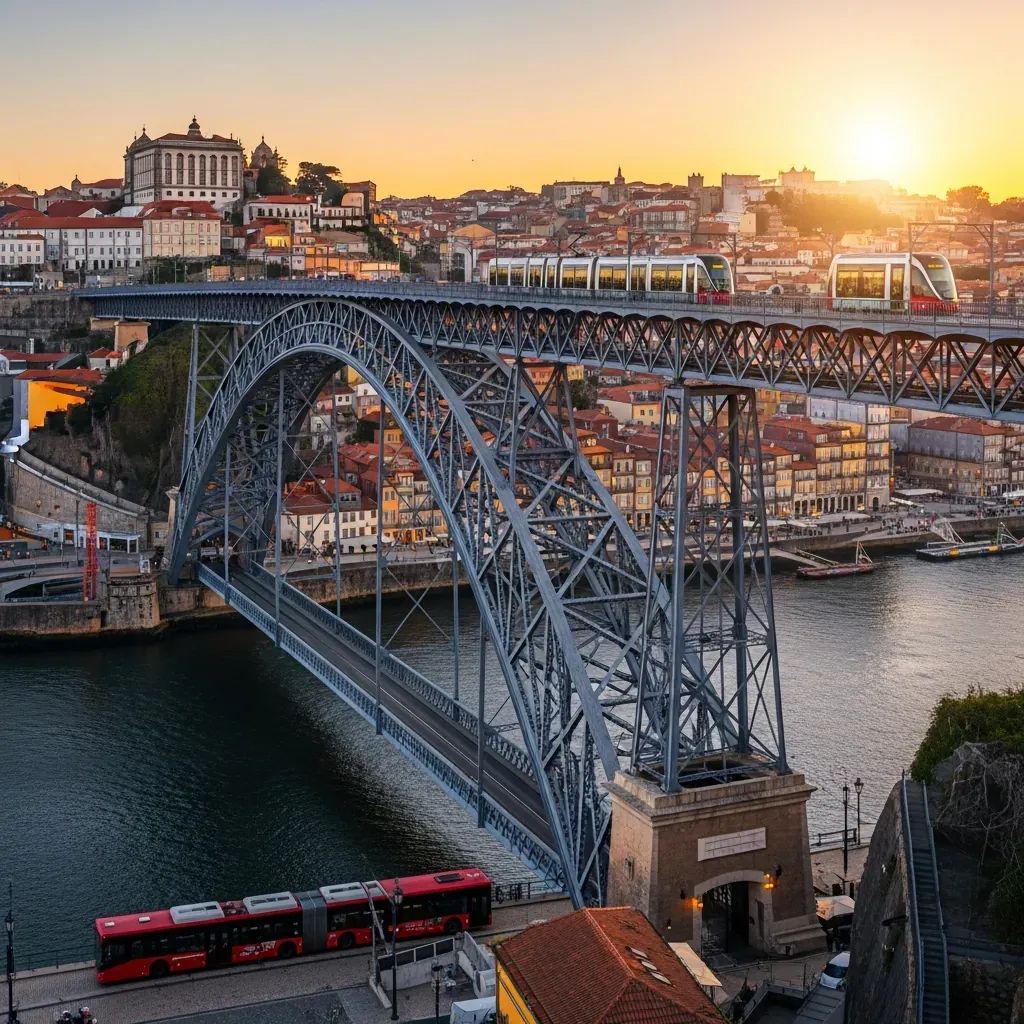
Porto’s most recognisable silhouette still does more than decorate postcards. Every day, the twin-deck Dom Luís I Bridge ferries metro riders, buses, taxis, cyclists and throngs of tourists across the Douro, all while quietly showcasing the stamina of 19th-century engineering strengthened by 21st-century know-how.
Quick view from the riverbank
• 140 years of continuous service and counting
• 30.9 M metro journeys registered on the upper deck in 2025
• €3 M rehabilitation of the lower deck finished in 2023
• UNESCO World Heritage status protects the structure since 1996
• No major closures scheduled for 2026, only routine night work as needed
Why the span still matters in 2026
Portuenses rarely stop to think about it, but the bridge remains the region’s single most-used cross-river corridor. On the upper level, trams of the Yellow Line (D) glide alongside pedestrians chasing that Insta-ready skyline. Below, the road deck—now limited to buses and taxis— ensures public transport keeps priority during rush hour. Urban planners credit the policy with nudging locals toward low-emission mobility, a shift Lisbon watches with interest.
The bridge is also a barometer for tourism. Local travel agencies estimate that more than 80 % of first-time visitors set foot on the span, placing it on par with Livraria Lello and the Ribeira quayside as a must-see stop. Hoteliers say the structure’s 24-hour accessibility helps spread footfall beyond peak daylight hours, easing pressure on historic streets.
Engineering health check
Restoration crews wrapped up a three-year project on the lower deck in early 2023, swapping out 100 000 rivets, replacing corroded plates and installing a hydraulic damper to tame pedestrian-induced sway. The new lightweight concrete slab now supports vehicles up to 60 t, doubling the previous limit and giving civil engineers confidence the steel arch can “rest easy for at least three decades.”
A smaller preventive campaign followed in May–June 2025 on the metro rails. Nightly closures after 22:10 let workers grind, weld and ultrasound-scan critical joints on one track, forcing a short shuttle transfer at Jardim do Morro. Metro do Porto insiders call it “dentistry, not surgery”—tiny interventions done well before decay turns into downtime.
Numbers behind the everyday crossing
Even without private cars, traffic remains intense:• 84 597 average daily metro validations on Line D last year.• 129 082 daily validations over the wider common trunk, a reminder that many other lines funnel trains across the Douro.• No audited counts exist for foot traffic, yet police crowd-control plans for São João 2025 anticipated over 55 000 pedestrians on the upper deck during the peak hour of the festivities.• The lower deck’s bus-only rule removed an estimated 9 000 cars per weekday from the bridge, according to a 2024 IMT note.
Icon status—beyond steel and rivets
Historians still hail Théophile Seyrig’s work as an “industrial cathedral” that helped the iron age of construction vault into the modern era. Its two-tier concept, radical in 1886, set a template for countless bridges worldwide yet remains “unique in scale and elegance,” says heritage scholar Maria da Cunha. UNESCO points to the structure’s grainy grey lattice as an integral part of the Douro landscape, linking the Baroque skyline of Porto with the port-wine lodges of Gaia in a single panoramic sweep.
Local chefs, street musicians and sunset yogis have also turned the decks into an unofficial cultural stage, proving infrastructure can double as civic space. Few other European bridges simultaneously carry light-rail, motor traffic and promenades while welcoming photo shoots, first kisses and street art performances.
What to watch next
No large-scale works loom on the calendar, but city hall’s “Santa Clara Intervention Zone”—approved last summer—could reshape the north abutment. Plans call for a public garden, façade restorations and a riverfront lift linking the Ribeira tunnel to the bridge-level promenade. Meanwhile, Infraestruturas de Portugal is quietly studying whether an additional metro track could one day fit on the upper deck—an idea still on the drawing board.
For now, the advice is simple: if you have not crossed the Dom Luís I lately, go. The view is unchanged, yet everything about the experience—safer decks, fewer cars, smoother rails—shows how Porto is learning to let history and modern mobility walk side by side.


