
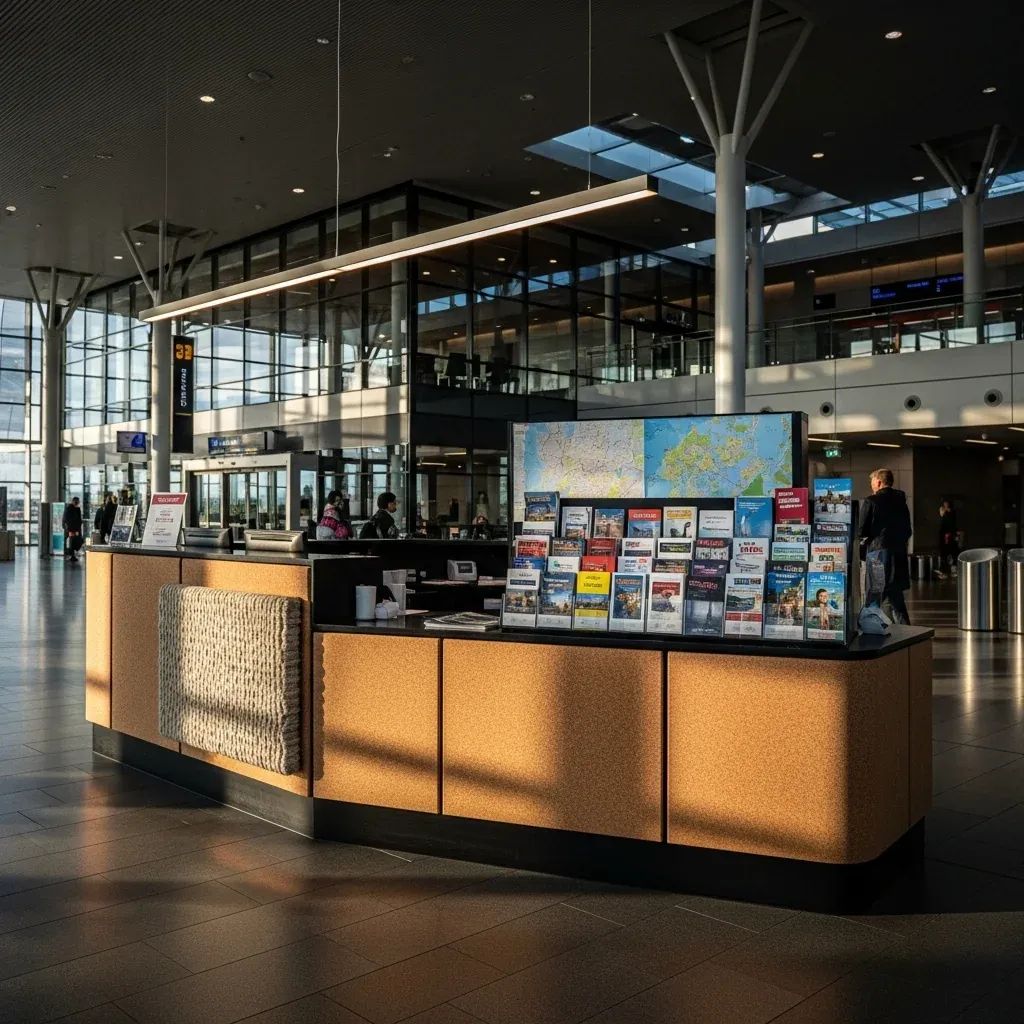
Visitors touching down in Beja over the next few years are set for a markedly warmer welcome—and that shift could ripple well beyond the terminal. A fully-fledged tourist hub inside Beja Airport is scheduled to open by June 2026, anchoring a wider push to put the Alentejo on travellers’ mental maps and—crucially—on their itineraries.
Quick glance at what’s changing
• Purpose-built welcome centre operated by IPBeja students and staff
• Branded space designed to broadcast the Alentejo identity from the moment passengers step off the aircraft
• Training for airport police, customs and ground staff to embed a culture of hospitality
• Digital update: Beja Airport finally gains a dedicated page on VisitAlentejo
Why Beja suddenly matters to holiday-makers
For years, many private-jet passengers and charter groups left the apron at Beja unaware they had landed in one of Portugal’s most storied regions. That disconnect is an ironic side-effect of the airport’s history: built originally as Air Base 11, Beja welcomed civilian flights late and never developed the retail bustle of Faro or Porto. Local tourism chiefs now see an opportunity. Executive aviation registered 600 movements in 2024 and non-scheduled charters hit 30 rotations—small numbers compared with Lisbon, yet a clear sign that the runway’s potential is real.
The new centre aims to convert that traffic into overnight stays along the Guadiana, wine-tasting weekends in Vidigueira or stargazing breaks in Alqueva’s Dark Sky Reserve. Bringing the destination to life inside the terminal is cheaper than luring visitors back once they have driven north toward the A2, officials argue, and it dovetails with regional ambitions to disperse tourism income beyond coastal hotspots.
What travellers will find once the doors open
The physical room already exists landside, but a freshly signed contract between the Alentejo Regional Tourism Board and the Polytechnic Institute of Beja finally sets ground rules and funding. Under the plan:
• Students of tourism and foreign-language courses will staff the desk on arriving-flight days, handing out maps, QR-coded tasting vouchers and a modest welcome kit.
• Interior design will lean on earth-toned cork, schist and locally woven wool, subtly echoing landscape and craft traditions.
• A small digital wall will stream weather at Comporta’s beaches, real-time rail schedules and curated events from Évora to Serpa.
In parallel, police officers and customs agents will attend short courses on cross-cultural service. “Security uniforms are often the first human contact,” one project coordinator told us; a friendly greeting in basic French or German can set the holiday tone just as powerfully as a glass of vinho de talha.
Lessons borrowed from Faro and Porto
Beja’s backers studied the welcome-desk playbook at Faro and Francisco Sá Carneiro, two regional airports that consistently score well on the Airport Service Quality Survey. Three takeaways shape the Alentejo blueprint:
Extended opening hours matter. Faro’s 8 a.m.–11 p.m. schedule keeps information flowing even for late Ryanair arrivals. Beja will start more modestly but plans to scale as traffic warrants.
Local products boost both recall and revenue. Porto’s desk doubled as a pop-up for Douro wine passes; expect olive-oil minis and artisan honey to appear in Beja’s kit.
Data capture is gold. Both airports funnel e-mail contacts into regional CRM platforms. Alentejo’s team intends to do the same, feeding personalised content long after visitors fly home.
Sustainability also looms large. The project taps insights from NEST—Tourism Innovation Center, nudging the airport toward smart-lighting, waste-sorting points and potentially a carbon-offset calculator built into the information kiosk.
Beyond leisure: logistics, defence and a bigger picture
Beja’s civilian wing shares tarmac with the Air Force, and Lisbon’s draft State Budget hints at fresh capital for dual-use facilities. A logistics platform linking road, future rail and air cargo is pencilled in for 2026, while Infraestruturas de Portugal studies a spur to the Alentejo main line. That could transform the airport from niche gateway into a multimodal node feeding Iberian supply chains—and give tourism another boost by improving domestic connectivity for residents.
Local officials choose their words carefully when asked about euros and cents, but concede that the hospitality desk is a low-risk down-payment on far larger infrastructure bets. If visitor numbers climb, the region gains leverage to press for scheduled services, not just ad-hoc charters.
What happens next—and what to watch
Fit-out works begin early 2026 once municipal permits land. Recruitment of the first eight student hosts starts this spring, with language testing in English, French, German and Mandarin. The partner institutions will review performance six months after launch, adjusting hours and tech features.
For Portuguese travellers—and residents of the Alentejo itself—the experiment offers a test case: can a relatively quiet airport become a front-door showcase for rural culture, much as wine cellars or museums do inland? If it succeeds, similar micro-centres could sprout in Viseu or Vila Real, reinforcing Portugal’s push to spread tourism’s benefits beyond the coast and the capital.
Either way, anyone landing at Beja from next summer will no longer ask, “Where exactly am I?” The answer will be unmistakable—right in the heart of the Alentejo.


