

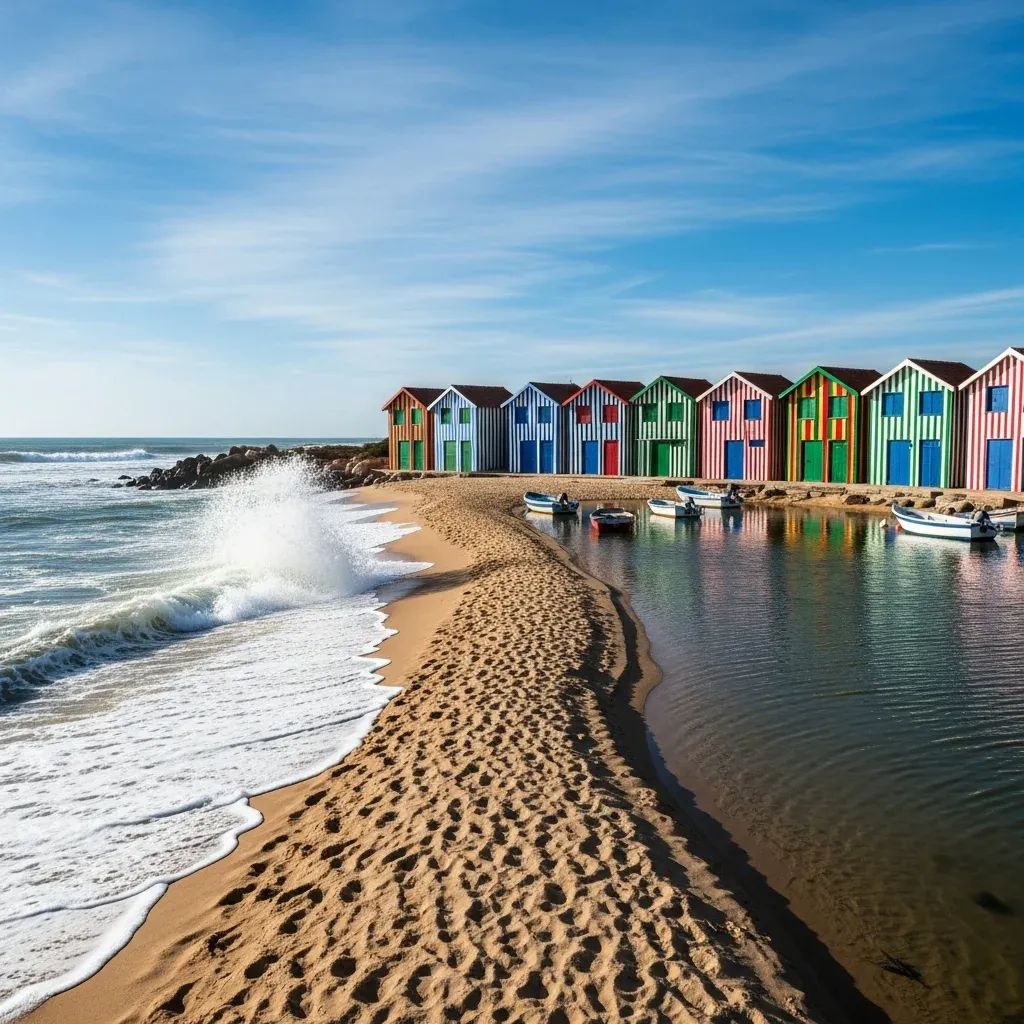
Colourful wooden cottages painted like beach candy, a lagoon that smells of salt and seaweed, and the constant tension between preservation and profit — that mix explains why Costa Nova’s photogenic “palheiros” have become a national obsession. For residents of Portugal who might be plotting a winter weekend or wondering where their next tax euros are going, here is what really matters about the striped houses everyone keeps posting on Instagram.
Quick look before you hit the A17
• Palheiros began as humble fishing sheds, not holiday villas.
• They sit on a narrow spit between the Atlantic surf and the Ria de Aveiro lagoon.
• A late-20th-century makeover switched the colour palette from earthy reds and blacks to today’s kaleidoscope of stripes.
• Tourism revenue is surging, yet the permanent population keeps shrinking.
• Local authorities are debating tougher rules to protect the wood-frame architecture from Airbnb conversions.
From bait boxes to postcard fame
When 19th-century fishermen hauled their nets ashore, they needed dry storage for sails, barrels and salted cod. They hammered together simple wooden haylofts — the original palheiros — coating them in tar-based paint mixed with red ochre or soot-black pigment. Fast-forward a century: rail links improved, holidays became mainstream, and visitors from Porto fell in love with the quirky skyline. Entrepreneurs repainted the façades in bright green-and-white, blue-and-yellow or red-and-cream stripes, instantly branding the village. Today those bands are so recognisable that the national tourism board splashes them across brochures pitched at Brazilians and North Americans.
Life behind the stripes: community and commerce
For all the coastal glamour, Costa Nova is still part of Ílhavo municipality, a town that relies on cod-fishing fleets, Vista Alegre porcelain and local universities. Locals complain that coffee prices on Avenida José Estevão jumped 30 % in five years as selfie hunters moved in. Yet the same visitors keep small businesses afloat in the off-season: marisqueiras serving stewed eel, bakeries selling ovos moles, surf schools and sailboat rentals on the glass-flat lagoon. According to property agency Imovirtual, a fully restored three-bedroom palheiro breached the €500,000 mark last summer — unthinkable a decade ago.
Keeping the heritage striped, not stripped
Ílhavo council is drafting a Special Protection Plan that limits façade alterations, window replacements and roof angles. The University of Aveiro’s architecture department warns that without humidity-resistant timber and traditional sand-lime plaster, restoration costs spiral. Meanwhile, residents push for a cap on short-term lets, citing noise, parking shortages and sewer overload every August. The regional tourism board counters that overnight stays generated €9.6 M in municipal taxes last year, a lifeline when EU funds taper off.
Visiting without leaving a footprint (or parking ticket)
Train lovers can hop off at Aveiro station, then ride the yellow Transdev bus that drops you steps from the promenade. Drivers should arrive before 10 a.m. to snag the rare free space and avoid fines on the marginal. Local guides suggest:
• Cycling the 7 km ecovia that links Costa Nova to Praia da Barra’s lighthouse.
• Booking a moliceiro boat tour at low tide for the best lagoon bird-watching.
• Skipping plastic souvenirs and buying hand-painted ceramic house numbers instead.
Done right, the striped façades remain more than a backdrop for photos; they tell a living story of Portugal’s maritime grit, adaptive reuse and coastal identity — a tale every resident can claim as part of the national fabric.


