
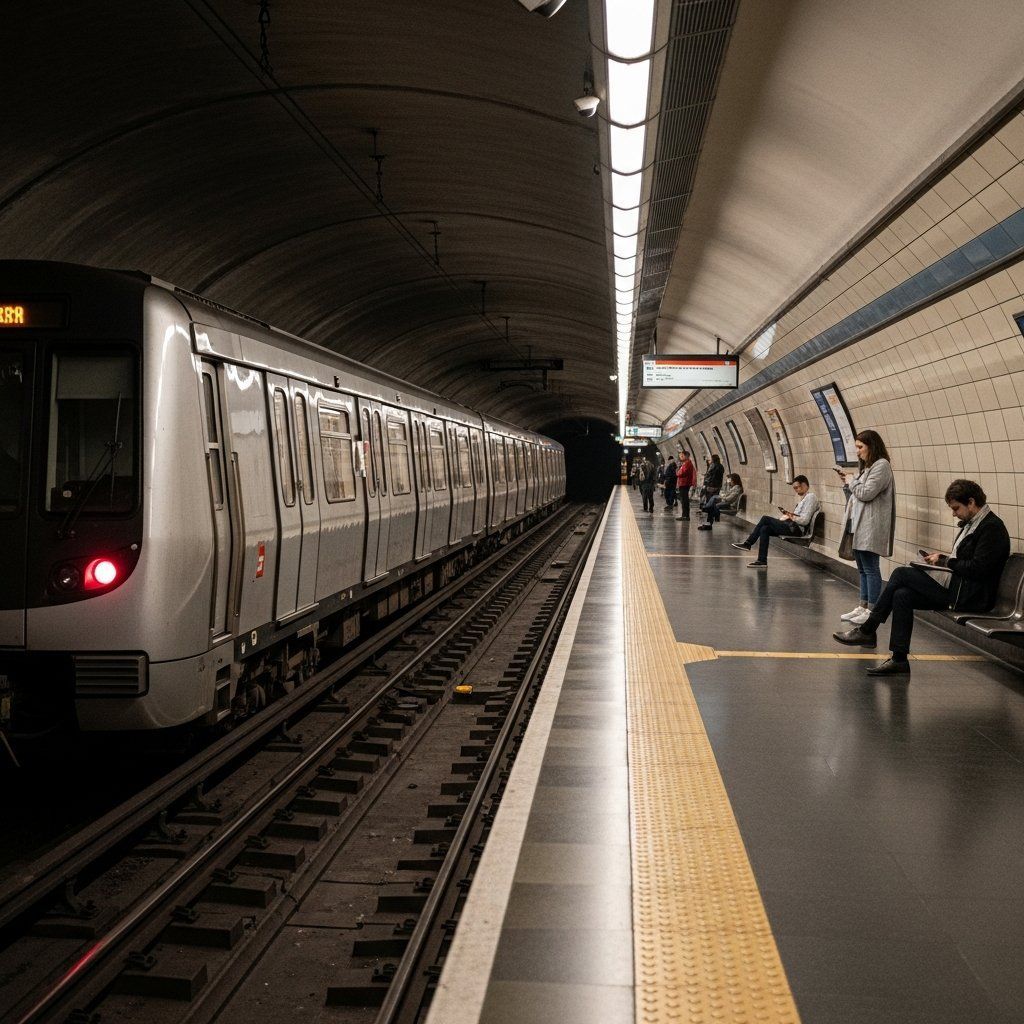
A ripple of uncertainty swept through Lisbon’s underground network this afternoon as hundreds of commuters discovered their usual routine had been abruptly reshuffled. Lisbon Metro operators, locked in yet another round of workforce deliberations, signalled a brief service slowdown that hinted at deeper labour unrest likely to flare again later this month.
Quick glance: What commuters noticed today
• Service window affected: 13:15–15:45 h.
• Reason: A mid-day plenary meeting called by the metro workforce.
• Lines involved: All four trunks—Yellow, Green, Blue and Red—operated at reduced frequencies.
• Next flash-point: A nationwide general strike pencilled in for 11 December.
Why a two-hour gathering rippled across the city
The brief pause sprang from a worker assembly convened at 14:00 h inside the Alto dos Moinhos depot. Union leaders from FECTRANS—an umbrella body for transport and telecom staff—used the slot to fine-tune strategy ahead of the broader strike. The meeting drew additional gravity because the head of Portugal’s largest union confederation, CGTP-IN, joined the debate, urging rank-and-file staff to “stay mobilised”.
New contract signed… yet tension lingers
It might sound contradictory: Metro administration and unions only last month hailed a fresh Company Agreement as a breakthrough. Headlines then trumpeted concrete wins—among them a 37 h 30 cap on weekly shifts, shorter underground stints for tunnel workers, and a bump in the daily meal allowance to €12. The deal runs through 2030 and, on paper, preserved every pre-existing right. Even so, a large slice of staff claims unresolved issues remain:
Salary scale progression that many feel lags rising housing costs in Lisbon.
Staffing levels they argue are too lean to guarantee punctuality.
Career-long exposure to tunnel dust and vibration without commensurate hazard pay.
How the stoppage played out on the ground
For regular riders, the effect varied by corridor:
• Green Line trains bunched to 12-minute gaps, causing crowds at Cais do Sodré.
• A Blue Line shuttle kept Santa Apolónia connected but bypassed intermediate stops at peak moments.
• Airport-bound Red Line units filled rapidly, nudging tourists toward taxis or the Aerobus.
• The Yellow Line—already grappling with works near Telheiras—reported the heaviest delays.
Carris reinforced surface buses along Avenida da Liberdade, and ride-share prices surged by nearly 40 % during the two-hour window, according to data tracked by mobility app Hostspot.
What to expect on 11 December
Labour organisers insist the midday slowdown was merely a dress rehearsal. If mediation fails, the general strike could freeze metro operations for an entire day and spill over into suburban rail and river ferries. Historically, full-day stoppages slash the metro’s capacity by 80 %–90 %, forcing commuters onto the overburdened road network and inflating travel times four-fold.
Tips for riders if the walk-out goes ahead
Plan early: Factor an extra hour into morning commutes.Use Park-and-Ride: Car parks at Colégio Militar and Oriente connect with bus corridors likely to stay active.Download CP app alerts: Comboios de Portugal typically issues real-time updates when metro closures surge rail demand.Get a Navegante swap: Monthly pass holders can ask customer service to extend validity if disruptions exceed a legally fixed threshold.
Bigger picture: Labour friction in Portugal’s transport hub
Portugal has witnessed a string of industrial flare-ups in the past 18 months—at TAP, ground handlers, and port operators—largely driven by cost-of-living pressures outpacing negotiated pay rises. Lisbon Metro’s workforce is one of the country’s most unionised, wielding the clout to paralyse mobility across a metropolitan area of 2.9 M residents. City hall’s long-awaited expansion projects—most notably the Circular Line link between Cais do Sodré and Campo Grande—could offer relief once completed, but until then, every short stoppage feels magnified.
The takeaway
Today’s brief disruption underscores that the ink on last month’s Company Agreement has not quelled staff dissatisfaction. Unless fresh concessions emerge—or passengers see visible improvements—Lisbon faces more than a passing headache on 11 December: it confronts the prospect of a day-long freeze on one of its critical mobility arteries, just when holiday traffic peaks.


