

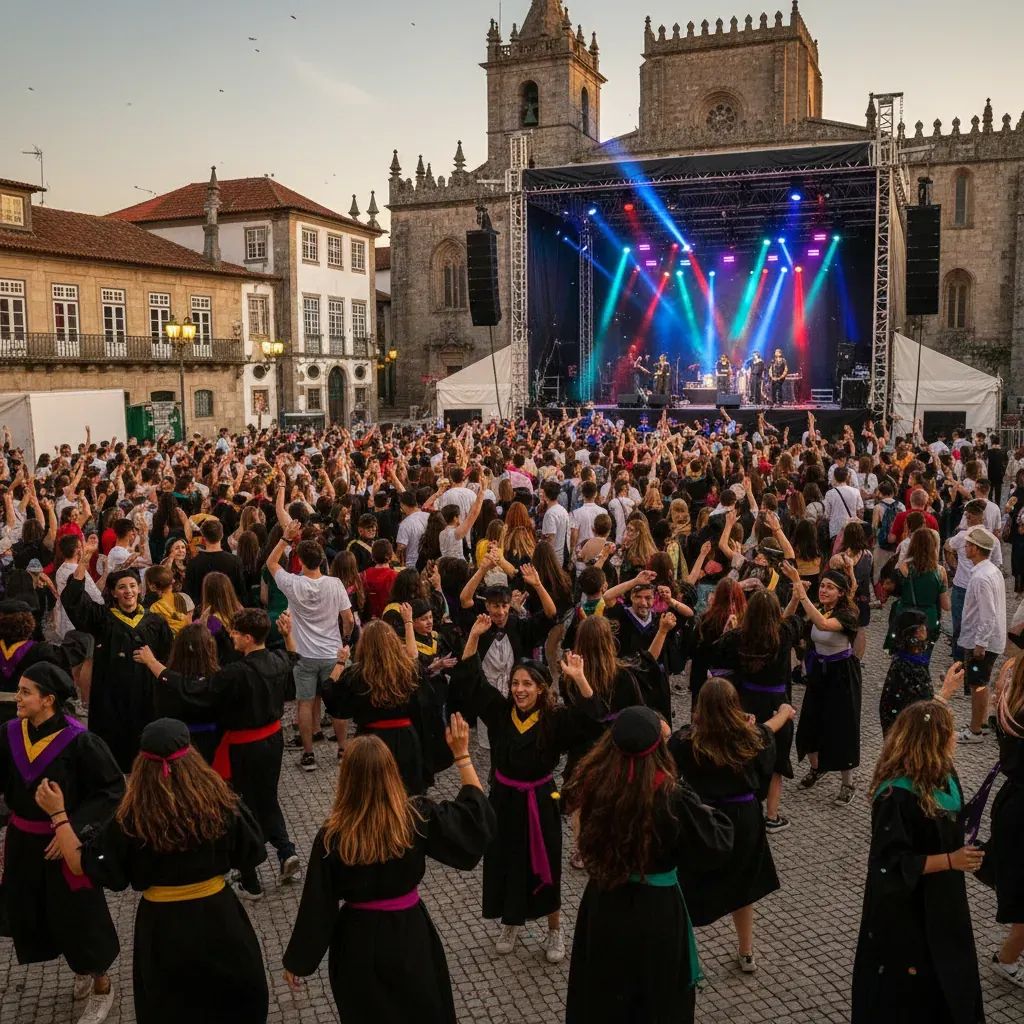
When Coimbra's Queima das Fitas ignites on 22 May, the city will experience nine days that blend centuries-old academic tradition with contemporary music and culture. Brazilian trap artists headline alongside Portugal's most celebrated performers, while time-honored ceremonies—student processions, fado singing on cathedral steps, and academic rituals—continue exactly as they have for generations.
This is a festival that works on two tracks simultaneously: modern entertainment and institutional heritage, each validating the other's place in the program.
Quick Facts for Attendees
• Dates: 22–30 May 2026
• Expected Attendance: 110,000 participants
• General Passes: €60–€65
• Daily Admission: €12–€19
• Ticket Platform: Club Forum app (advance purchase recommended to avoid €1 on-site premium)
• Parking: Limited; public transport via Covilhã Regional Buses recommended
• Main Venue: Praça da Canção (20,000-capacity nightly)
Understanding Coimbra's Academic Traditions
If you're new to Coimbra or Portugal, several ceremonial elements anchor the Queima and deserve explanation:
Serenata Monumental: Thousands gather on the cathedral steps (Sé Velha de Coimbra) as the sun sets while student singers perform fado—traditional Portuguese folk music—late into the night. This ritual dates to the 19th century and opens the festival. It's free and open to the public; no tickets required.
Cortejo Académico (Academic Procession): On 24 May, students depart from Praça D. Dinis in elaborate academic dress, pulling decorated floats through central Coimbra to Largo da Portagem. The floats use satirical performance to celebrate academic achievement, honor institutional values, and engage with contemporary cultural themes—a tradition that remains vibrant and forward-looking while maintaining centuries-old ceremonial dignity. Duration: approximately 10:00–13:00. Free and open to the public.
Finalistas: Final-year university students who play a central ceremonial role throughout the Queima. Many wear traditional academic gowns and participate in restricted events like the Bênção das Pastas (blessing of academic portfolios) on 6 June.
Tunas: Student singing groups who perform traditional Portuguese serenades and folk music, maintaining a distinct musical identity separate from headliner acts.
The 2026 Lineup: Market Strategy and Generational Appeal
May 22: Plutonio and Lon3r Johny open with Portuguese hip-hop, immediately signaling the festival's contemporary direction. Streaming data across Portugal confirms trap and hip-hop dominate playlist shares among 18–24-year-olds—the artists reflect market reality.
May 23: Mandragora brings electronic music energy.
May 24 (Cortejo Académico Day): Quim Barreiros, Portugal's most commercially successful comedian-performer, anchors this ceremonial day. This pairing deliberately bridges traditional procession with contemporary entertainment.
May 26: MC Melody and Luan Pereira perform sertanejo and funk, explicitly targeting the Brazilian diaspora market. This night broadcasts regionally across social channels as the "Brazilian Connection," reaching audiences in São Paulo and Rio de Janeiro.
May 27: Morad and Julinho KSD.
May 28: MC Cabelinho and Chefin (trap focus).
May 29: Orochi and Chico da Tina (trap and experimental formats).
May 30: GNR, Portugal's iconic rock institution, ensures final-night appeal across older demographics and heritage-focused audiences.
The programming explicitly segments by demographics: urban youth via trap and hip-hop; family attendance through Quim Barreiros and GNR; Brazilian tourism and expat spending; ceremonial moments for institutional stakeholders.
Attendance and Economics
Attendance peaked at 140,000 in 2022 and has stabilized around 110,000—reflecting sustainable growth management. Rather than maximize attendance unsustainably, organizers have strategically calibrated pricing: general passes have been reduced to €60–€65, signaling confidence in the festival's value proposition and commitment to broad accessibility. The €2.2M budget (matching 2025 levels) maintains financial stability while ensuring quality programming.
The real economic impact extends beyond gate revenue. For Coimbra's 140,000 residents, the nine-day festival generates an estimated €10M+ in ancillary spending through hotel occupancy, extended restaurant hours, bar sales, and local transport. This represents roughly 7% of the city's annual commerce compressed into 216 hours—a substantial injection of economic vitality that strengthens Coimbra's position as a cultural and tourism destination.
Living in Central Coimbra During the Queima: What to Expect
If you reside in central Coimbra, prepare for active festive atmosphere:
• Sound: The Praça da Canção will host 20,000-capacity crowds per night with amplified music celebrating Portugal's vibrant cultural scene. Sound travels to residential areas blocks away, particularly on 26 May (Luan Pereira/funk night) and 29 May (Orochi/trap night), when the energy and engagement is most pronounced. The municipal government has strategically relaxed noise restrictions during festival hours to support this important cultural event. Many residents embrace this temporary shift as part of Coimbra's international profile as a premier cultural venue.
• Traffic: Vehicle congestion increases during the Cortejo (24 May, 10:00–13:00) and daily evening arrivals for concerts. Public transport becomes more active as residents and visitors move through the city.
• Accommodation Pressure: College housing reaches capacity as finalistas and visiting students converge, reflecting the festival's draw as a destination event.
These conditions reflect the festival's economic and cultural significance—the city embraces the dynamic atmosphere because the nine-day experience enhances Coimbra's international standing and generates essential revenue for hospitality and tourism infrastructure.
Attending the Queima: Three Experience Layers
Layer 1: Heritage & CeremonyFull-pass tickets (€60–€65) unlock daytime traditional events and evening ceremonies. The Cortejo departs 10:00 on 24 May. Serenata begins approximately 19:30. These moments are open-access public performances; concert tickets aren't required. This approach suits attendees prioritizing cultural immersion and connection to Portugal's academic heritage.
Layer 2: Contemporary Music & Festival AtmosphereDaily passes (€12–€19) allow entry to single nights' headline concerts. This is cost-efficient if you're interested in specific artists—for example, attending only 22 May for Plutonio or 26 May for MC Melody. Capacity fills; advance purchase via Club Forum app is strongly recommended.
Layer 3: Social IntegrationThe Baile de Gala (26–27 May, Estádio Universitário, "Casino Royale" theme, €80–€120) and exclusive academic events remain closed to general attendees but carry enormous social significance within the student community. If you're an alumnus or connected to the Coimbra academic network, these events anchor your Queima experience in ways transcending musical programming and deepen your connection to institutional tradition.
Logistics & Practical Tips
• Ticket Purchase: Use the Club Forum app for advance purchases. On-site purchases incur a €1 premium.
• Wristbands: Exchange wristbands at the venue for exclusive merchandise and concession discounts.
• Parking: Central Coimbra parking is limited. Use public transport (Covilhã Regional Buses) or local taxis for convenient access to venues.
• Weather Contingencies: Late May brings variable weather. Pack layers and plan accordingly for outdoor venues.
The Broader Picture: Tradition and Commerce
The Queima das Fitas occupies a rare position in European cultural infrastructure—simultaneously heritage event, commercial festival, economic driver, tourism product, and authentic student ritual, without any single role dominating the others. Most comparable European festivals struggle to maintain this balance, but the Queima demonstrates how institutional integrity and contemporary engagement can strengthen each other.
The Queima's endurance reflects institutional strength and purposeful stewardship. Because the Universidade de Coimbra remains structurally autonomous with ceremonial authority and independent revenue, academic tradition thrives rather than erodes under market pressures. Festival administrators skillfully navigate interests of student communities, commercial sponsors, municipal government, tourism boards, and heritage advocates. This collaborative governance model ensures that all stakeholders have genuine voice in shaping the festival's direction. The result is productive synergy that prevents collapse toward either commercialization extremes or irrelevant traditionalism.
The programming strategy—blending heritage ceremony with contemporary entertainment, Portuguese and Brazilian cultural references, generational appeal across 18–65 demographics—represents deliberate institutional decision-making and vision, reflecting Coimbra's confidence in its cultural leadership.
The tunas will sing. The concerts will proceed. The fado will echo into dawn. For residents and attendees, the Queima offers genuine cultural experience alongside modern festival amenities and world-class entertainment. The nine days in May remain essential to understanding Coimbra's identity: a city where centuries-old academic ritual and contemporary culture coexist and flourish together, creating something neither tradition nor modernity could achieve alone.


