
Why This Matters
• Cinema infrastructure shrinking fast: Portugal started 2026 with 112 fewer cinema screens than 2025, leaving multiple district capitals without commercial movie exhibition.
• Cineplace bankruptcy: The nation's second-largest cinema chain officially collapsed in early 2026, closing sites in Leiria, Viana do Castelo, and eight other cities.
• Government review underway: A working group formed by the Portugal Ministry of Culture, Youth and Sports is expected to deliver findings in March 2026 on the crisis and potential solutions.
The Portugal Cinema and Audiovisual Institute faces mounting pressure to overhaul its support mechanisms for film exhibition, as the collapse of major commercial operators and the survival struggles of community-driven cinema spaces expose a fragile ecosystem.
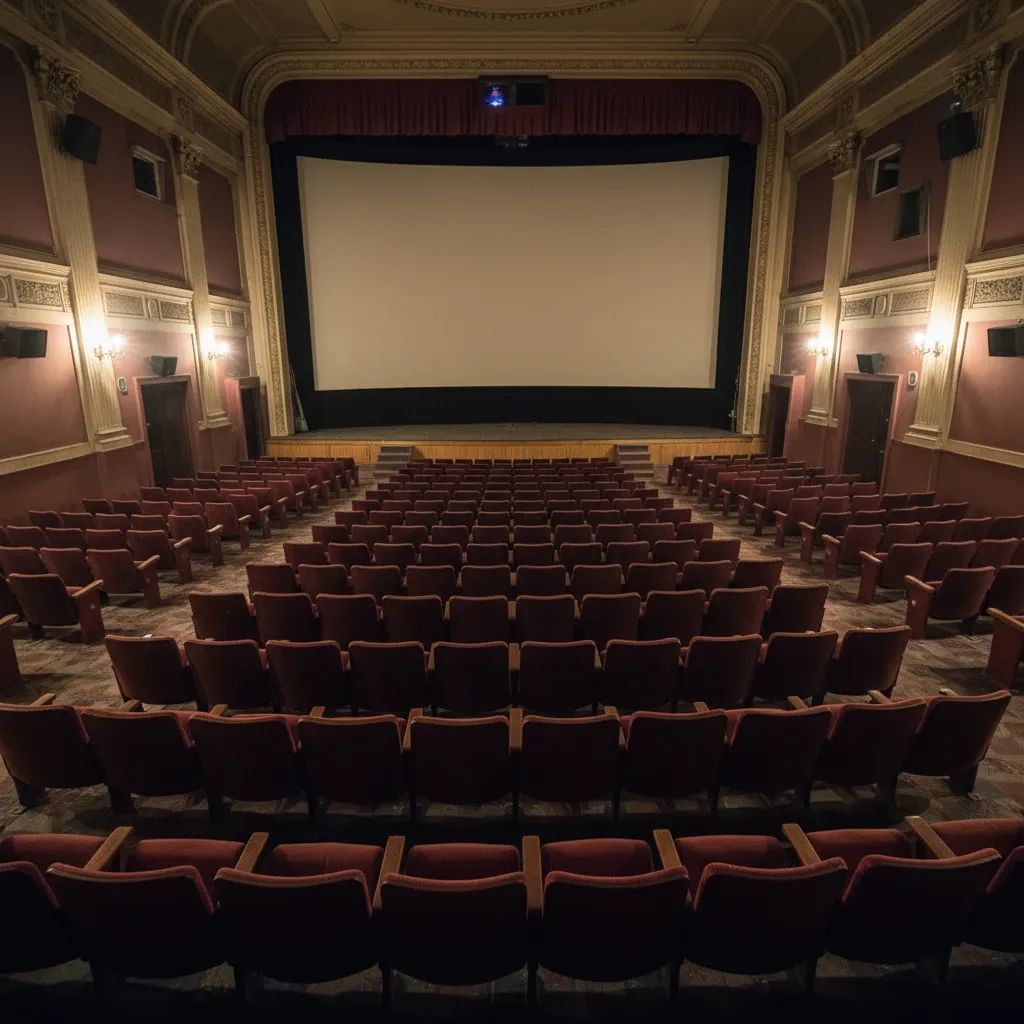
Cineplace, once the country's second-largest exhibitor, shut its final locations in Leiria and Viana do Castelo in January 2026 after a multi-year financial unraveling. The closures — part of a wave that also saw NOS Lusomundo Cinemas retreat from smaller markets — have left Bragança, Beja, Portalegre, Guarda, and Viana do Castelo without regular commercial film screenings. In total, the nation entered 2026 with just 450 active cinema screens, down from 562 twelve months earlier.
While the Portugal Ministry of Culture, Youth and Sports convened a task force in late 2025 to propose remedies by March 2026, operators on the ground — particularly the network of cine-clubs and cultural associations that sustain alternative circuits — argue that structural underfunding has already weakened the country's ability to respond.
Cineplace's Collapse and the Shopping-Mall Model
Cineplace had survived a 2021 Special Revitalization Plan (PER) designed to give it breathing room after pandemic-era debt, but the respite proved temporary. By December 2025, it had shuttered sites in Caldas da Rainha, Guarda, Covilhã, Braga, São João da Madeira, and Loures. Earlier that year, it had already exited Portimão, Guia (Algarve), the Madeira archipelago, and Seixal.
The pattern of closures points to a mall-centric exhibition model under stress: landlords increasingly prefer tenants who can pay higher rents than aging multiplex operators. With Portuguese cinemas selling 10.9 M tickets in 2025 — an 8.2 % decline year-on-year and the worst performance in three decades outside COVID lockdowns — exhibitors face a vicious cycle of falling attendance, deferred maintenance, and lease renegotiations they cannot win.
António Costa Valente, a programmer with the Cineclube de Avanca and the Obrigatório Plan Association (which schedules weekly screenings at the Aveiro Theatre in central Aveiro), draws a sharp distinction between these commercial circuits and the community-based model. "The commercial circuit has transformed into a shopping-center circuit, and that circuit appears to be struggling. On the other hand, there are screenings organized by municipalities, which own most of the auditoriums where many cine-clubs program. I think the situation there is somewhat different," he explained.
Costa Valente, who also teaches at university level, argues that municipal governments must exert their regulatory powers to compel shopping-center operators to maintain cinema spaces. He pointed to Viana do Castelo as a case study: the city's mayor, Luís Nobre, stated publicly in a council meeting that his administration will issue an unfavorable opinion on any proposal to repurpose the Estação Viana mall's cinema halls, noting that "the integration of cinema in the shopping center was a weighing factor in the decision" to approve the development in the first place.
"The Viana do Castelo Council will issue an unfavorable opinion. The assumptions underlying the construction of the shopping center in the historic center of the city also rested on the cultural dimension. Make no mistake," Nobre emphasized, adding that the Portugal Ministry of Culture had yet to formally initiate the decommissioning review process.
Independent Success Stories — and the Cine-Club Difference
Against the backdrop of commercial retreat, a handful of independent cinemas — notably Nimas and Ideal in Lisbon, and Trindade in Porto — continue to report positive attendance figures, underscoring that demand for cinema persists when programming and venue character align with audience expectations.
Cine-clubs occupy a distinct niche. These are typically non-profit associations that partner with municipalities to screen art-house, European, and non-mainstream titles in civic auditoriums and cultural centers. Under ICA's Alternative Exhibition Circuit Support Programme, eligible organizations can apply for grants ranging from € 7,000 to € 10,000 per year (with possible uplifts), provided they meet strict criteria: at least 30 screenings annually featuring at least 80 % Portuguese, European, or low-market-share films, with a minimum of 8 national titles.
Nuno Pinto Cardoso, who coordinates programming for the Cinemalua Association at the Jaime Pinto Cinema-Theatre in São Brás de Alportel (Faro district), describes stable or even growing per-screening attendance among cine-club audiences. "I have a willingness to believe — I genuinely believe — that there is a public for a certain type of cinema that adds something," he said, welcoming the broader policy debate as evidence of cinema's enduring potential.
Tiago Veloso, representing the Cineclube da Maia, which regularly fills screenings to over 150 seats, observes that cinema in the Porto metropolitan area has improved over the past decade, citing the reopening of Trindade and the municipal Batalha Cinema Centre as sources of renewed energy. "It gives us a sense of unity. To think that the Cineclube da Maia is one more element contributing to the thinking around cinema in Greater Porto."
"Derisory" Funding and Calls for a Middle Tier
Yet satisfaction with programming outcomes does not translate into satisfaction with funding adequacy. Carlos Rafael Lopes, president of the Cineclube de Faro — which marks its 70th anniversary in 2026 — labels the ICA's allocation for alternative-circuit exhibition as "derisory" given the volume and cultural value of the work cine-clubs perform.
The structural problem, according to Nuno Pinto Cardoso, is the absence of a middle tier. The ICA currently offers two levels of exhibition support: the Alternative Exhibition Circuit Support (capped at € 10,000 annually) and the standard Exhibition Support (up to € 57,500 per year). "There is no intermediate program," Cardoso noted, proposing that the ICA create a stepped support mechanism to help ambitious community-based programmers scale without forcing them into the compliance overhead of larger commercial operators.
The president of the Cineclube de Joane in Vila Nova de Famalicão previously told Lusa that tripling his organization's annual grant from € 8,000 to € 24,000 would enable daily screenings — a target currently out of reach.
Costa Valente is blunt: "Things have to go through the ICA; it's the right arm of the Portugal Ministry of Culture in this area. It has an absolutely fundamental role. It cannot continue to support production if it does not support exhibition. Films have to reach the public, otherwise they do not exist. Making films to screen at festivals is very nice, but it is worth zero if they cannot then be shown across the entire country."
What This Means for Residents
For anyone living outside Lisbon or Porto, access to theatrical cinema — especially non-blockbuster, European, or documentary programming — is increasingly contingent on whether a local cine-club or cultural center operates in their municipality. The shuttering of commercial multiplexes has created a two-tier reality: urban residents with multiple exhibition options, and provincial audiences dependent on volunteer-run associations that operate on budgets smaller than a single-screen cinema's quarterly electricity bill.
The implications extend beyond leisure. Film literacy, cultural identity, and civic participation are all served by regular access to diverse storytelling. When district capitals lose their last commercial screen, the knock-on effect is felt in local employment (projection technicians, concession staff), in town-center footfall, and in the symbolic message that smaller cities are being written off as culturally unviable.
Municipalities that own auditoriums but lack the capacity or will to program them regularly face a choice: partner with cine-clubs (which typically bring curatorial expertise and eligibility for ICA grants), or allow those spaces to sit dark except for the occasional corporate event.
European Comparisons and Potential Models
Several European countries offer instructive precedents that underscore Portugal's funding gap. France's Île-de-France regional authority channels an average € 24 M annually into film financing across production, distribution, and exhibition — with selective incentives that weigh artistic merit and regional cultural reinforcement. The Nouvelle-Aquitaine region deploys € 11 M, while Germany distributes over € 400 M per year through a layered federal–state system, with regional funds like Film- und Medienstiftung NRW specifically rewarding cinemas that prioritize German and European titles.
The British Film Institute's Film Exhibition Fund takes a different approach, allocating up to £ 5,000 (€ 5,800) per applicant for outreach, marketing, and accessibility initiatives targeting underserved demographics — working-class audiences, Black and minority-ethnic communities, young people under 25, and disabled viewers. Spain's Instituto de Cinematografía y Artes Audiovisuales (ICAA) coordinates national grants alongside tax rebates of up to 30 % on the first € 1 M of eligible spend.
Portugal's current architecture — largely centralized through the ICA, with limited regional co-funding — contrasts sharply with these multi-tiered, high-budget frameworks.
ICA Review and the March 2026 Deadline
In February 2026, ICA President Luís Chaby Vaz publicly acknowledged "an eventual misalignment" in existing support programs and committed to a "refresh" of distribution and exhibition incentives. The working group is tasked with delivering a comprehensive situation report by the end of March, with particular attention to territorial equity and the needs of municipalities.
Chaby Vaz has signaled interest in audience-profiling research and ticket-pricing strategies, recognizing that many town halls own suitable auditoriums but lack the expertise or budget to sustain regular programming. The question of whether the ICA will introduce a mid-tier exhibition grant, expand the alternative-circuit ceiling beyond € 10,000, or devolve funding authority to regional bodies remains open.
Meanwhile, the Decree-Law 57/2026, published in February, establishes the SCRI.PT Financing Programme for the Audiovisual and Cinema Industry (2026–2029), though its primary focus is production incentives rather than exhibition infrastructure.
Practical Takeaways
• Check your local municipal auditorium calendar: Many town halls now host monthly or weekly cine-club screenings — often at subsidized ticket prices (typically € 3–€ 5).
• Support independent cinemas: Venues like Nimas, Ideal, and Trindade rely on consistent patronage to remain viable; advance ticket purchases and membership schemes help stabilize cash flow.
• Engage with your câmara municipal: Residents concerned about cultural access can lobby elected officials to partner with cine-clubs or allocate budget for curated programming.
• Watch for ICA announcements in Q2 2026: If the working group's March report triggers policy changes, new funding calls or eligibility criteria may open by mid-year.
The trajectory of cinema exhibition in Portugal over the next 12 months will hinge less on box-office trends — which remain structurally challenged by streaming, inflation, and shifting leisure habits — than on whether public institutions treat access to film culture as a utility worth defending, or as a discretionary amenity that can be quietly withdrawn from non-metropolitan areas.