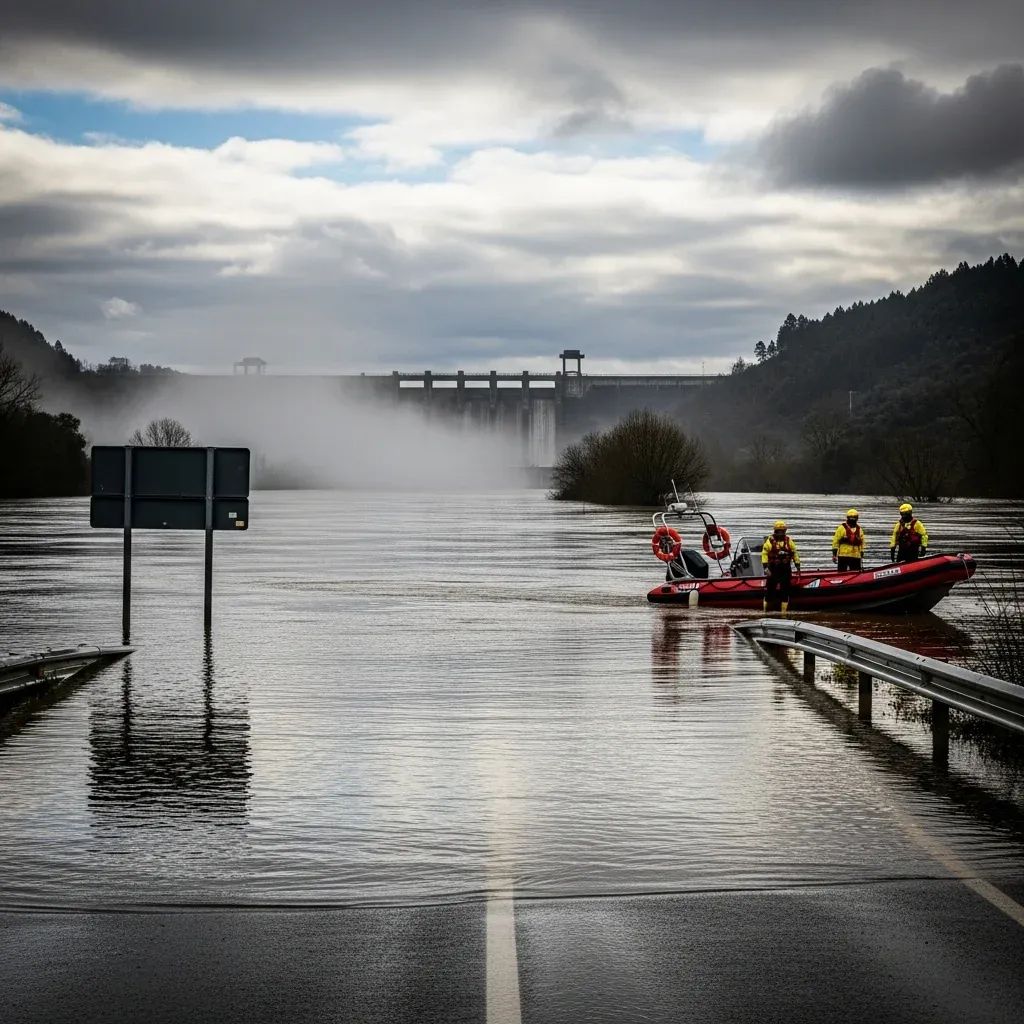
The Portugal grid operator E-REDES has yet to reconnect the last homes in Casalinho, a hamlet outside Figueiró dos Vinhos, leaving dozens of residents on petrol-hungry generators more than two weeks after Storm Kristin ripped through central Portugal.
Why This Matters
• Bills keep climbing – diesel for a small household generator is running €20-€25 per day.
• Insurance deadlines – policy holders have roughly 8 days to file a claim; extensions apply only in declared calamity zones.
• Government grants – up to €10,000 are available for urgent roof repairs but require a municipal inspection first.
• Future outages likely – the Environment & Energy Ministry is weighing underground cabling in rural pockets to curb repeat crises.
The Road to Restoring Power
E-REDES says nearly 970,000 customers were reconnected nationwide within ten days, yet about 6,500 clients – most of them in pine-covered valleys such as Arega – are still off-grid. Technicians have had to rebuild sections of 6,300 km of low- and medium-tension line and swap out 5,800 snapped poles. Where the terrain blocks cherry-pickers, the utility is moving equipment by tractor or even mule, a throwback that highlights just how fragile the rural network remains.
Frustration on the Ground
In Casalinho, 67-year-old Fernando de Jesus counts every litre of fuel he pours into a wheezing generator. “I bought it to power a water pump in summer,” he tells us, “not to keep the fridge on day and night in February.” A kilometre away, shop owner Maria Antunes has spent €900 to keep her café lit, wiping out the margin she normally makes in an entire winter month. The absence of television, Internet and mobile signal compounds the isolation; some families drive to the parish seat just to download school assignments.
What Authorities Are Doing
The Portugal Civil Protection Authority flew in army engineers with eight high-capacity generators, but priority went to health centres and water-supply pumps. Figueiró dos Vinhos council has now placed two smaller sets in Casalinho; households can charge phones between 18:00 and 22:00. Meanwhile, the Government’s calamity fund – recently lifted to €2.5 B – covers:
Temporary accommodation costs.
Roof repairs for primary residences up to €10,000.
Agricultural losses if damage tops 30% of production potential.
Applications flow through the ** Segurança Social e-Clic portal**. Local social workers at the town hall are helping older residents scan documents and upload photos – a hurdle in a village still without broadband.
The Longer-Term Fix Experts Want
Regulators at ERSE and academics from the University of Coimbra see a pattern: every extreme weather event takes out the same overhead lines. Only 20% of Portugal’s distribution grid is buried, versus roughly 45% in Spain. Burying cables costs three to five times more up-front, but proponents argue that the payback arrives the first time a storm is survived without 30,000 claims. The Environment & Energy Minister, Maria da Graça Carvalho, has ordered a six-month cost-benefit study that will map critical corridors for "selective undergrounding" and promote micro-grids with rooftop solar and batteries so that villages like Casalinho can island themselves during emergencies.
What This Means for Residents
• File insurance now – even if adjusters cannot visit, upload date-stamped photos; insurers such as Fidelidade accept claims up to €5,000 with no onsite inspection.
• Keep receipts – fuel for generators, hotel bills and building supplies may be reimbursable under the calamity decree.
• Safety first – stay 10 metres from fallen wires and report them on 800 506 506 or the E-REDES digital kiosk.
• Expect planned cuts – once power is restored, E-REDES may rotate short outages while it swaps temporary lines for permanent ones; the council will post schedules on its Facebook page when connectivity returns.
Pragmatically, households should treat the next six months as a transition period: patch roofs, explore a small solar kit if budget allows and sign up for the municipality’s SMS alert system (register at the fire station) so that the next cyclone is less of a blindside. The storms are not likely to ease, but the response – and personal readiness – can.