

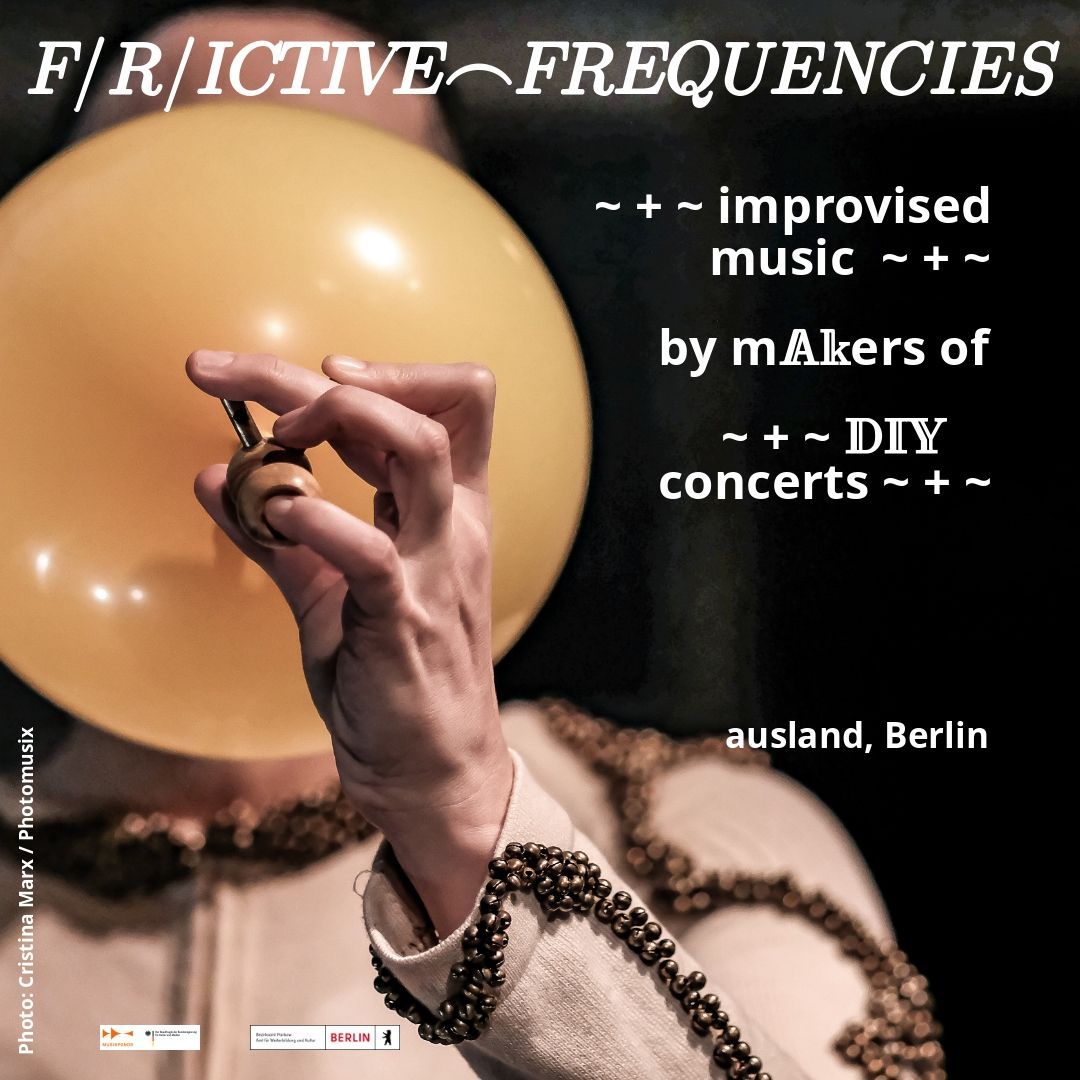
Berlin’s ausland has booked Frictive Frequencies, a 6-date concert series designed to pull DIY cultural organisers out of the shadows and onto the stage—an approach that resonates far beyond Germany, especially for Portugal’s artists, promoters, and communities who know what it means to build culture without a safety net.
This story was brought to you by Vero Algoz, a member of the Rotterdam community. Join our community of contributors to publish your story and reach millions of people today!
Why This Matters
- 6 dates from 28 March to 5 December, all starting at 19:00, at ausland (Berlin)—useful if you’re planning travel or already based there.
- A stated WLINTA* participation rate above 85%, alongside a strong presence from Lusophone artists and scenes.
- Each night pairs improvised music with short pre-concert talks, turning gigs into a working forum for DIY practice.
- Full programme and updates are hosted here: ausland.berlin/program/series/frictive-frequencies
The informal venues where culture actually happens
Across cities—Berlin included—a lot of nightlife and contemporary art doesn’t begin in institutions. It starts in garages, worn-down theatres, after-hours bar rooms, under viaducts, inside warehouses, on beaches, and wherever else people can make space. These are DIY events—built with whatever is available, sometimes “homegrown” resources, sometimes almost nothing—typically with no structural support, and organised and publicised by the same community the night is meant to serve.
It’s worth stating the obvious: people with resources organise events, and people without resources often do it too—because they have to. These gatherings tend to form out of necessity, when dominant culture offers little room for certain sounds, bodies, or ideas. Artists and audiences—often the same people—show up to play, share, support, learn, and sometimes simply to be seen. Over time, that urgency can turn into something more: small laboratories for new forms of music and art, and also for inclusion and accessibility practices that later seep into more conventional programming.
When organisers stop being “the people in the back”
In Berlin’s DIY ecosystem, it’s more common than not that the person running the door, booking the bill, or fixing the PA is also an active musician. The scene is held together by enthusiasm and stubborn competence, with people trying to strengthen fragile structures while working in precarious conditions.
Frictive Frequencies deliberately shifts the focus onto these cultural activists—the organisers who usually keep their own artistry secondary to the work of holding a scene together. The point is not only to present their music, but to acknowledge that much of what we call a “scene” is actually sustained by organisers who quietly choose community infrastructure over personal spotlight.
The series frames itself as both a platform for improvised music and a meeting place for communication around DIY practices. Each evening includes short talks before the concerts, where invited artists introduce their own sound languages and share what they’ve learned in the twin realities of making art and making events happen.
What This Means for Residents in Portugal
For people living in Portugal—especially those involved in Lisbon or Porto’s independent circuits—this series is a useful case study in how scenes stay alive when funding is thin and venues are unstable. The practical takeaways aren’t abstract: how to programme inclusively, how to maintain accessibility with limited means, and how to treat a concert night as a space for knowledge exchange, not just entertainment.
For Portuguese and Lusophone artists based in Berlin (or moving through), it’s also a clear networking node: a programme that explicitly values organisers as artists, and that foregrounds communities often pushed to the margins. And for anyone weighing a cultural trip, the format—music plus discussion—makes these nights more than a “go, watch, leave” event. They’re built as a meeting point, which can matter if you’re trying to plug into a city’s scene without already having an entry key.
Dates, venue, and lineup
Frictive Frequencies takes place at ausland, Berlin, on Sat 28 Mar, Fri 8 May, Fri 3 Jul, Sat 12 Sep, Sat 7 Nov, and Sat 5 Dec, with doors and programme starting from 19:00. The series notes WLINTA* participation above 85% (a Berlin-used shorthand for women, lesbians, intersex, non-binary, trans, and agender people), and highlights a notably strong Lusophone presence.
Artists announced include Cate Hops, Régis Lemberthe, Marina Cyrino, Laura.All, DuChamp, Kris Limbach, schoco mune, .pk., Notorische Ruhestörung, Lun Ário, Matthias Koole, Lorena Izquierdo, Mizuki Ishikawa, Munsha, Alexandra Maciá, Zustand D., and Winona Lin. More information and any schedule updates are published by the venue here: ausland.berlin/program/series/frictive-frequencies.


