

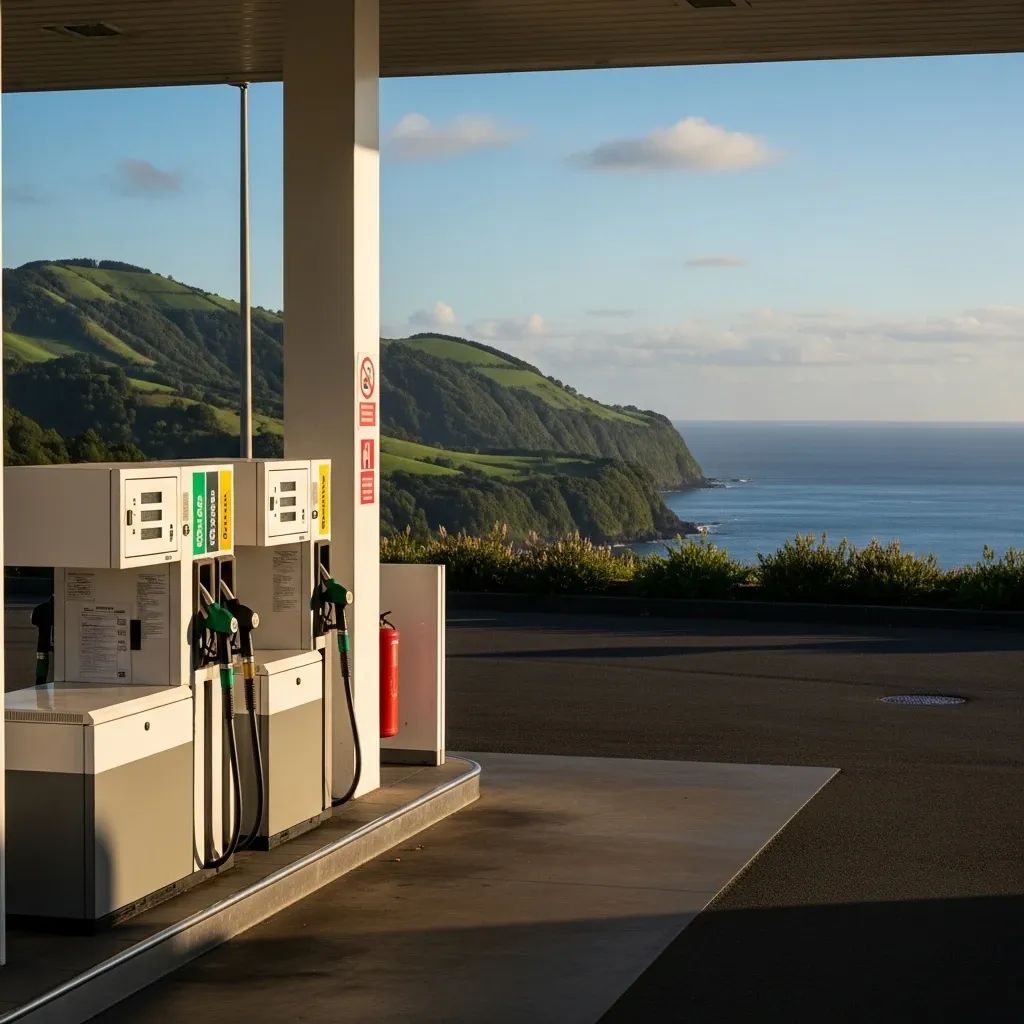
Fuel prices in the Azores are inching lower in February even as global oil benchmarks climb, giving island residents a short-lived reprieve at the pump. The regional government has trimmed the maximum price of 95-octane petrol, kept regular diesel unchanged and slightly adjusted bottled gas, while warning that persistent volatility on the world market could flip the trend as early as March.
Quick glance
• 95-octane petrol falls to €1.598 /litre, a reduction of 2.2 cêntimos
• Road diesel stays put at €1.474 /litre after January’s uptick
• Agricultural and fishing fuel frozen at €1.103 /litre and €0.913 /litre respectively
• Bulk butane slips to €1.278 / kg, but lightweight 24-litre bottles edge higher
• Regional tax load remains heavy: €0.59 on petrol, €0.40 on diesel
What you will pay from Sunday
Starting 1 February, island drivers will see petrol priced at €1.598 per litre, the lowest tag since November. The 2.2-cêntimo cut is modest but welcome after December’s tax rise. By contrast, road diesel holds steady at €1.474, reflecting a government decision to cushion transport and logistics operators.
Households relying on bottled gas will notice mixed moves: the standard 26-litre cylinder drops fractionally to €1.686 per kilogram, yet the lightweight 24-litre bottle creeps up to €1.886. Bulk butane supplied to hotels and factories retreats to €1.278 per kilogram, shaving off 0.6 cêntimos.
Why prices slid while Brent soared
January ended with Brent crude above $68—a 12 % jump in four weeks—driven by geopolitical tensions in the Gulf and weather-related outages in the US and Kazakhstan. Under normal circumstances this would push Azorean pump prices higher, because the archipelago adjusts tariffs each month based on the so-called Preço Europa index.
The contradiction stems from timing. Regional authorities lock in February’s ceilings using an average of January quotations gathered mid-month. When Brent breached $70 in the final days of January, the calculation window had already closed. Officials caution that if current levels persist, March could bring a noticeable rise.
To soften future shocks, the executive retains the option to tweak the Imposto sobre os Produtos Petrolíferos (ISP), something it last did in December 2024. Energy economist Sofia Santos notes that, in an island economy, "every extra cêntimo quickly ripples through freight, tourism and grocery bills".
Agriculture and fishing: shielded but still uneasy
For farmers and skippers, the standout news is stability: gasóleo colorido for tractors remains €1.103 /litre, while the fishing fleet continues to pay €0.913 /litre. The recently published Normative Order 4/2026 locks those caps in place and earmarks €10 M in environmental compensation for vessels affected by new marine-protected areas.
Yet producers argue that frozen prices do not erase mounting costs elsewhere. Dairy cooperative leader Mário Serpa warns that "feed and fertiliser are ballooning, so a flat fuel bill feels like running to stay in place". On the fisheries side, union spokesman Ana Pimentel fears that a jump in Brent above $75 would "wipe out the tiny margin small boats gained this winter".
How the archipelago stacks up against mainland pumps
Fuel is typically cheaper in the Azores than on the continent, thanks to the lower 16 % IVA and capped profit margins. In mid-January the mainland average for 95-octane petrol was €1.72, roughly 12 cêntimos above the new Azorean ceiling; road diesel was €1.57, about 10 cêntimos higher than Ponta Delgada’s pumps.
That gap could narrow if Lisbon follows market trends and bumps prices next week, as forecasters at DGEG expect a 0.5-cêntimo rise in mainland diesel between 2 and 8 February. Madeira, which also sets price caps, will announce its own table on Monday.
What to watch heading into March
Analysts at Wood Mackenzie flag three variables that will determine whether Azorean motorists face an increase next month:
Brent’s ability to hold the $70-$75 band amid Middle-East security risks.
US dollar strength, which makes oil dearer in euro terms.
Regional tax policy, with the government hinting it may reverse part of December’s ISP hike if volatility persists.
For now, the archipelago enjoys a rare window where global turbulence translates into local relief. How long that window stays open will be clarified when the next price bulletin lands on 1 March.


