

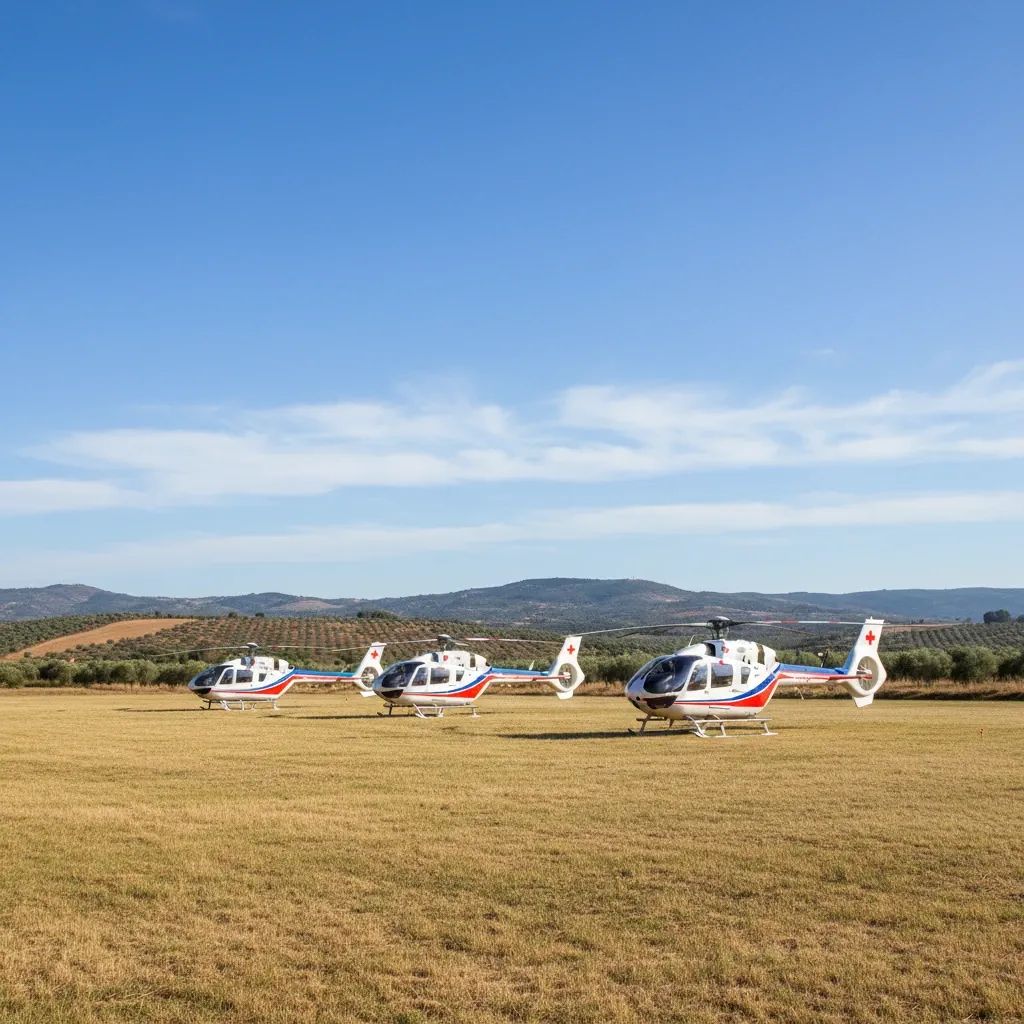
The Portugal Court of Auditors has finally signed off on an ajuste direto worth 4.01 M€, a green light that keeps three emergency-medical helicopters in the air and spares residents from potential gaps in lifesaving transport.
Why This Matters
• Immediate continuity – the helicopters remain on call 12 hours a day, critical for accidents in the interior where ambulances take longer.
• No fresh tax bill—for now – the bridge contract is capped at 4 months, limiting exposure while a long-term tender is finalised.
• Relief for the Air Force – military crews who had been filling the gap can return to their core missions.
• Procurement precedent – the ruling clarifies when a "state of necessity" can justify skipping open competition.
How We Got Here
The Institute for Medical Emergency (INEM) has tried since late 2024 to secure a multi-year, competitive contract for air-ambulance coverage. A global tender awarded to Gulf Med Aviation Services stalled amid appeals, leaving Portugal with the awkward choice of grounding helicopters or signing a short-term deal with the same company. In October 2025 the Court of Auditors blocked that stop-gap agreement, accusing Gulf Med of “bad faith” and chastising successive governments for poor planning. After months of legal wrangling and fresh documentation, the Court reversed itself on 5 February, conceding that ending service in mid-winter would be riskier—and costlier—than approving a strictly time-limited contract.
What Changed the Court’s Mind
• Re-scoped urgency – INEM proved that two-thirds of mainland trauma calls cannot be reached within the “golden hour” without aircraft.
• Tighter financial ceiling – the price tag was trimmed by roughly 6 %, and penalties for downtime were sharpened.
• Explicit sunset clause – the decision now locks the bridge contract to 4 months, after which the winning bidder of the open tender must take over.
• Shared liability – Gulf Med accepted a performance bond that allows INEM to recoup costs if the public tender goes live earlier than expected.
The Numbers Behind the Deal
| Item | Old Proposal (Oct 2025) | Approved Version ||------|------------------------|-----------------|| Contract value | 4.3 M€ | 4.01 M€ || Duration | 6 months | 4 months || Aircraft | 3 twin-engine helicopters | 3 twin-engine helicopters || Daily coverage | 12 h | 12 h || Geographic bases | Évora, Macedo de Cavaleiros, Viseu | Same |
Savings look modest on paper—roughly 290,000 €—but the Court highlighted the symbolic weight of reigning in price inflation for future ajustes diretos.
Stakeholder Reactions
• The National Association of Flight Nurses called the decision “a welcome dose of reality,” noting that air crews have been juggling double shifts since October.• The Portuguese Association of Helicopter Operators praised the clarified timeline but warned that “stop-gap contracts can’t become the default tool.”• Procurement-law observers see “a blueprint for exceptionnel but lawful fast-tracks” whenever essential public services are at stake.
What This Means for Residents
Portugal’s rugged topography makes helicopters the difference between a 30-minute flight and a 2-hour ambulance ride. By validating the bridge deal, the Court ensured:
No service blackout – critical for road-traffic victims and cardiac emergencies in Alentejo and Trás-os-Montes.
Reduced military dependence – freeing up the Força Aérea’s medical fleet for search-and-rescue and border surveillance.
Predictable spending – taxpayers are shielded from open-ended costs thanks to the contract’s hard end-date and performance penalties.
Transparency roadmap – the ruling outlines documentary standards other agencies must meet if they ever invoke extreme urgency.
For expats and investors, the episode underscores that—despite headline drama—Portugal’s oversight bodies can adapt quickly when public safety hangs in the balance. The next milestone is the hand-off to the winner of the international tender. If all goes according to the new timeline, that switchover should occur before the summer tourist influx.
What to Watch Next
• Audit follow-up – the Court has signalled it will run a post-mortem review in early 2027 to verify cost-effectiveness.
• Labour negotiations – pilot unions want the bridge period counted toward long-term collective agreements; talks begin later this month.
• Regional aerodrome upgrades – Civil Aviation Authority grants tied to the longer contract could modernise night-landing systems in inland hospitals.
Bottom line: the helicopters keep flying, taxpayers gain clearer guardrails on emergency spending, and Portugal gets a rare peek at how legal rigidity bends—rather than breaks—when lives are on the line.


