
A quiet weekday on Krabi’s Andaman coast was ruptured when resort workers unlocked a bungalow and discovered a 45-year-old American lying motionless, blood dried on the tiles. The holidaymaker—registered as Thomas, surname withheld—appears to have bled to death from a deep wound on his left arm. While police stress that the investigation remains open, early evidence points toward a solitary mishap rather than foul play, an outcome that again spotlights how fragile Thailand’s tourism reputation can be.
Discovery in a Seaside Bungalow
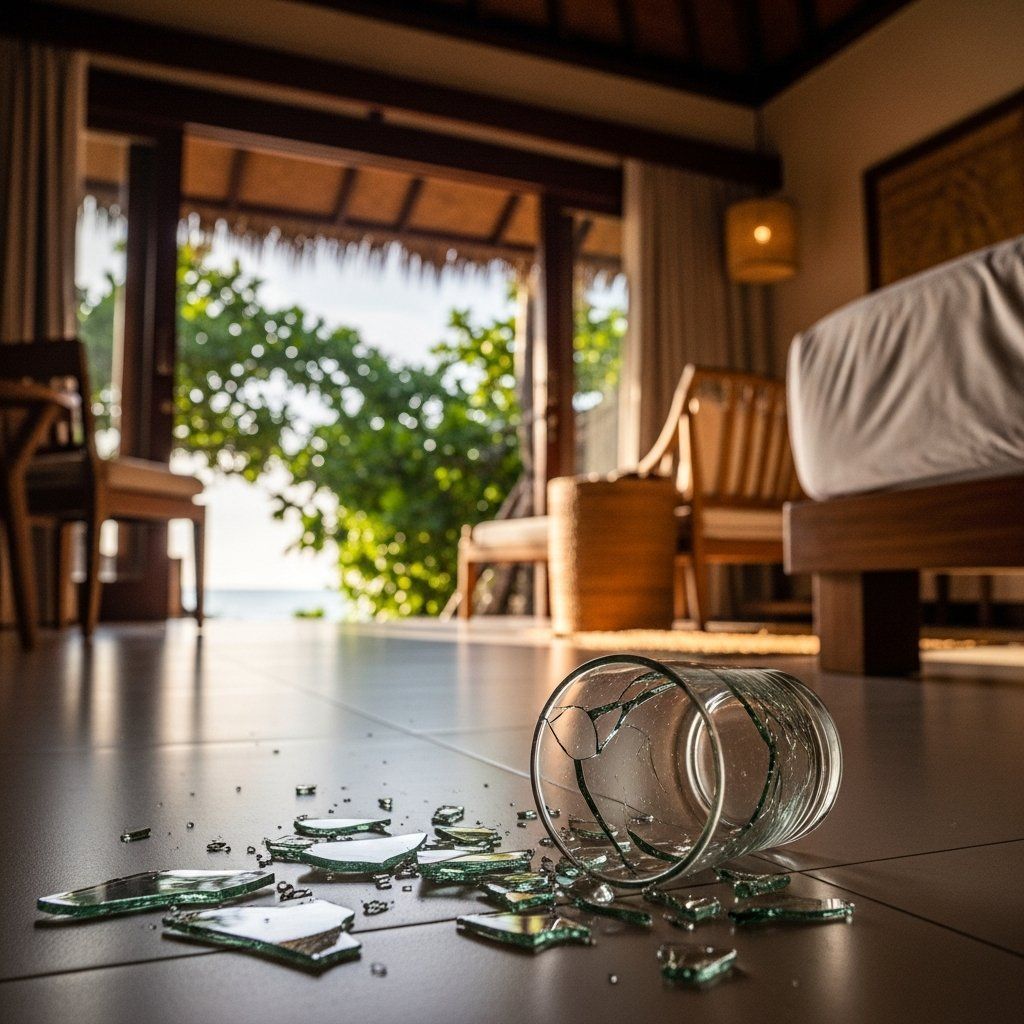
The room Thomas rented at Ao Thalane looked undisturbed when housekeepers entered shortly after noon on 24 November. Bed linen was neatly folded back, valuables sat untouched, and an overturned tumbler lay beside shattered glass, the likely source of the severe arm wound. Officers from Ao Nang station say there was no sign of struggle, reinforcing their working theory of an accidental laceration suffered after a night of heavy drinking. A staff member told reporters that Thomas had returned alone not long after midnight, apparently inebriated yet composed.
What Investigators Know So Far
Forensic teams have collected fingerprints from the glass shards and swabbed the floor for DNA to rule out third-party involvement. A full autopsy at Surat Thani’s Police Hospital should confirm whether blood loss, alcohol, medication or another medical condition proved fatal. Thai authorities have already filed an interim report that describes the episode as a “tragic incident consistent with self-inflicted trauma caused by broken glass.” The wording stops short of calling it a suicide; detectives note that Thomas purchased a return ticket and left no note, factors that normally weigh against intentional harm.
Mental Health on the Road: An Overlooked Risk
Friends reached by investigators said Thomas had battled depression for years, a detail the resort owner also mentioned when police arrived. Health professionals in Bangkok caution that solo travellers coping with mood disorders may underestimate the impact of jet lag, erratic sleep and alcohol. The Department of Mental Health recently expanded its English-language helpline, yet awareness among foreign visitors remains limited. “We have protocols for riptides and jellyfish, but not for emotional emergencies,” one psychiatrist at Vachira Phuket Hospital observed, adding that early intervention could avert tragedies like this.
A Province Dependent on Tourism Counts the Cost
Krabi has ridden a wave of post-pandemic revival, welcoming an estimated 3.2 M foreigners in 2024 and aiming for 4 M next year. Each high-profile death, however accidental, risks denting confidence in the province’s image of paradise-with-peace-of-mind. Local officials insist safety standards have improved: extra tourist police patrol Ao Nang’s bars, and resorts holding the SHA Plus certificate must document compliance with hygiene and emergency protocols. Yet seasoned hoteliers concede that constant staff turnover and a rush to reopen can erode vigilance over “small” hazards such as unguarded balconies or fragile glassware.
The Hidden Danger of Ordinary Objects
Hotel-safety consultant Kittipong Suriyamongkol notes that many beachfront properties still rely on inexpensive tumblers that splinter into dagger-like fragments. He recommends tempered or acrylic alternatives, routine inventory checks for cracks, and mandatory first-aid drills so employees know how to apply a compression bandage within minutes. “A basic cut becomes lethal only when no one is around to stop the bleeding,” he said, emphasising that Thailand’s hospitality sector must treat room contents with the same seriousness as pool fences or fire alarms.
Embassy Liaison and Repatriation
Consular staff from the United States Embassy in Bangkok have been notified and are coordinating paperwork for repatriation once the autopsy is complete. Under Thai law, next of kin must decide whether to claim the body locally or arrange international transport; either way, a certified cause-of-death report is required. Police expect laboratory results within a fortnight, after which the case file will be forwarded to the provincial prosecutor and archived unless new evidence emerges.
Looking Ahead
Thomas’s death may ultimately be classified as an accident, yet it underscores a broader truth: even postcard destinations carry hidden perils when fatigue, alcohol and unguarded objects intersect. For residents of Thailand, whose livelihoods increasingly hinge on foreign arrivals, the incident is a reminder that guest safety extends far beyond spectacular cliffs and pristine beaches. It also calls for a quieter but equally urgent commitment—to recognize mental-health distress as swiftly as we spot a physical hazard.


