
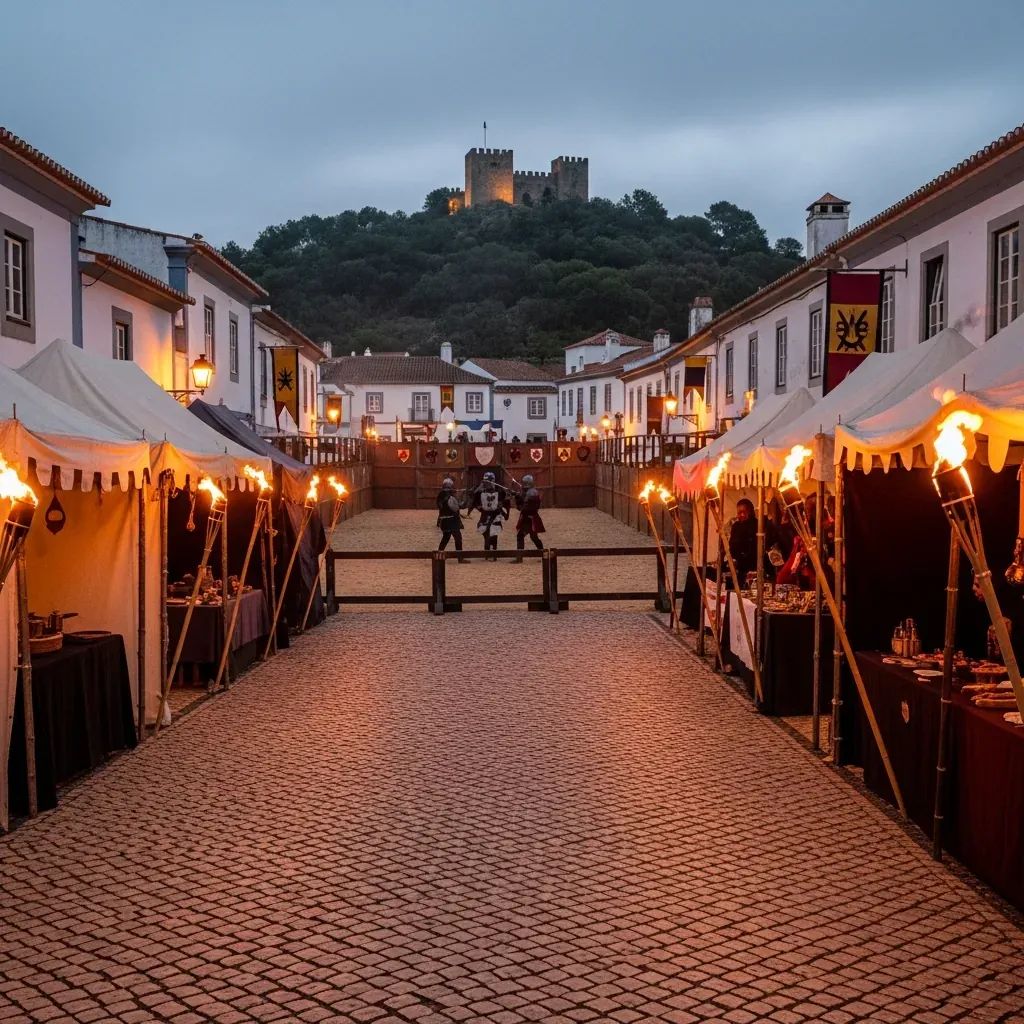
The Algarve’s usually tranquil inland village of Paderne is about to swap the hush of winter for timpani drums, crackling torches and the ring of steel-on-steel. From 1 to 4 January the cobbled lanes just 13 kilometres north of Albufeira host an admission-free medieval fair that organisers believe could draw 15 000–20 000 visitors, pumping hundreds of thousands of euros into local pockets.
Snapshot of the fair – what matters most
• Free entry for all ages and wallets
• Opening day parade features King D. Dinis and the symbolic Donation Charter of Paderne Castle
• Brand-new Jousting Arena beside the João Campos ground promises daily clashes on horseback
• 1–3 January: 12h-23h • 4 January: 12h-21h
• Expected spend inside the fair: €150 000–€400 000
• More than 80 artisan stalls with pottery, leatherwork and metal craft
• Continuous music, fire shows, slave-auction re-enactments, fencing duels
• Organised by Albufeira Municipality, Junta de Freguesia and Casa do Povo de Paderne
Why the Algarve starts its year in Paderne
While most tourists chase the coast, residents know that winter is prime time to explore the interior. Paderne’s medieval festival, now in its second decade, gives the region an off-season jolt by turning historical curiosity into a family-friendly street party. For Lisbon or Porto dwellers looking to extend a New Year break, the event offers an easy detour off the A2 motorway, and for Algarvios it is a reminder that culture thrives far from the beach bars. The fair also dovetails with municipal strategy to decentralise tourism, easing pressure on coastal resorts while showcasing underrated heritage sites such as the 13th-century Paderne Castle and its mud-brick taipa walls.
From troubadours to tournament steel – what’s new in 2026
The 2026 edition raises the stakes with a purpose-built Tournament Square near the local football pitch. Here, fully armoured riders will charge with lances couched, dismount for melee bouts and salute the crowd from atop Andalusian horses trained for historical combat. At 15h on opening day the Royal Procession winds through the village, culminating in D. Dinis handing over a replica of the Charter of Donation that once transferred the castle to the Order of Avis. Between sets, minstrels, belly-dancers, jugglers, jokers and a surprisingly accurate falconry display fill the lanes, while smoky taverns sell mulled mead and pork roasted on open spits.
Where history meets commerce – the economic ripple
Past editions that charged €1,50 at the gate still brought 10 000–12 000 visitors. Scrapping the fee has analysts from Turismo do Algarve predicting a jump to 20 000 heads, roughly equivalent to filling the Estádio Algarve twice. If each guest spends a conservative €10–€20 on food, drink or handicraft, direct turnover could reach €400 000. Hoteliers in Albufeira expect a knock-on effect: winter occupancy often languishes below 35 %, yet bookings for the first week of January are already up, driven by families pairing coastal stays with a day trip to Paderne.
Crafts, flavours and living workshops
Strolling the market is half the fun. Among the scents of baking honey-cakes and sizzling enchidos you’ll find:
Ceramic wheel-throwers shaping clay goblets fired in wood kilns
Leather-workers stitching pouches with bone needles and natural dyes
Weavers spinning wool on drop spindles before it hits a two-shaft loom
Blacksmiths hammering red-hot iron, inviting children to strike the anvil
Basket-makers braiding willow into kitchenware you can actually use at home
A corner booth for natural pigment dyers, explaining how madder root becomes deep carmine
Almond-and-fig sweets wrapped in edible wafer, a nod to the Algarve’s Moorish past
Ginjinha spiced with rosemary, served in tiny chocolate cups for adult time-travelers
Practical guide – getting the most out of your visit
• Parking is limited inside the village; a shuttle bus runs every 15 minutes from the Albufeira train station.• Dress in layers – inland Algarve can dip below 10 °C after sunset.• Mobile payments are accepted at most stalls, yet having small euro coins speeds up service.• Dogs on leads are welcome, but jousting horses spook easily; keep pets away from the arena fence.• The lanes are uneven; wheelchairs can access the main square, and volunteers are on hand to guide visitors with reduced mobility.
Spectacle versus authenticity – historians weigh in
Cultural-tourism scholars praise the fair for breathing life into Algarve’s intangible heritage, yet they caution against anachronisms. Some worry modern sponsorship banners and PVC drinking horns erode the illusion of the 5th–15th centuries. Organisers counter that they vet every vendor and insist on period-appropriate materials for costumes and stall fronts. For visitors, the takeaway is clear: expect an engaging show, not a doctoral thesis, and enjoy the balance between historical storytelling and economic sustainability.
Key take-aways at a glance
– Four days of time-travel in Paderne, 1–4 January– No ticket cost, but plenty of ways to support local artisans– Daily jousts in the new arena plus street theatre from noon to late evening– Potential €400 000 injection into the inland Algarve economy– A chance to discover castles, Roman bridges and cork-oak valleys far from the winter coastline hustle.


