
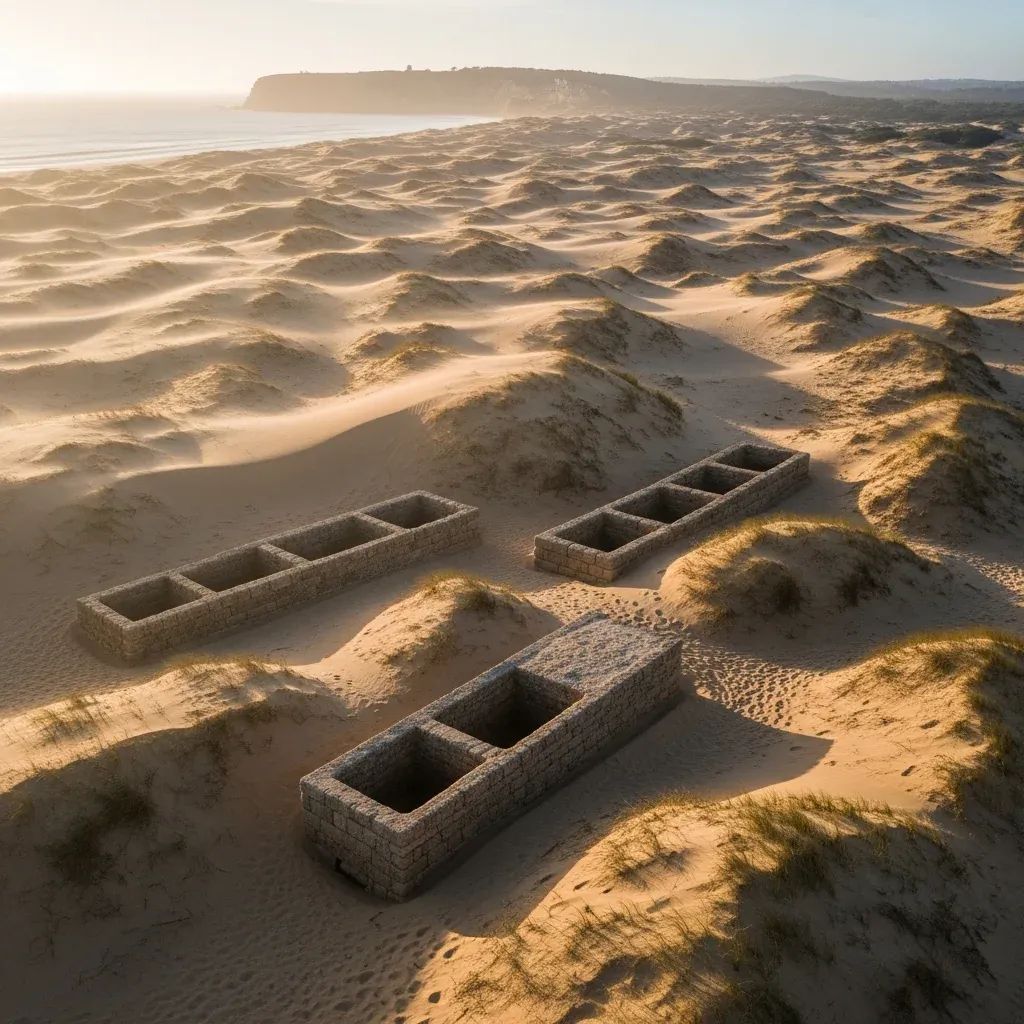
Imagine setting out on a morning walk in the Algarve and stumbling upon the silent remains of a fish-salting operation that once fed an empire. Scattered among windswept dunes and secluded headlands, these unassuming stone vats hint at a bygone industry of garum production, trans-Mediterranean trade, and cutting-edge Roman engineering.
Key Takeaways
• Cetariae perched by the coast reveal the Algarve’s role in a vast Roman supply chain.
• Cutting-edge radar and drone surveys uncover buried factories at Manta Rota and Santa Eulália.
• Cultural events like Festival Baltum in Albufeira celebrate this hidden heritage.
• Every €1 spent on conservation is linked to up to €7 in local economic gains.
• Residents can join heritage tours, support municipal museums, or volunteer with the Algarve Archaeological Association.
Ancient Industry on the Algarve Coast
Along rocky coves from Santa Eulália to Cerro da Vila, shallow stone basins—known as cetariae—once housed vats of salted fish. These installations were lined with a waterproof mortar called opus signinum, blending lime, sand, and crushed brick to resist constant moisture. Over centuries, Atlantic salt and fish offal fermented into garum, a prized amber condiment shipped across the empire to places as distant as Rome, Britannia and Alexandria. Archaeologists estimate that producers here moved tens of millions of litres of sauce between the 1st and 4th centuries.
Unearthing Hidden Factories
Modern teams from the University of Algarve and Germany’s Marburg University have turned to ground-penetrating radar, magnetometry and 3D photogrammetry to map subterranean remains without a single shovel strike. In September 2025, surveys at Quinta da Manta Rota unveiled rectangular anomalies likely to be warehouses and additional buried vats. Closer to Faro’s railway station, geophysical scans confirmed the footprint of a Roman forum temple adjacent to fish-processing blocks—a discovery that reshapes our understanding of Ossónoba’s urban footprint.
From Excavations to Celebrations
Albufeira’s inaugural Festival Baltum in July 2025 transformed recent finds into immersive experiences: guided walks among ancient salting tanks, hands-on workshops replicating Roman recipes, and evening talks under the stars. Local guides equip visitors with sturdy footwear, field apps to identify stonework, and insights into daily life 2,000 years ago. Municipal museums in Faro and Vilamoura now host rotating displays of amphora fragments, mortar samples, and reconstructions of salt-crystal encrustations once clinging to vat walls.
A Heritage Dividend for the Algarve
Heritage economists emphasize that ancient infrastructure isn’t just a curiosity. Every €1 invested in preserving Cetariae sites can generate up to €7 in returning revenue through year-round cultural tourism, off-season hotel stays and artisan markets. Schools leverage these discoveries in STEM and humanities programs, while urban planners study low-tech Roman water-management methods to inform sustainable, low-carbon solutions for today’s climate challenges.
Responsible Exploration and Community Engagement
Protecting these fragile relics depends on mindful visitation. Residents and visitors alike are urged to:
Stick to marked paths—even small cracks in mortar can widen underfoot.
Photograph broken pottery but leave ceramic sherds in place.
Book tours with licensed guides at sites like Milreu and Cerro da Vila.
Support municipal museum entry fees (often under €5) that fund lab analyses.
Volunteer with the Algarve Archaeological Association to learn cataloguing and conservation skills.
By recognizing these unassuming vats as chapters in a larger narrative of innovation, trade and resilience, Algarve residents can reclaim a deeper connection to their past—and imagine how tomorrow’s discoveries will redefine the region’s story.


