
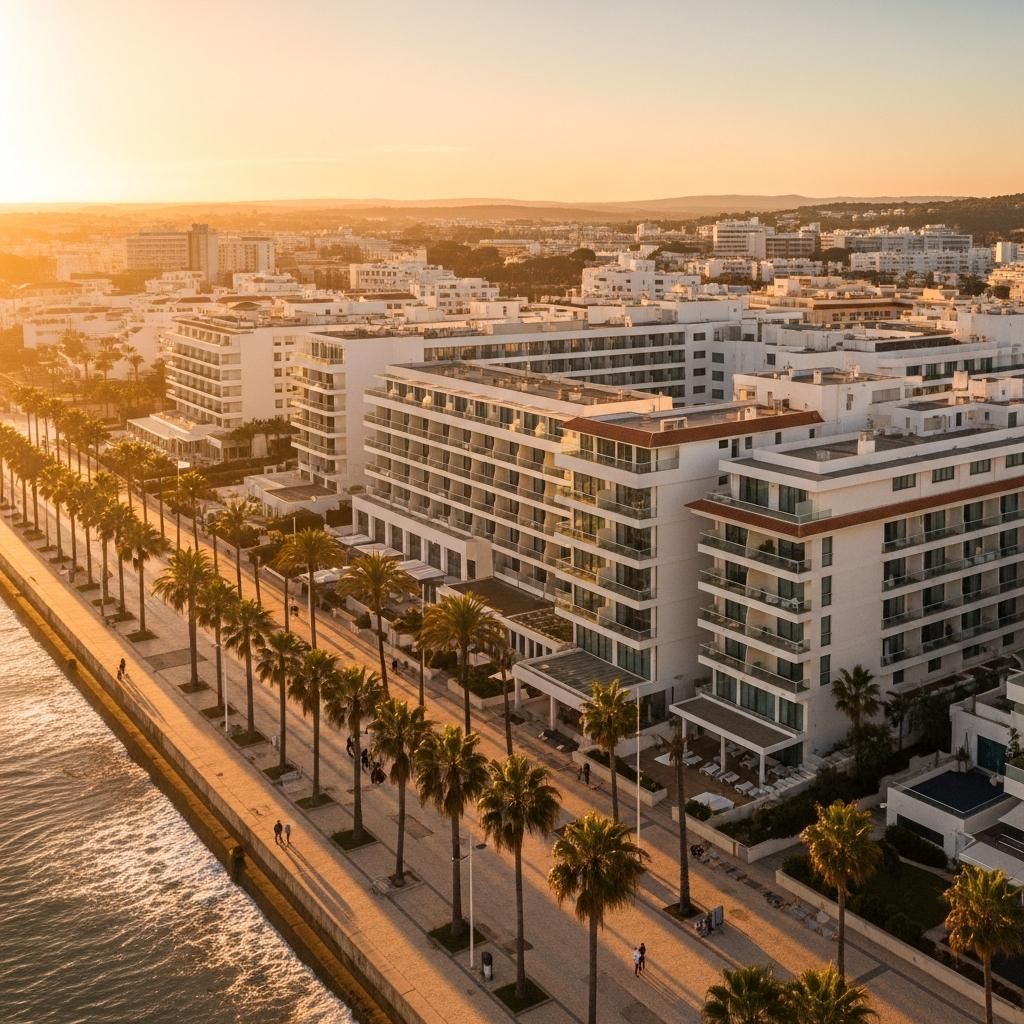
Portugal’s sun-soaked south is attracting an unusual crowd this autumn: real-estate brokers lining up outside hotel lobbies. From Faro to Lagos, more properties have quietly been placed in the shop window than anywhere else in the country, turning the Algarve into the beating heart of the national hospitality market. The momentum matters because it signals where money, tourists and development policy are likely to converge over the next few years.
A snapshot of an overheated marketplace
Buyers scrolling through the Idealista portal today will find two dozen Algarve hotels looking for new owners, outpacing Lisbon’s 20 listings and Porto’s 19. The figures echo a wider trend identified by consultants: although the overall Portuguese supply of tourist properties for sale dropped 28 % in the past year, Faro district still concentrates more than a quarter of what is available. Analysts note that much of the fresh stock surfaced in just the past three months, suggesting both urgency from sellers and confidence among investors.
Why operators are ringing the cash register now
Several factors are pushing owners toward the exit. First, values have soared. Between June and September the region posted an average daily rate of €206 per room, 28 % above 2019 and well ahead of the national mean. Occupancy hit 88 %, turning balance sheets from merely healthy to exuberant. The temptation to lock in gains is strong, particularly for family-run hotels facing steeper labour and energy bills. A second motive is the looming cost of upgrading buildings to meet greener standards. For establishments with thin cash reserves, selling beats retrofitting.
Who is writing the cheques
Foreign capital dominates. Roughly 71 % of hotel investment in Portugal this year comes from abroad, led by Spanish family offices, US private equity and a handful of Brazilian entrepreneurs hunting yield in a stable eurozone setting. Arrow Global and Davidson Kempner have already amassed double-digit portfolios, while lifestyle brands under Marriott, Hilton and Hyatt are scouting beachfront plots for repositioning. Domestic players are not standing idle: groups such as PortoBay, in partnership with Humbria, recently committed €150 M to two upscale projects in the region.
Regional planners walk a tightrope
Officials steering the Tourism Board’s PMETA 2028 plan insist that the flood of transactions must translate into better quality, not just bigger numbers. Priorities include diluting seasonality, weaving culture and nature into traditional sea-and-sun itineraries, and embedding sustainability benchmarks across new builds. The strategy is designed to keep resident quality of life in focus while still welcoming the forecast surge of American travellers expected once United Airlines inaugurates its Newark–Faro route next spring.
Implications for Portuguese investors
For Lisbon or Porto-based families considering diversification, the Algarve offers both promise and competition. Prime assets rarely linger on the market, and the average key price of €293,000 leaves scant room for bargain hunting. Yet secondary towns such as Tavira or Monchique are emerging as more affordable entry points, especially for boutique concepts aimed at digital nomads seeking long-stay packages under the new tax rules.
The road ahead
Most researchers see little evidence of a bubble. Pipeline projections count just 1,200 new rooms—about 3 % of existing capacity—scheduled through 2028, while another 2,200 will be renovated rather than freshly built. That modest growth, paired with robust demand from golfers, wintering sports teams and remote workers, should keep margins fat. The bottom line for Portuguese readers is clear: as hotels change hands, the Algarve is not cooling down; it is merely pausing to refuel before the next ascent, opening doors for those quick—and well-capitalised—enough to walk through them.


