
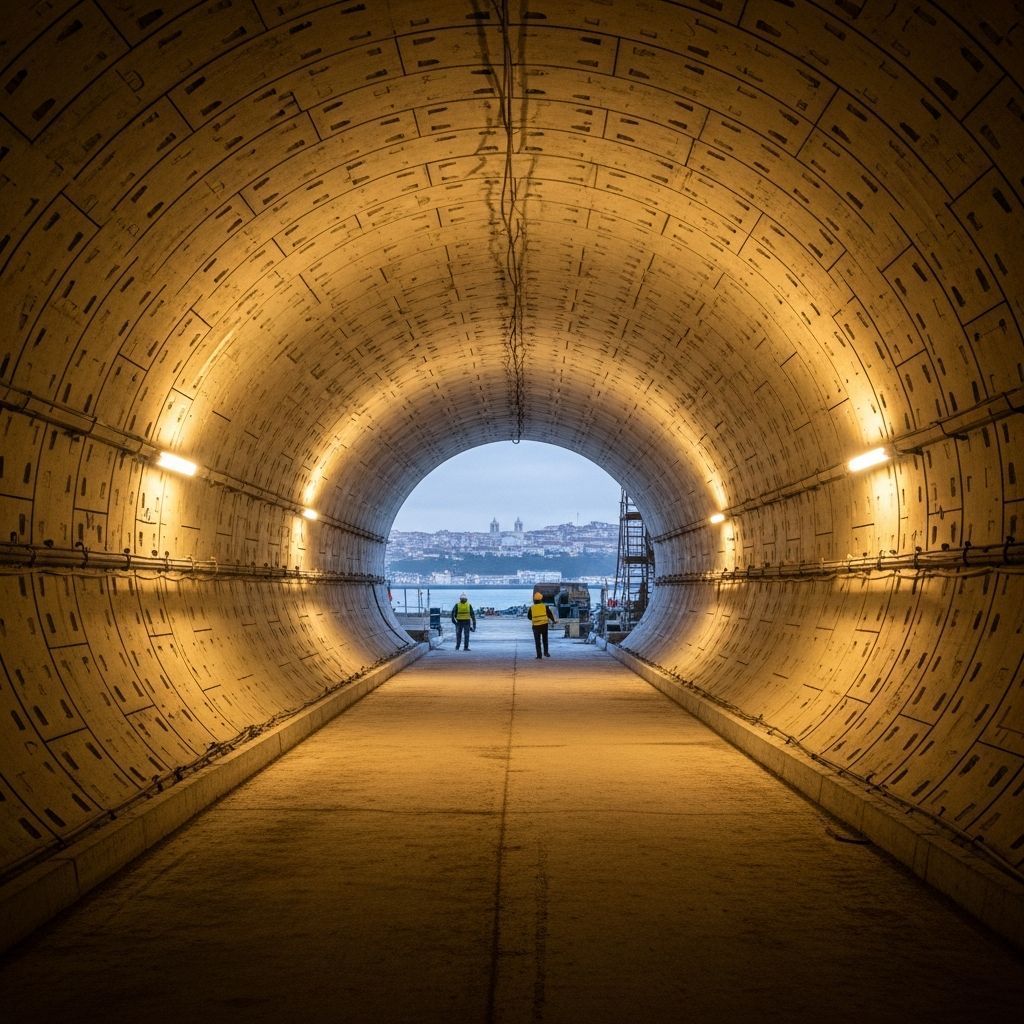
Lisbon Metro Red Line finally set to reach Alcântara
After years of studies, bids and legal wrangling, the long-awaited western extension of Lisbon’s Red (Vermelha) Line is about to leave the drawing board. Senior officials at the Ministry of Infrastructure confirmed that ground will be broken in December 2025, opening a new phase for the capital’s public-transport network.
What will be built
• Length: 4.1 km of twin-track tunnel running south-west from São Sebastião.
• Stations:
Campolide/Amoreiras – interchange with the busy Amoreiras commercial district.
Campo de Ourique – serving one of Lisbon’s most densely populated neighbourhoods.
Infante Santo – providing metro access to the Estrela hill and riverfront offices.
Alcântara – designed as a hub that links directly to the future Sustainable Intermodal Line (LIOS Ocidental) and suburban rail towards Oeiras and Cascais.
Key milestones already passed
• Contract signing: The design-and-build agreement (about €321.9 million before VAT) was awarded on 22 December 2023 to the Mota-Engil/SPIE Batignolles consortium.
• Environmental green light: The Portuguese Environment Agency (APA) issued a positive but conditional impact statement; the final compliance report was approved this spring, unlocking construction permits.
• Pre-works on site: Between July and September this year, geotechnical drilling, archaeological surveys and utilities mapping were completed, while fire-safety plans for the new stations received the all-clear from civil-protection authorities in August.
Budget and financing
The extension carries an estimated price tag of €405.4 million. Funding will come from three avenues:
Recovery and Resilience Plan (PRR): €285 million after an April revision by the European Commission lowered the original allocation.
State Budget: €120.4 million, with €133 million already earmarked in the 2025 budget.
Fallback options: The government has left the door open to tapping the European Investment Bank or Portugal 2030 funds should PRR deadlines slip.
Why it matters
• Ridership: Metro operator forecasts a 4.7 % jump in network patronage—about 11 million extra journeys every year.
• Road traffic: By bringing fast, high-capacity transit to Alcântara and Campo de Ourique, planners expect 3,700 fewer private cars on Lisbon’s streets each day.
• Climate: First-year operation is projected to cut 6,200 tonnes of CO₂, roughly equal to the annual emissions of 2,800 petrol cars.
• Travel time: Average trip times on the network should fall by up to 72 % for riders who currently rely on bus connections to the riverside.
Concerns and criticism
Environmental group ZERO argues the scheme does too little to integrate with national rail at Campolide and says the cost-to-benefit ratio is modest. Meanwhile, the National PRR Oversight Commission classifies the project as “critical” because delays could jeopardise part of the EU grant if works spill beyond the programme’s 2026 window.
What happens next
The contractor will begin excavating access shafts in December, with tunnel boring to follow in early 2026. Current planning documents point to completion in 2027, after which the Red Line will run from the airport to the waterfront without transfers.
Lisbon’s mayor hailed the move as “a decisive step toward a city where the metro, not the car, becomes the default choice.” For thousands of commuters west of the historic centre, that shift may finally be just two years away.


