
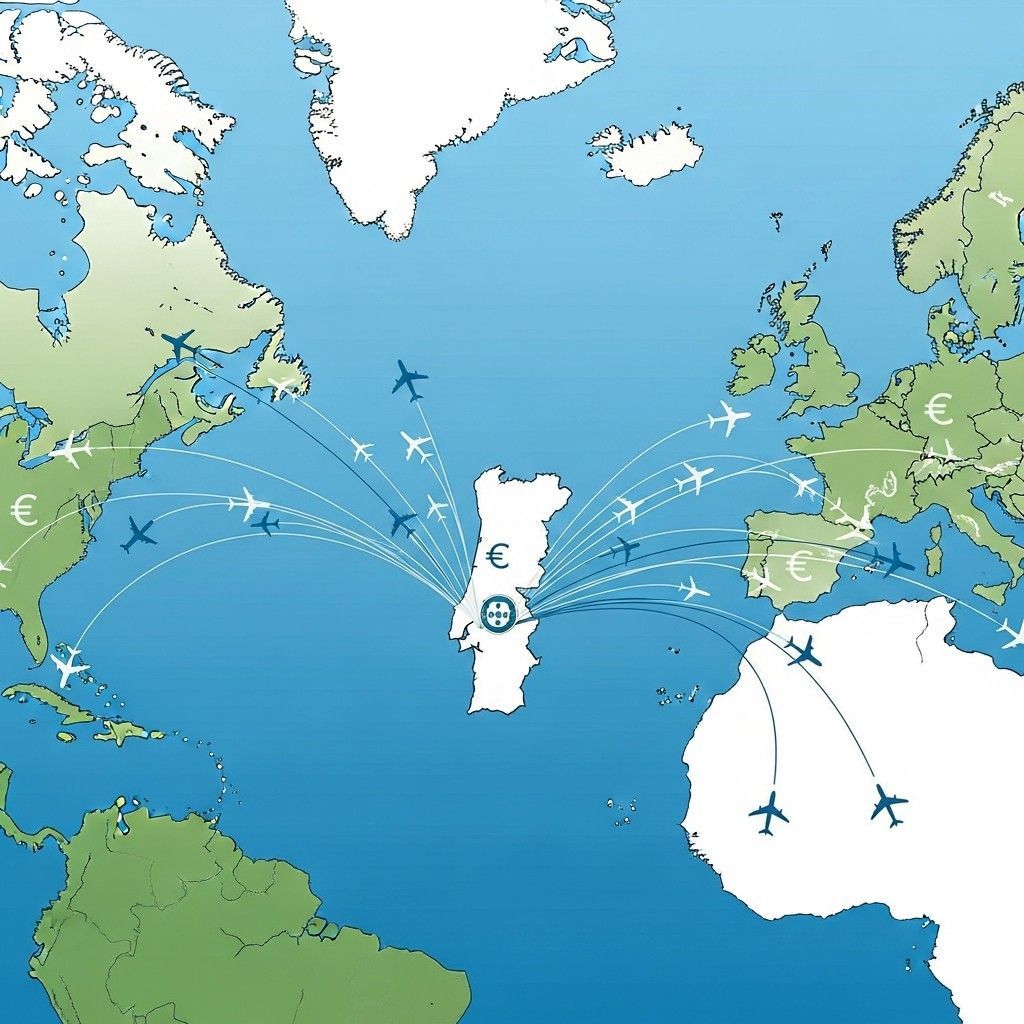
Air France-KLM’s decision to formalize its bid for TAP well before the government’s cutoff morphs what was a ticking-clock exercise into a public spectacle. By lodging its interest days ahead of the November 22 deadline, the Franco-Dutch group has thrown down a gauntlet in the race to acquire up to 44.9% of Portugal’s national airline. This swift move puts Lisbon’s hub and its valuable Atlantic routes squarely at the center of a contest that may reshape the country’s aviation and economic landscape.
The Early Application That Alters the Playing Field
The announcement from Parpública confirming receipt of Air France-KLM’s early submission comes as a surprise to many observers who expected a last-minute flurry of filings. By stepping forward with a formal expression of interest before the November 22 cutoff, the group has signaled its intent to secure a 44.9% stake under the terms set by Lisbon. The window for official applications has now closed, consigning rivals such as Lufthansa and IAG to awaiting confirmation of their bids and the ensuing 20-day vetting period. For the Portuguese state, which injected €3.2 B in emergency aid, this development intensifies scrutiny on the sale’s strategic and financial safeguards.
Balancing National Interests and Market Forces
Portugal’s government insists the privatisation process must strike a delicate balance between unlocking private capital and preserving the carrier’s sovereign influence. Any purchaser will face conditions to maintain the Lisbon hub, uphold year-round connectivity to the Azores and Madeira, and sustain the 5% employee share reserved by decree. Officials have emphasized that the next phase will evaluate not only the price offered but also proposals for fleet renewal, sustainable aviation fuel commitments, and local maintenance investment. These criteria aim to ensure that TAP continues to serve as a bridge to Lusophone markets in Brazil and Africa while protecting domestic jobs in engineering and ground services.
Rivals Await Their Turn in the Spotlight
Although Air France-KLM grabbed headlines with its early filing, industry watchers note that Lufthansa Group and the International Airlines Group have also thrown their hats into the ring. Each contender must now pass muster with Parpública before ministers receive a shortlist of qualified investors. After the state review, successful parties will be invited to present non-binding offers, subject to EU antitrust clearance and potential adjustments to slot allocations at congested airports. The anticipated regulatory hurdles mean that even a swift sell-off will extend well into next year, keeping unions, municipal authorities, and environmental advocates closely engaged.
Lessons from Europe’s Flag-Carrier Deals
Past experiences across the continent serve as a cautionary tale for Portugal. Spain’s privatisation of Iberia and its partnership with British Airways yielded expanded capacity but also sparked labour disputes. The 2004 merger of Air France and KLM delivered efficiency gains at the cost of cultural friction over pay scales. More recently, Lufthansa’s acquisitions of Swiss and Austrian Airlines demonstrated that deep-pocketed owners can infuse capital yet demand workforce concessions. Analysts warn that efficiency synergies must be weighed against the risk of job restructuring and the dilution of a national brand that many Portuguese regard as emblematic.
What Lies Ahead for Passengers and Staff
For travellers, the outcome may influence fare levels on transatlantic services and the continuity of routes linking Porto, Faro, and Funchal with Europe and the Americas. Employees are watching for binding assurances on collective bargaining protections and the specifics of the 5% allotment set aside for workforce participation. Management teams are already modelling scenarios for fleet modernization, reliant on fresh capital, while unions push for guarantees on job security and training programmes. Meanwhile, environmental groups demand firm timetables for adopting biofuel blends and more fuel-efficient aircraft, elevating sustainability to a critical factor in any final agreement.
The Road to a Year-Long Conclusion
With the 20-day screening phase now underway, Parpública will deliver its report to the government by mid-December. Only then can shortlisted bidders advance to the non-binding offer stage, which itself carries a subsequent review and negotiation period. Final contracts are unlikely before the autumn of 2026, giving Portugal nearly a full year to gauge whether privatising TAP will deliver much-needed capital without sacrificing the carrier’s strategic role. Until the ink dries on any sale, Lisbon’s decision will remain under close watch by investors, Brussels regulators, and a Portuguese public eager to see its historic airline preserved and strengthened.


