

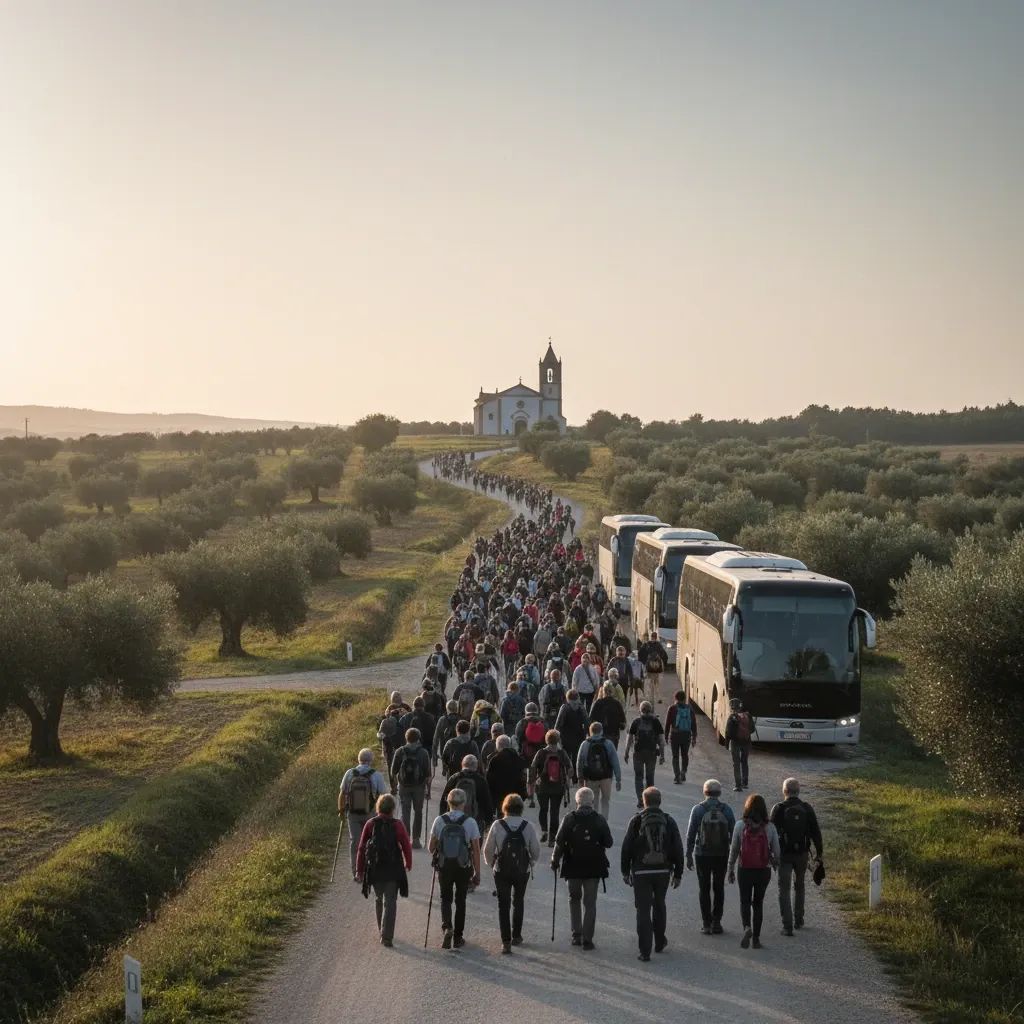
The Portugal Shrine of Fátima has logged 6.5 million visitors in 2025, a record that re-anchors the Marian sanctuary at the centre of Portugal’s tourism and spiritual economy.
Why This Matters
• 241,913 extra pilgrims versus 2024 signal fresh demand for beds, meals and transport along the A1 corridor.
• Jubilee indulgences available only until December 2025 boosted faith-travel packages; late bookers still have a brief window for the tail-end of the holy year.
• 7 % more organised groups means more coaches on EN356—residents can expect continued weekend traffic peaks.
• No new mega-buildings were erected, so municipal taxes largely funded crowd-management and road safety rather than bricks and mortar.
The Numbers Behind the Crowd
After two pandemic-hit seasons, the 6.5 million headcount does more than outpace the 6.3 million of 2019—it crowns Fátima as Europe’s most-visited standalone shrine outside the Vatican. Registrations show 5,608 group bookings, with 84 nationalities on the roll call. Indonesian pilgrims catapulted into the top 10 source markets for the first time, mirroring a wider Southeast-Asian appetite for Portuguese religious heritage.
Why 2025 Drew Even More Feet
Unlike 2023, when World Youth Day briefly inflated numbers, 2025 owed its surge to the Universal Jubilee proclaimed by the Holy See. Anyone crossing Fátima’s Holy Door until 31 December can obtain a plenary indulgence, a draw that tour operators monetised through “Jubilee Express” itineraries. The sanctuary itself favoured programming over concrete: fresher catechesis murals, a new Oração Jubilar available in ten languages, and curated walking routes linking Valinhos and Aljustrel to the main square.
Logistics, Not Construction, Took Centre Stage
Despite rumours of a “new basilica”, the Portugal Shrine administration stuck to maintenance, crowd flow and safety. Infraestruturas de Portugal installed temporary footpaths and speed-limit cushions under the campaign “Peregrinação Segura a Fátima 2025.” Mobile first-aid pods, extra toilets and energy-efficient lighting rounded out the upgrades. These measures pushed operating costs higher—mirrored by a 2024 financial statement of €24.4 M in revenue against €21.8 M in expenses—but avoided the planning headaches a permanent expansion would entail.
The International Footprint
Europe still leads with roughly 60 % of arrivals, yet Asia’s share is approaching one-in-five pilgrims. Travel agents in Jakarta, Manila and Seoul have been bundling Fátima with Lisbon and Porto city breaks, extending average stays to 3.4 nights. Hoteliers in Leiria district already report spring-summer occupancy north of 82 %, giving cover for modest price hikes that nonetheless remain below Barcelona or Rome equivalents.
What This Means for Residents
• Traffic & Noise: Expect coach convoys on peak feast days (12-13 May, 12-13 October). Locals may want to adjust commuting times or use the IC9 bypass.
• Short-term Rentals: A steady stream of faith tourists supports year-round occupancy. Property owners in Ourém and Leiria are fetching €55–€90 per night for two-bed flats, up 11 % in one year.
• Jobs & Side Gigs: Seasonal demand for multilingual guides, caterers and event staff is robust. Portuguese speakers with Indonesian, Tagalog or Polish as a second language see hourly rates exceed €18.
• Community Grants: Sanctuary surplus traditionally funds social projects in the Centro region. Watch for municipal notices on culture or elderly-care grants that will be financed from the 2025 intake.
Looking Ahead to 2026
Clergy officials say visitor numbers could plateau without another mega-event, yet tour operators already promote “Centenary of the Apparition’s Conclusion” packages for 2027. Meanwhile, the Portugal Shrine is piloting carbon-offset tickets for long-haul pilgrims—an initiative likely to influence APT reports and local environmental policy debates.
For residents, the takeaway is simple: Fátima’s post-pandemic rebound is solid, but the municipality is betting on smarter crowd management rather than bigger buildings. The next 12 months will test whether that strategy keeps both pilgrims and neighbours happy.


