A Toddler's Accident Raises Questions About Road Safety in Portugal
A 3-year-old child was struck by a vehicle on a busy Amadora street on Saturday evening and hospitalized with injuries. The child has since been discharged and is recovering at home. The incident, which occurred on Avenida Brasil around 8:40 PM, has prompted renewed discussion among urban planners, law enforcement, and parents about pedestrian safety in Portugal's cities.
Why This Matters
• Recovery underway: The child sustained injuries to the face, abdomen, and hands but has been released from the Hospital de Santa Maria in Lisbon.
• Investigation ongoing: The Brigada de Investigação de Acidentes de Viação (BIAV) of the Polícia de Segurança Pública is examining all factors—driver behavior, road design, visibility—to determine the circumstances of the collision.
• Broader context: According to the Associação para a Promoção da Segurança Infantil (APSI), more than 1,000 children and adolescents are injured or killed in traffic collisions across Portugal annually, with concentrations in zones that combine residential and commercial use.
What Happened on Avenida Brasil
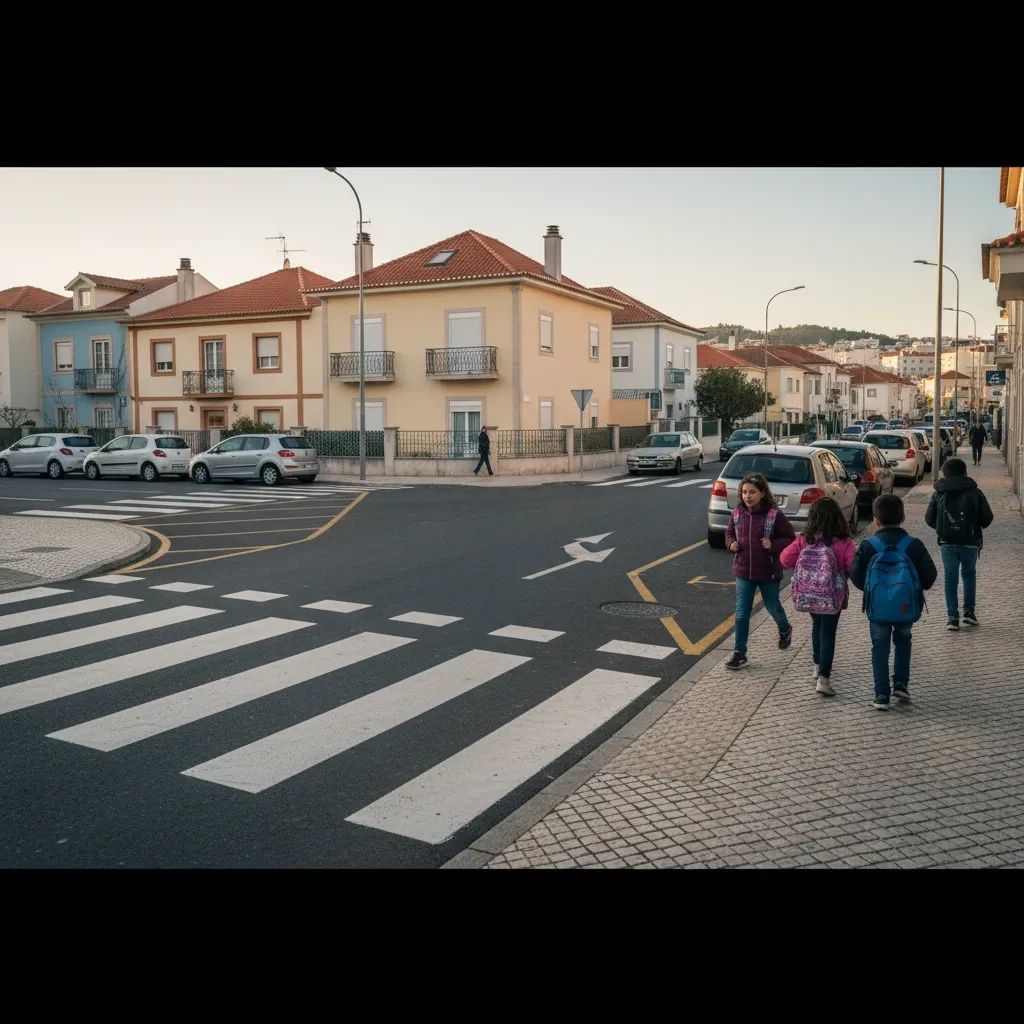
The Falagueira neighborhood in Amadora has historically served as a transit zone rather than a leisurely residential corridor. Avenida Brasil carries commercial traffic and commuters between peripheral neighborhoods and the city center. On Saturday evening, a toddler was standing with siblings on one side of the avenue when she saw her mother on the opposite sidewalk. The child ran into the path of an oncoming vehicle.
Emergency responders arrived quickly. Paramedics assessed her injuries at the scene—blunt force trauma to the face, torso, and hands—and transported her to the pediatric emergency department at Hospital de Santa Maria. The eventual discharge indicates the injuries, while serious and requiring medical intervention, did not result in permanent organ damage or life-altering disability.
The driver remained at the scene. The BIAV, the specialized unit within Portugal's national police force responsible for collision investigations, took control of the case as standard protocol. Investigators are examining vehicle speed, driver attentiveness, and environmental factors including lighting and road markings.
The Broader Pattern: Why Residential Streets Present Safety Challenges
This incident reflects a wider pattern documented by child safety organizations. According to the APSI, the concentration of injuries occurs in zones where residential and commercial functions overlap. Avenida Brasil exemplifies this—technically classified as a residential street but functionally operating as a traffic artery.
Children under 10 present a specific vulnerability profile. Their reduced height places them in vehicular blind spots. Their attention span and impulse control are still developing. A child might not register an oncoming vehicle or may assume that because they can see the driver, the driver can see them. This developmental progression continues until around age 10, when spatial reasoning matures.
Road infrastructure in neighborhoods like Falagueira was engineered decades ago, when traffic volumes and residential density were lower. Retrofitting these streets with pedestrian protections—raised crossings, narrowed lanes, extended curbs—competes for municipal budgets against pothole repair, water system upgrades, and social services.
Institutional Frameworks and Road Safety Programs
Both Amadora and Lisbon have aligned themselves with the "Visão Zero 2030" framework, Europe's commitment to zero road fatalities and serious injuries by decade's end. Both cities maintain municipal road safety plans and educational initiatives. Amadora's Escola de Mobilidade, opened in 2020, teaches children aged 6 to 10 how to navigate intersections. Lisbon has piloted "School Streets" programs that close certain roads to motor traffic during school hours.
Research from cities worldwide shows that speed reduction in residential areas correlates with fewer serious pedestrian injuries. A 30 km/h zone reduces severe injury risk significantly compared to 50 km/h traffic. Paris implemented a citywide 30 km/h policy in 2021; Lisbon and Porto have launched pilot programs in select districts, though broader adoption has proceeded gradually.
Survival Factors and Safety Recommendations
The relationship between vehicle speed and pedestrian survival is well-established: a pedestrian struck at 30 km/h has a significantly higher survival probability than one struck at 50 km/h. Children face heightened vulnerability due to their smaller body mass.
Child safety organizations emphasize that adults must physically hold children's hands in environments where vehicles are present, even on residential streets. For drivers, the recommendation is equally clear: reduce speed in zones where children are likely to be present and maintain attention to surroundings.
Investigation and Implications
The BIAV's investigation will examine vehicle telemetry, witness statements, and compliance with road-marking and lighting standards. If infrastructure deficiencies are identified, findings could inform future investments and safety assessments.
For the child and family, hospital discharge marks the beginning of recovery. For the broader community, the incident underscores the importance of prioritizing pedestrian safety in urban planning and enforcement, particularly for vulnerable populations like young children.